

A solid skincare routine for hyperpigmentation is a two-pronged attack: you need to fade the dark spots you already have while simultaneously stopping new ones from showing up. This means a consistent game plan using ingredients that slow down melanin production, speed up cell turnover, and, most importantly, provide rock-solid sun protection. It's the most reliable way to get that clear, even skin tone we're all after.
Understanding What Causes Hyperpigmentation
Before we can build the right routine, we need to know what we're up against. At its core, hyperpigmentation is just your skin making too much melanin—the stuff that gives your skin, hair, and eyes their color. When it's overproduced, it clumps together, creating those darker spots and patches.
This isn't just a random occurrence; something specific is triggering it. Figuring out the "why" behind your dark spots is the key to picking the right products and treatments to finally get rid of them.
Getting to the Root of the Problem
So, what exactly puts your pigment-producing cells (called melanocytes) into overdrive? It usually comes down to one of three main culprits.
To make it easier to pinpoint your specific trigger, let's break down the three most common forms of hyperpigmentation.
The Three Main Types of Hyperpigmentation
| Type of Hyperpigmentation | Primary Causes | What It Looks Like |
|---|---|---|
| Post-Inflammatory Hyperpigmentation (PIH) | Inflammation from acne, eczema, cuts, or bug bites. | Small, dark spots (pink, red, brown, or black) left behind after a pimple or injury has healed. |
| Sunspots (Solar Lentigines) | Cumulative, long-term UV sun exposure. | Flat, oval-shaped brown or black spots, often on areas that get the most sun, like the face, hands, and shoulders. |
| Melasma | Hormonal fluctuations from pregnancy, birth control, or hormone therapy. | Symmetrical, blotchy brown or grayish patches, most commonly seen on the forehead, cheeks, nose, and upper lip. |
Knowing which type you're dealing with makes all the difference in crafting an effective strategy. It shifts your focus from just trying to erase spots to creating a skin environment where they struggle to form in the first place.
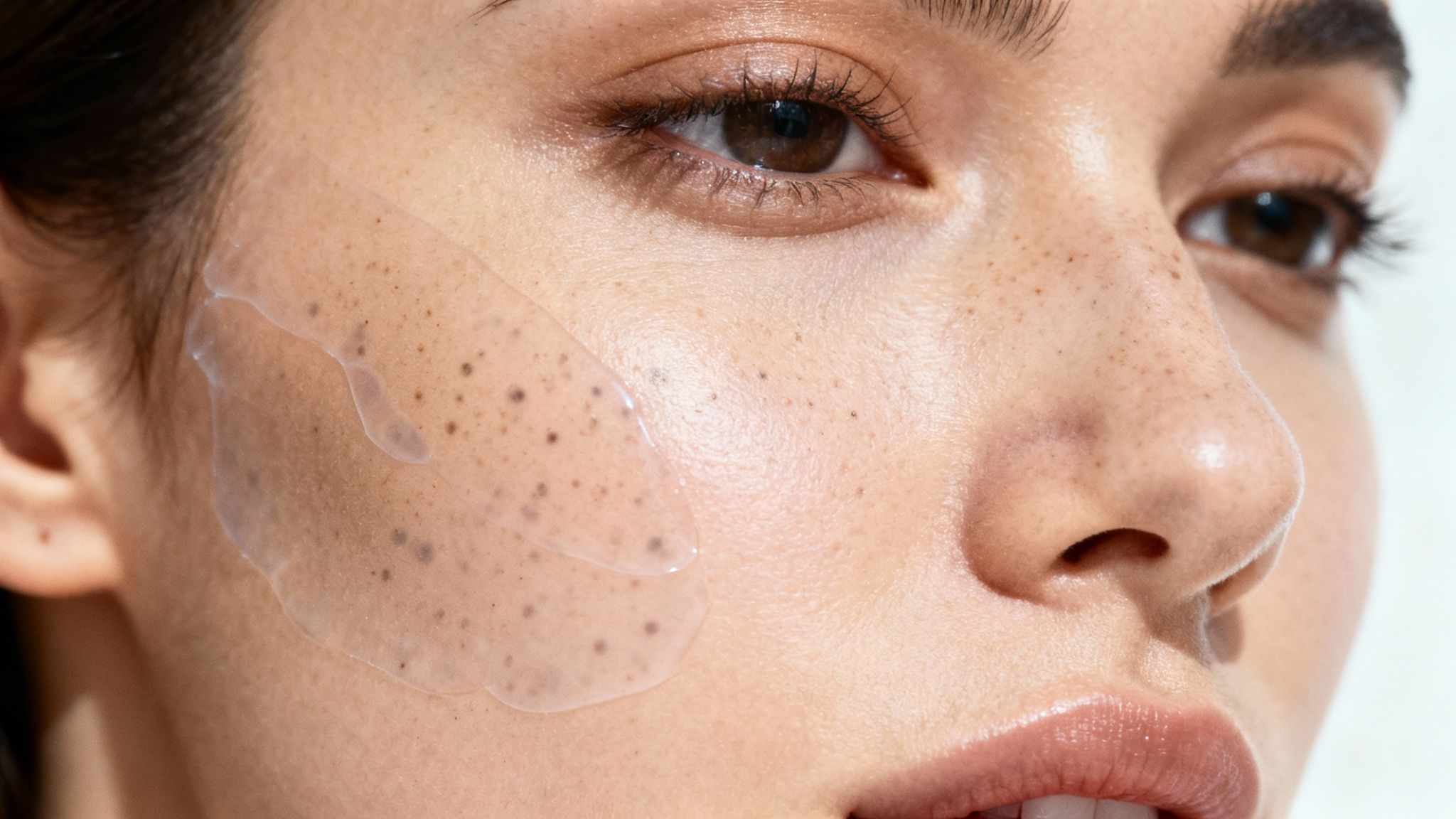
This skin concern is incredibly common. Studies have shown that between 20-30% of women between the ages of 40 and 65 deal with facial melasma. It's a widespread issue that affects people of all skin tones and backgrounds.
The most important thing to remember is that hyperpigmentation isn't a permanent stain. It's an active process your skin is going through. By consistently using the right products, you can interrupt that process and help your skin find its balance again.
For an even bigger boost, you can look into professional pigmentation treatments that work alongside your at-home routine to deliver faster, more dramatic results.
Your Morning Skincare Routine for Protection
Think of your morning routine as your skin’s personal bodyguard. Its main job is to shield you from the daily environmental attacks—especially UV rays—that are notorious for creating new dark spots and worsening existing ones. This doesn't mean you need a complicated, 10-step process. Far from it. The key is making sure every product you use serves a distinct, protective purpose.
The goal here is simple: stop new spots in their tracks and create the perfect environment for your nighttime treatments to do their corrective work. And it all begins with a fresh, clean canvas.
Start with a Gentle Cleanse
First thing's first: wash your face. But when you’re dealing with hyperpigmentation, how you wash it is just as important as what you wash it with. Overly aggressive, stripping cleansers are your enemy. They can wreck your skin barrier, leading to inflammation—a direct trigger for your pigment-producing cells to go into overdrive.
You want a gentle, hydrating cleanser that respects your skin's natural pH. Look for sulfate-free formulas that feature calming ingredients like glycerin or ceramides. Remember, you’re just rinsing away sweat and leftover products from the night before, not trying to scrub your skin into submission.
Introduce a Potent Antioxidant Serum
After cleansing comes your non-negotiable power player: a Vitamin C serum. If you're serious about tackling hyperpigmentation, this is a must-have, not a maybe. Vitamin C is a powerhouse antioxidant that goes to work neutralizing the free radicals caused by sun and pollution before they can trigger melanin production.
Even better, it's also a tyrosinase inhibitor. In simple terms, it gets in the way of the enzyme that’s responsible for creating that excess pigment in the first place.
- L-Ascorbic Acid: This is the gold standard, the most potent and well-researched form of Vitamin C. For real results, look for a concentration between 10-20%.
- Sensitive Skin Alternatives: If your skin finds pure L-ascorbic acid a bit too intense, don't worry. You can get similar benefits from gentler derivatives like tetrahexyldecyl ascorbate (THD ascorbate) or sodium ascorbyl phosphate.
Adding this one ingredient can make a huge difference. To really get into the weeds on how it works, check out our full guide on why you need Vitamin C in your routine.
Moisturize to Support Your Skin Barrier
Next up, lock in all that goodness with a solid moisturizer. This step is about more than just keeping dryness at bay; it's about reinforcing your skin's natural defense system. When your skin barrier is healthy and hydrated, it's much better at fending off irritation and environmental stressors.
Look for formulas packed with ingredients like hyaluronic acid, niacinamide, and ceramides. A strong barrier not only protects your skin but also helps all your other products work more effectively—especially important since many hyperpigmentation treatments can be a bit drying.
Fighting dark spots is a massive global effort. The market for hyperpigmentation treatments was valued at USD 5.78 billion in 2024 and is projected to almost double by 2034. It’s a huge number that reflects a common struggle—some surveys show that nearly 50% of people report dealing with some kind of pigmentary issue.
The Unskippable Final Step: Sunscreen
And now for the most important step of all, the one that makes or breaks your entire routine: sunscreen. If you skip this, you might as well not bother with anything else. UV exposure is the number one cause of hyperpigmentation, period. It will darken the spots you have and create a whole new batch.
Applying a broad-spectrum sunscreen with an SPF of 30 or higher every single morning is the cornerstone of success. Understanding the importance of SPF is crucial for protecting the progress you've made.
A pro tip for anyone dealing with melasma: grab a tinted mineral sunscreen. The iron oxides in the tint provide an extra layer of defense against visible light, which we now know is a major trigger for that particularly stubborn form of hyperpigmentation.
Your Evening Skincare Routine for Correction
If your morning routine is all about defense, think of your evening routine as the offense. Nighttime is when your skin goes into repair mode, making it the perfect opportunity to bring in the heavy-hitting ingredients that actively correct hyperpigmentation. This is your window to break down existing dark spots, speed up cell turnover, and prevent new discoloration from forming.
Think of this as a targeted mission: dismantle the pigmentation you have and build a foundation for clearer, more even-toned skin. And it all starts with making sure your skin is perfectly prepped for what's to come.
Double Cleansing for Deeper Penetration
Before you even think about applying a potent serum, your skin needs to be completely clean. I can't stress this enough. A double cleanse is, without a doubt, the best way to do this.
You start with an oil-based cleanser. This is what will really dissolve and lift away stubborn sunscreen, makeup, and the day's grime. Follow that up with a gentle water-based cleanser to whisk away any lingering residue. This one-two punch leaves you with a truly clean slate, ensuring every active ingredient you apply next can penetrate deeply and work its magic without interference.
Introducing Your Pigment-Fighting Powerhouses
With your skin prepped and ready, it's time for the main event. Your evening treatment is where the real correction happens. This is where you'll use active ingredients specifically designed to break down excess melanin and encourage fresh, new skin cells to come to the surface.
So, what should you be looking for?
- Retinoids: This family of vitamin A derivatives is the undisputed champion of cell turnover. Retinoids essentially tell your skin to speed up the process of shedding old, pigmented cells, making way for the clearer skin hiding underneath.
- Exfoliating Acids (AHAs): Think glycolic acid and lactic acid. These work on the skin's surface, dissolving the bonds that hold dead, discolored cells together. It’s like gently polishing away the hyperpigmentation.
- Tyrosinase Inhibitors: This sounds technical, but the concept is simple. Ingredients like azelaic acid, kojic acid, and niacinamide act like roadblocks, inhibiting the enzyme (tyrosinase) that's responsible for producing melanin in the first place.
My Personal Tip: To get the benefits without the irritation, I always suggest 'skin cycling'. Try using an exfoliating acid one night, a retinoid the next, and then give your skin two nights off to focus purely on hydration and repair. This lets you use powerful actives without compromising your skin barrier.
To help you decide which active is right for you, I've put together a quick comparison of the most effective ingredients out there.
Choosing Your Hyperpigmentation Powerhouse Ingredient
| Ingredient | How It Works | Best For | Potential Side Effects |
|---|---|---|---|
| Retinoids | Speeds up cell turnover, shedding pigmented cells and promoting new cell growth. | Sun spots, post-acne marks, melasma, and general uneven tone. | Dryness, peeling, redness, and initial purging (breakouts). |
| Glycolic Acid (AHA) | Exfoliates the skin's surface by dissolving the "glue" between dead cells. | Surface-level discoloration, sun spots, and a dull complexion. | Tingling, redness, and increased sun sensitivity. Not for very sensitive skin. |
| Azelaic Acid | Inhibits the tyrosinase enzyme to slow melanin production; also anti-inflammatory. | Post-inflammatory hyperpigmentation (PIH), especially from acne, and melasma. | Mild itching or burning, but generally well-tolerated. |
| Niacinamide | Prevents pigment from transferring to the skin's surface cells. | All types of hyperpigmentation; great for sensitive or acne-prone skin. | Very rare, but can cause flushing in high concentrations. |
Ultimately, the best ingredient is the one you'll use consistently and that your skin tolerates well. Don't be afraid to experiment a little to find your perfect match.
The Role of Moisturizer in Skin Repair
After your treatment serum has had a minute to sink in, the final, crucial step is locking it all in with a good moisturizer. This isn't just about adding hydration—it's about supporting your skin through an intensive process.
Actives like retinoids and acids can be drying, so a high-quality moisturizer is non-negotiable for keeping your skin barrier healthy and intact. Look for formulas packed with ceramides, hyaluronic acid, and peptides. These ingredients are fantastic for repairing and strengthening your skin’s defenses, helping it stay calm and resilient. A strong barrier is your best friend in this fight.
This simple infographic below gives a great visual of the core steps for any protective skincare routine.
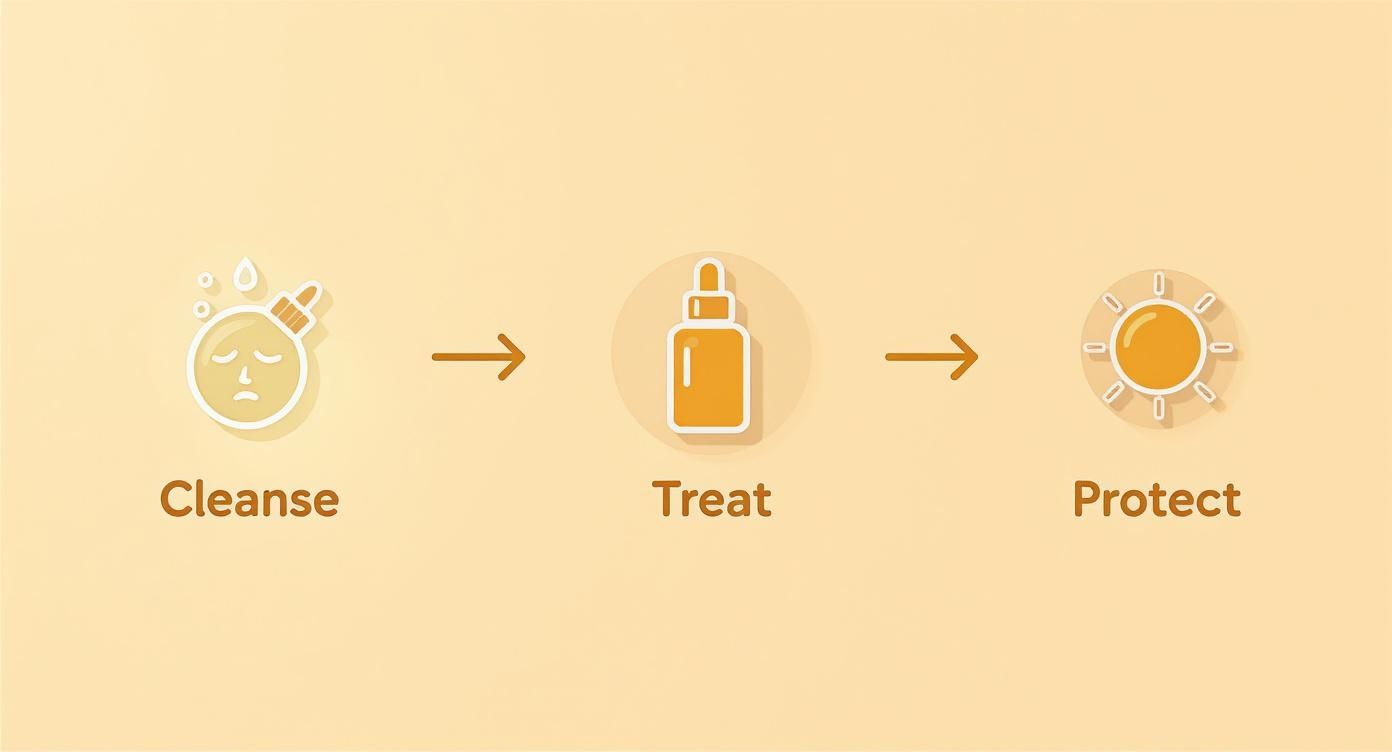
The image breaks it down to the fundamentals: Cleanse, Treat, and Protect. Mastering these three pillars is the foundation for successfully managing hyperpigmentation.
And it’s clear people are looking for solutions. The global hyperpigmentation treatment market was valued at around USD 2.93 billion in 2024 and is expected to nearly double by 2030. This surge shows just how common this concern is and reflects the incredible advancements in the products we now have at our disposal. You can find more details about this expanding market on stellarmr.com.
When to Consider Professional Treatments
Let's be real—sometimes, your at-home skincare routine just isn't enough. You can be doing everything right, using all the best serums and sunscreens, but still hit a frustrating plateau. If you've been consistent for a few months and the progress on your dark spots has stalled, it might be the perfect time to bring in a professional.
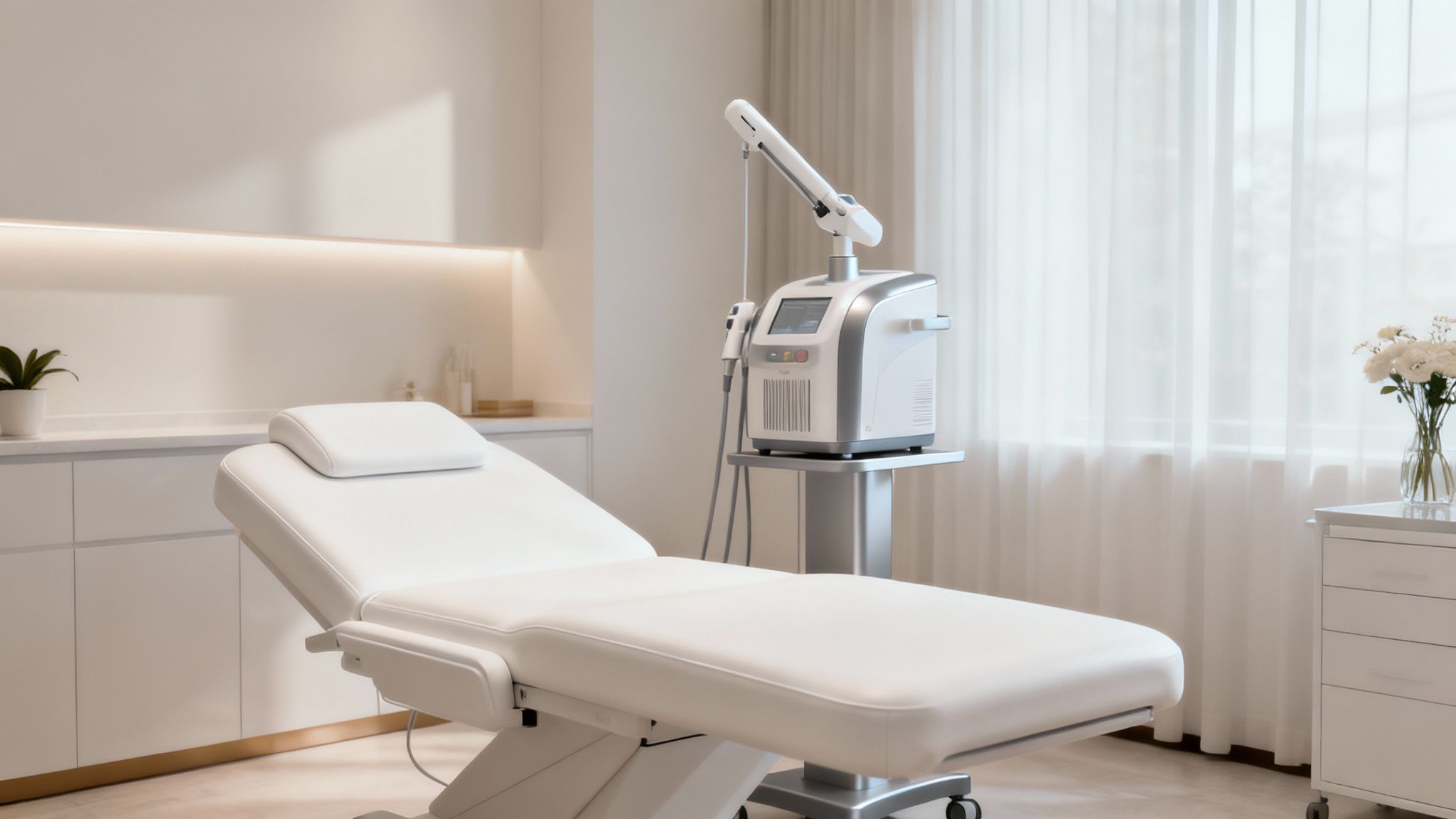
Think of it like this: your daily routine is the foundation, but an in-office treatment is the targeted, high-powered boost that can really kick things into high gear. These treatments work on a deeper level to break up stubborn pigment and accelerate skin renewal in a way that topical products simply can't match.
Exploring Your In-Office Options
When you sit down with a dermatologist or a seasoned esthetician, they'll likely walk you through a few go-to options for tackling hyperpigmentation. Each one works a bit differently, so the key is finding the right fit for your skin type, your specific kind of discoloration, and your goals.
Chemical Peels: These are a fantastic way to essentially slough off the dull, discolored outer layers of skin using powerful acid solutions. They come in different strengths, from light "lunchtime" peels with almost no downtime to deeper versions that deliver more dramatic results but require some recovery. We have a whole guide on how to find https://jules.mockupdomain.com/how-to-get-rid-of-dark-spots-the-best-chemical-peel-for-dark-spots/.
Laser Therapies: This is where technology really shines. Treatments like IPL (Intense Pulsed Light) or Fraxel use concentrated light energy that gets absorbed by the excess melanin in your dark spots. This shatters the pigment into tiny particles, which your body’s natural processes then clear away over time.
Microneedling: Sometimes called collagen induction therapy, this procedure uses tiny needles to create controlled micro-injuries in the skin. This not only kickstarts your skin's natural healing and collagen production but also creates pathways for your brightening serums to penetrate much more effectively.
Making the leap to professional treatments is a significant step, and I can't stress this enough: choosing the right provider is everything. A true expert will never pressure you. They’ll want to hear about your skin’s history and what you hope to achieve.
Finding the Right Professional
Your journey should always start with a really thorough consultation. A good dermatologist or esthetician will want to look closely at your skin, talk about your lifestyle, and make sure you have realistic expectations for the results.
They'll have you fill out detailed esthetician client consultation forms to get the full picture, ensuring the treatment plan is truly right for your skin and its unique needs.
Come prepared with questions! Ask about the costs, what to expect during recovery, and how many sessions they think you'll need. A professional you can trust will want you to feel completely comfortable and informed before you begin. Pairing their expertise with your dedicated at-home care is the ultimate one-two punch for finally achieving that clear, even-toned skin you're working towards.
Common Mistakes That Sabotage Your Hyperpigmentation Progress
When you're fighting hyperpigmentation, it’s easy to get frustrated and accidentally make things worse. I've seen it happen countless times. You’re putting in the effort, but a few common slip-ups can completely undermine your routine, leaving you wondering why you're not seeing results. Let's walk through the most common pitfalls so you can avoid them.
The biggest mistake? Doing way too much, way too soon. In the rush to fade dark spots, people often throw the entire kitchen sink at their skin. They'll start using a retinoid, an AHA exfoliator, and a high-strength vitamin C serum all at the same time. Instead of the clear, even-toned skin they're hoping for, they end up with a red, irritated, and compromised skin barrier. And guess what an inflamed skin barrier often leads to? You got it—even more hyperpigmentation.
The Cycle of Impatience and Inconsistency
I get it, you want to see results yesterday. But hyperpigmentation is a marathon, not a sprint. This impatience often leads to "product hopping," where you ditch a product after just a few weeks because you're not seeing a dramatic change.
Realistically, it can take a solid three to six months of consistent use to see a noticeable difference in dark spots. If you're constantly swapping out your serums, you’re not giving any of those powerhouse ingredients the time they need to actually do their job. You have to commit.
If there's one thing that can undo all your hard work in a single afternoon, it's skipping sunscreen. Just one day of unprotected sun exposure can trigger a surge in melanin, making your existing spots darker and even creating new ones. Your SPF isn't just a step in your routine; it's the foundation of it.
The Trouble with Picking and Scrubbing
We've all been told not to, but picking at a pimple is one of the fastest ways to guarantee a dark spot will take its place. This kind of physical trauma creates inflammation, and your skin’s response is to send pigment to the area as a form of defense. That tiny blemish can quickly turn into a stubborn brown mark that hangs around for months.
The same goes for over-exfoliating. Aggressively scrubbing your face won't magically erase the spots faster. It will, however, strip your skin's protective barrier and cause the kind of irritation that only invites more pigmentation.
To make sure your efforts actually pay off, keep these key things in mind:
- Don't Over-Exfoliate: Keep chemical exfoliation to just two or three times a week, max. This gives your skin time to recover and prevents irritation.
- Never Skip Sunscreen: Every single morning, no excuses. A broad-spectrum SPF 30+ is your best friend. If you're outside for a while, remember to reapply.
- Give Products a Real Chance: Before you decide a product isn't working, stick with it for at least 12 weeks. Consistency is everything.
- Hands Off: When you feel the urge to pick, grab a gentle spot treatment instead. It'll help the blemish heal cleanly without leaving a mark behind.
Got Hyperpigmentation Questions? Let's Get Them Answered
Embarking on a new routine to tackle dark spots always brings up a few questions. That's a good thing! It means you're invested. It's totally normal to wonder about timelines, which products play well together, and how to get the best possible results.
Getting these questions answered upfront helps you commit to the process with confidence, which is exactly what you need to see the even-toned, glowing skin you’re after. Let's dive into the most common ones I hear all the time.
How Long Until I See a Difference?
This is the big one, and the honest answer is: patience is everything. While you might notice your skin looking a little brighter and healthier within the first 4 to 6 weeks, significantly fading stubborn spots is a long game. We're talking months, not weeks.
For more recent, surface-level marks—like those leftover from a breakout—you could see a real, noticeable improvement in about 3 to 6 months. But for deeper, more persistent pigment like melasma, it could easily take up to a year of consistent effort.
The speed of your results really depends on the type of hyperpigmentation you have, how diligent you are with your routine, and—this is the most important part—your absolute dedication to daily sun protection.
Can I Use Vitamin C and Retinol Together?
Yes, you absolutely can and should! But the trick is how you use them. These two are a powerhouse duo for discoloration, but applying them at the same time can be too much for your skin and lead to irritation. The smartest approach is to split them up.
Here’s the schedule I recommend for all my clients:
- In the Morning: Use your Vitamin C serum. It’s a brilliant antioxidant that will help protect your skin from sun damage and pollution all day long.
- In the Evening: Apply your retinoid. Nighttime is when your skin is in repair mode, and retinol works best then to speed up cell turnover without being exposed to sunlight.
By giving each ingredient its own time to shine—one for morning, one for night—you get all the protective and corrective benefits without the risk of redness or sensitivity. It's the perfect balance.
Which Sunscreen Is Best for Preventing Dark Spots?
Honestly, the best sunscreen is the one you'll wear every single day, without fail. Consistency trumps everything.
That being said, if you're serious about preventing pigment, some formulas are better than others. Always, always look for a broad-spectrum sunscreen with an SPF of 30 or higher.
For those dealing with really stubborn dark spots or melasma, I always steer them toward a mineral-based (or physical) sunscreen. Look for zinc oxide or titanium dioxide on the ingredients list.
Want to level up your protection? Go for a tinted mineral sunscreen. The iron oxides that give the product its tint do double duty by also helping to block visible light—a sneaky trigger for hyperpigmentation, especially for those with deeper skin tones. This one simple switch can be a total game-changer.
At Face of Jules, we create personalized plans that address the root cause of your skin concerns. If you're ready for a routine that actually works, we're here to guide you. Explore our corrective treatments and book your consultation today.