

The best way to care for combination skin is all about creating balance. You're essentially treating two different skin types at once. The key is to use lightweight, hydrating products on the dry spots and gentle, oil-controlling ingredients where you get greasy, like the T-zone. Forget harsh, stripping formulas; your goal is to give each part of your face exactly what it needs.
Understanding Your Combination Skin
Before you can build the right routine, you have to get to know your skin’s specific quirks. Combination skin is more than just an oily T-zone and dry cheeks; it’s a moving target influenced by everything from your DNA to the weather. This split personality is its defining feature, which is why a one-size-fits-all product will almost always let you down.
One of the most common mistakes I see is people treating their entire face like it’s oily. They'll use aggressive products that strip moisture from their already-dry cheeks. This backfires spectacularly, making the dry areas flaky and irritated while sending the T-zone into oil-production overdrive to compensate. It's a vicious cycle.
Confirming Your Skin Type at Home
Not 100% sure you have combination skin? Try this simple test.
- Wash your face with a gentle, pH-balanced cleanser.
- Gently pat it dry, and don't put anything on it for about 30 to 60 minutes.
- Now, check in with your skin. If your forehead, nose, and chin look shiny or feel slick, but your cheeks feel tight or just normal, congratulations—you have combination skin.
This little experiment gives you the confirmation you need to start building a routine that actually works. To really get a handle on where your skin fits in, it's worth getting a broader view by understanding the five main skin types.
The goal isn't to fight your skin's natural tendencies but to work with them. A successful regimen creates harmony between the oily and dry zones, rather than trying to force them to be the same.
Why Balance Is Everything
Grasping this dual nature is the most important part of the puzzle because it dictates every single product you choose. It's no wonder that combination skin is the biggest player in the global facial care market. In fact, by 2025, products made just for this skin type are expected to make up 36.5% of the sector’s total revenue. That’s more than any other category! This just goes to show how many people are looking for the right answers.
This foundational knowledge helps you pick ingredients that bring true balance. For example, you might find that a lightweight gel moisturizer works wonders on your T-zone, while your cheeks crave something a little richer. This kind of targeted application is the real secret to a happy, healthy complexion.
And if that T-zone shine is a major headache, you might want to look into professional options. Exploring skincare treatments for oily skin in Los Angeles can be a great way to supplement what you're doing at home.
Your Morning Game Plan: The Protection Routine
Think of your morning skincare routine as your daily armor. It’s not just about waking up your face; it's a strategic move to prepare your skin for whatever the day throws at it. For those of us with combination skin, the goal is twofold: keep that T-zone shine in check while giving our drier cheeks the hydration they're craving. Get this right, and you've set the stage for a balanced, comfortable complexion all day long.
The first thing you do sets the tone. Reach for a gentle, pH-balanced cleanser. If your face feels tight or "squeaky clean" after washing, that’s a red flag. It means you’ve stripped your natural moisture barrier, which can send both your oily and dry areas into a frenzy. A mild formula will clear away any overnight oil and grime without causing drama.
Targeted Treatments with Serums
After cleansing, it's time to get strategic with serums. This is where you can really customize your approach. I'm a huge fan of a technique called "skin zoning"—it sounds technical, but it just means giving different parts of your face what they uniquely need.
It’s simple, really. For your oily T-zone, a serum with niacinamide is a game-changer. It’s fantastic for reining in oil production and making pores look a little less obvious. Then, for your cheeks and any other dry patches, gently pat on a hydrating serum with hyaluronic acid. This ingredient is like a magnet for moisture, pulling it into the skin to keep those areas feeling plump and comfortable.
This infographic breaks down a simple way to confirm if you truly have combination skin, which is the foundational step before you start buying products.

By paying attention to how your skin feels post-cleanse, you'll know exactly which zones need oil control and which need a drink of water.
Don't forget an antioxidant! A morning Vitamin C serum is one of the best protective measures you can take. It acts as a shield against environmental stressors like pollution and UV radiation. If you want to get into the nitty-gritty, you can learn more about why your skin needs Vitamin C and how it helps brighten your complexion.
To make it even easier, here's a quick cheat sheet for your morning steps.
Morning Routine for Combination Skin
| Step | Purpose | Key Ingredients to Look For |
|---|---|---|
| 1. Gentle Cleanse | Remove overnight oil and impurities without stripping the skin. | Glycerin, Ceramides, Green Tea Extract |
| 2. Targeted Serums | Address specific concerns in different facial zones (oily vs. dry). | Niacinamide (T-zone), Hyaluronic Acid (cheeks) |
| 3. Antioxidant | Protect skin from daily environmental damage and free radicals. | Vitamin C (L-Ascorbic Acid), Vitamin E, Ferulic Acid |
| 4. Lightweight Moisturizer | Hydrate all areas without clogging pores or feeling heavy. | Gel-creams, Hyaluronic Acid, Squalane |
| 5. SPF 30+ | Provide essential, non-negotiable protection from UV rays. | Zinc Oxide, Titanium Dioxide, or modern chemical filters |
This table acts as a great starting point, but remember to listen to your skin and adjust as needed.
Lock It All In
Once your serums have had a minute to sink in, it's time to moisturize and protect. The right moisturizer is crucial. You want something that’s lightweight and non-comedogenic—meaning it won’t clog your pores. Gel or gel-cream textures are usually a safe bet, as they hydrate effectively without feeling greasy.
The single most important step in any morning routine, for any skin type, is sunscreen. Period. For combination skin, the texture makes all the difference. A thick, oily sunscreen will just make your T-zone feel like a slip-n-slide.
And for the final, non-negotiable step: broad-spectrum SPF of 30 or higher. Thankfully, sunscreen formulations have improved dramatically over the years. Look for mineral-based options with zinc oxide for a matte finish, or explore some of the newer, lightweight chemical sunscreens. This last step shields your skin from sun damage and seals in all the hard work you just did.
Your Nightly Repair and Treatment Regimen
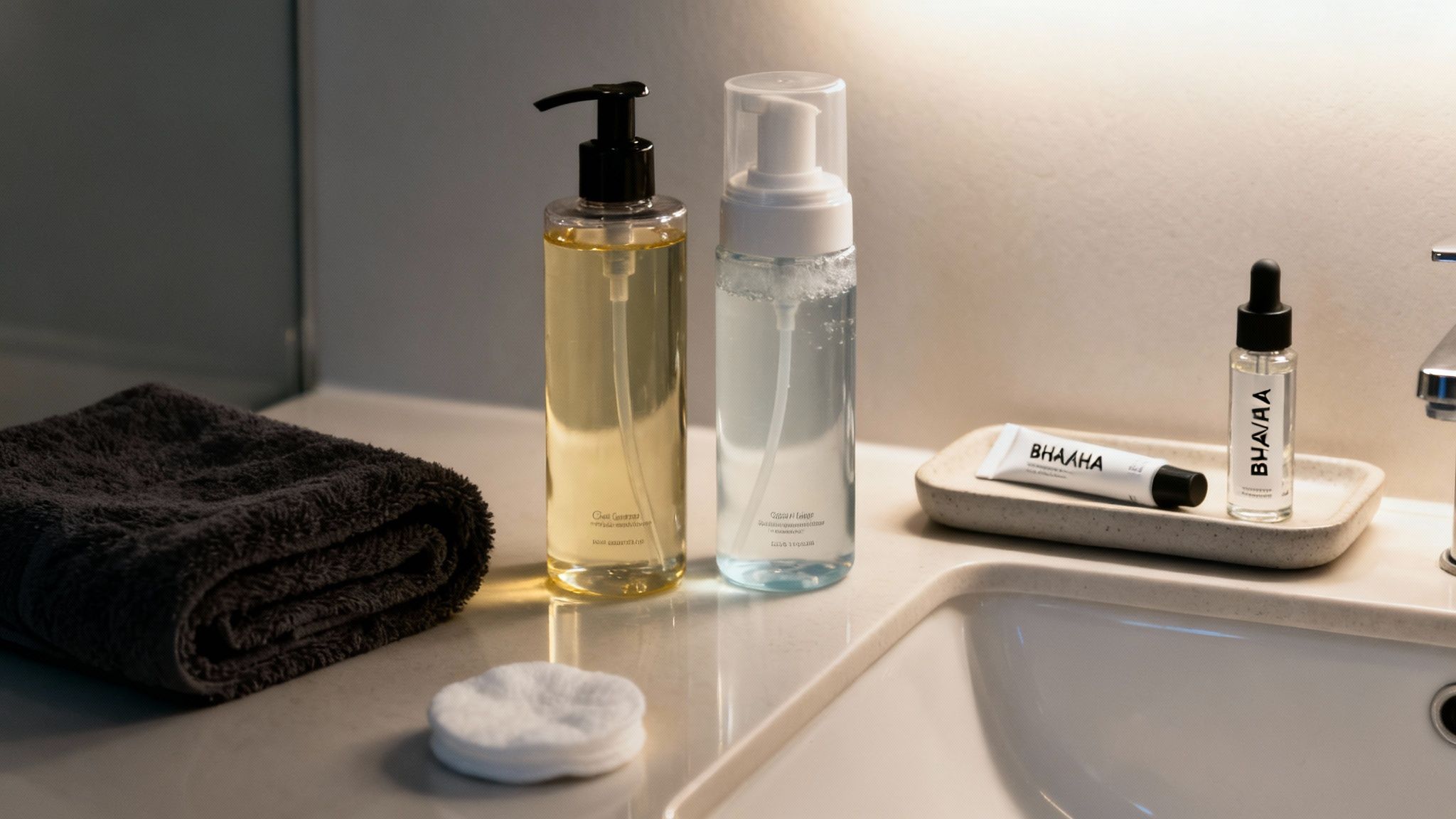
If your morning routine is all about defense, your evening routine is where the magic really happens. At night, your skin finally gets a break and switches into full-on repair mode. This is the prime time to wash away the day's grime and let powerful treatments get to work without interference from UV rays or pollution. It's your golden opportunity to tackle everything from clogged pores and uneven texture to those stubborn dry patches.
The absolute cornerstone of any good nighttime routine is a deep, thorough cleanse. For combination skin, especially if you've been wearing makeup or sunscreen, double cleansing isn't just a trend—it's essential. This two-step method is brilliant because it removes absolutely everything without stripping your skin.
First, go in with an oil-based cleanser. I know, putting oil on an oily T-zone sounds crazy, but trust me on this. Oil dissolves oil. Massage it onto dry skin to literally melt away makeup, SPF, and all that excess sebum. Then, follow up with a gentle, water-based cleanser to rinse it all away. What's left is a perfectly clean slate, ready for the next steps.
Strategic Exfoliation and Treatment
Once your skin is prepped and clean, it's time to bring in the targeted treatments. This is where you can see a major difference in your skin's clarity and smoothness. But a word of caution: going all-out with active ingredients is a recipe for disaster. The real secret is to alternate your actives so you don't overwhelm your skin.
Think of it as creating a simple weekly schedule for your face:
- Nights 1 & 3: BHA for the T-Zone. Grab a serum with salicylic acid (a BHA) and apply it only to your forehead, nose, and chin. As an oil-soluble acid, it gets right into your pores to clear out congestion and blackheads.
- Nights 2 & 4: AHA for the Cheeks. On the other nights, switch to a gentle lactic acid (an AHA) for your cheeks. This will help smooth out texture, tackle any lingering dark spots, and give those drier areas a much-needed hydration boost.
- Nights 5, 6, & 7: Rest and Hydrate. Give your skin a break! On these nights, your only job is to focus on hydration and nourishment to help your skin barrier recover and stay strong.
This "skin cycling" approach ensures every part of your face gets exactly what it needs without the irritation that comes from throwing too many actives at it at once. This is a core part of building the best skincare regimen for combination skin.
Over-exfoliating is one of the fastest ways to wreck your skin barrier. You have to listen to your skin. If you start seeing redness or feeling sensitivity, back off the acids immediately and just focus on simple, soothing hydration until things calm down.
Introducing Retinoids for Cell Turnover
After your skin has gotten used to regular exfoliation, you might want to consider adding a retinoid to the mix. These Vitamin A derivatives are the gold standard for a reason—they speed up cell turnover, which helps with everything from fine lines and wrinkles to acne and overall texture. They essentially push fresh, healthy skin cells to the surface, giving you a smoother, more even-toned complexion.
Start slow and low. Pick up an over-the-counter retinol with a low concentration and use it just two nights a week, making sure it's on one of your "rest" nights (never on the same night as an exfoliant). You only need a pea-sized amount for your entire face. As your skin gets comfortable over several weeks, you can gradually work your way up to more frequent use.
Finally, you need to lock it all in with the right moisturizer. Just like in the morning, "zoning" your moisturizer at night can be a game-changer. A lightweight gel-cream is perfect for keeping the T-zone happy, while your cheeks might drink up a slightly richer, more nourishing lotion to help them recover overnight. This final layer seals in all those powerhouse treatments and helps you wake up to balanced, happy skin.
Your daily routine is the foundation, but adding in a few weekly treatments is how you really see significant change. Think of them as specialists you call in to tackle the stubborn issues that daily care just keeps at bay. The trick is knowing how and when to use them so you don't overwhelm your skin and undo all your hard work.
For those of us with combination skin, the single most effective weekly strategy is multi-masking. It’s such a simple idea but absolutely brilliant for our skin type. You’re essentially using different masks on different parts of your face at the same time, giving each area exactly what it’s craving.
Mastering the Art of Multi-Masking
Imagine your face is a map. The T-zone is the oily, congested jungle, and your cheeks are the dry, sometimes sensitive, plains. Multi-masking respects these different zones.
- For the T-Zone: This is where you’ll put a good clay or charcoal mask. Slather it on your forehead, nose, and chin. These ingredients are fantastic for pulling out all the gunk—excess oil, dirt, and grime—that clogs pores and leads to blackheads.
- For the Cheeks: While the clay mask is working its magic, treat your cheeks and any other dry patches to a rich, hydrating mask. Look for powerhouse hydrators like hyaluronic acid, ceramides, honey, or squalane. These will pump moisture back into the skin and keep your barrier happy.
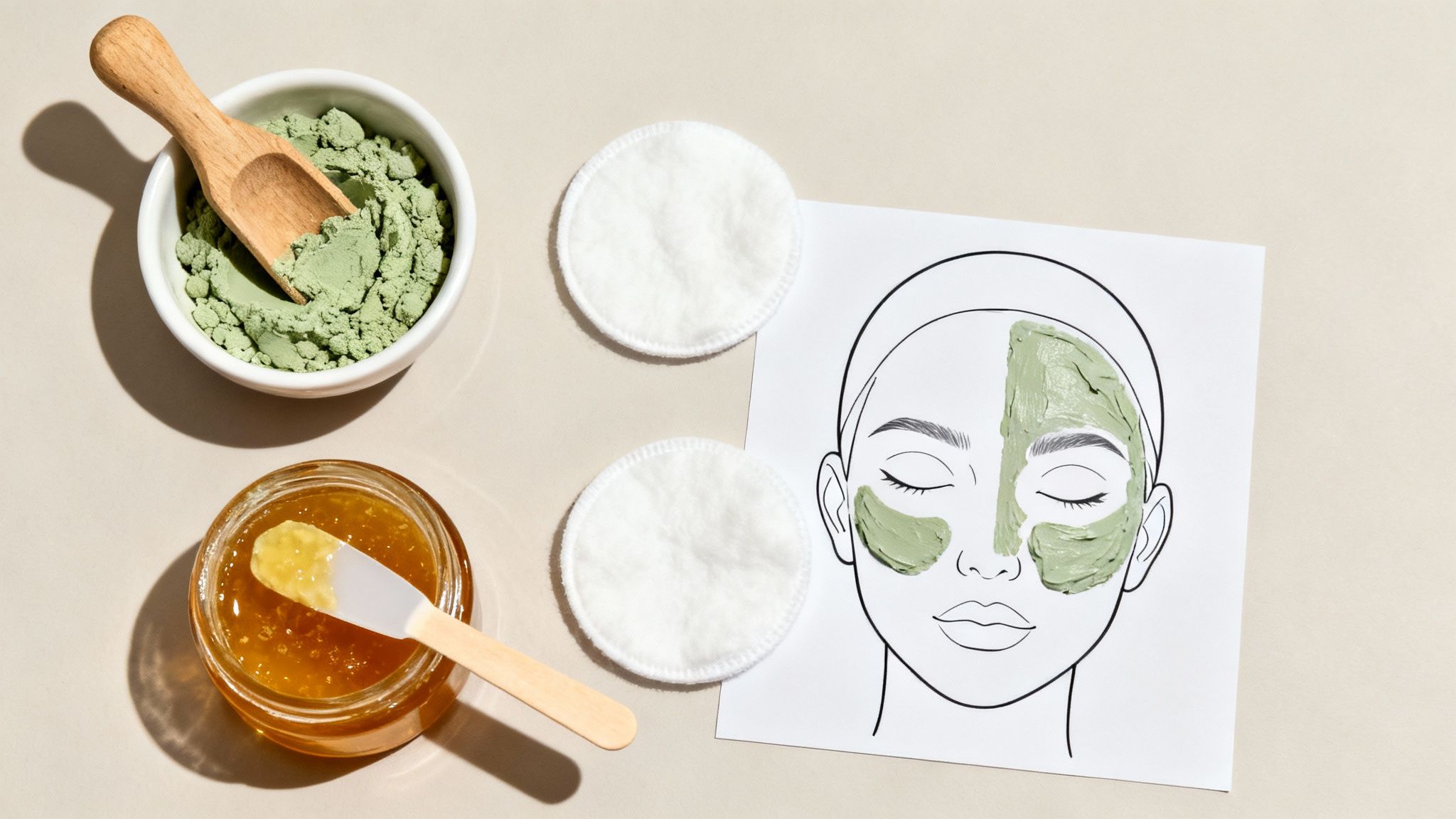
This simple technique is a total game-changer. You avoid the classic mistake of making your dry cheeks even drier with a clay mask meant for your nose. It's all about bringing true balance to your entire face. Of course, for a really deep clean, nothing beats supplementing your home routine with occasional professional spa treatments and facials.
Pro Tip: I always apply the clay mask first since it usually dries faster. Then, I carefully apply the hydrating mask to the other areas, trying not to overlap them too much. Give them both about 10-15 minutes to work, then rinse everything off with lukewarm water.
Unlocking Radiance with Gentle Peels
Besides masking, a gentle weekly peel can do wonders for your skin's texture and overall glow. I find that aggressive physical scrubs are just too much for most combination skin types, but enzyme peels are a much kinder, more effective alternative.
Instead of scrubbing, these peels use natural fruit enzymes (think papaya or pineapple) to gently dissolve the "glue" that holds dead skin cells together. This reveals the brighter, smoother skin underneath without any irritation.
Doing an enzyme peel just once a week is a great way to manage both flaky patches and clogged pores, leaving you with a much more even complexion. There are a few different ways to let’s exfoliate, so it's worth exploring to see what your skin responds to best. By weaving these weekly treatments into your schedule, you’re moving beyond basic maintenance and creating a truly custom plan for balanced, healthy skin.
Fine-Tuning Your Routine for Real-Life Balance
If you’re still using the same exact products morning and night, day in and day out, you're missing a trick. Your skin is dynamic, and the absolute best skincare regimen for combination skin is one you can tweak on the fly. Don't think of it as a rigid checklist, but more like a toolkit you can dip into based on what your skin—and your life—is throwing at you.
This mindset is everything because so many things can throw your skin's balance out of whack. The most obvious culprit? The seasons.
When summer humidity hits, you’ll probably notice your T-zone getting oilier than usual. That’s your cue to swap out your go-to lotion for a lightweight gel moisturizer. It’ll help keep your pores clear without that heavy, greasy feeling.
Then, winter rolls in. The cold, dry air can suck the life right out of your cheeks, leaving them flaky and tight. This is the perfect time to bring in a richer, more nourishing cream. Look for ingredients like ceramides or squalane to help shore up your skin's defenses where they're weakest.
Adjusting to Your Daily Environment
It’s not just about the big seasonal shifts; your day-to-day environment matters just as much. Spend all day in an office with bone-dry, recycled air? That’s a classic recipe for dehydrated cheeks, even if your forehead is shiny.
A game-changing trick is to keep a hydrating facial mist on your desk. A quick spritz of something with hyaluronic acid or glycerin can give your skin an instant drink of water without messing up your makeup. It's such a small thing, but it makes a world of difference in avoiding that tight, uncomfortable feeling that can creep in by 3 PM.
Listening to your skin is a skill you develop over time. Pay attention to how it feels after a long flight, a stressful week, or a sweaty workout. These are all signals telling you exactly what it needs to get back to its happy place.
Think about what happens after a workout, for example. Letting sweat, oil, and bacteria hang around is basically sending a written invitation for breakouts, especially in those already-oily areas. A quick swipe with micellar water or a gentle face wipe right after you cool down is crucial for keeping your pores clear.
This idea of a flexible, responsive routine isn't just a niche concept; it’s a global movement. In the Asia Pacific region, which makes up over 39.8% of the entire global skincare market value, there's been a massive surge in products designed for nuanced, combination skin. This trend really highlights a broader understanding that a one-size-fits-all approach just doesn't cut it. If you're interested, you can explore more about these market trends to see just how big this skincare philosophy has become.
Ultimately, learning to make these small, smart adjustments is what takes a skincare routine from just okay to truly effective.
Answering Your Top Combination Skin Questions
Dealing with combination skin often feels like you're trying to please two completely different people at once. Your T-zone is having an oil-slick party while your cheeks are practically begging for a drop of moisture. It can be confusing, but once you nail down a few key principles, managing it becomes second nature.
Let's break down some of the most common questions I hear and get you some straightforward, practical answers. We'll cover things like:
- How to moisturize without making your T-zone greasy
- The right way to exfoliate without causing irritation
- Whether facial oils are a friend or a foe
- The biggest mistakes to steer clear of
Should I Really Use Two Different Moisturizers?
I get it—using one moisturizer for your whole face is just easier. But for true combination skin, this is one area where a little extra effort pays off big time. Think of it as giving each part of your face exactly what it needs to be happy. This is what we call "moisturizer zoning."
A lightweight, gel-based moisturizer is perfect for your oily T-zone (forehead, nose, and chin). It provides hydration without clogging pores or adding extra shine. For your drier cheeks, a slightly richer cream-based formula will prevent tightness and flaking.
A targeted approach is the secret sauce for a balanced complexion. You're not just applying products; you're responding to what your skin is telling you.
How Often Can I Exfoliate Without Overdoing It?
This is a delicate balance. Exfoliation is crucial for decongesting oily areas and smoothing dry patches, but too much of a good thing can strip your skin's protective barrier.
The sweet spot for most people with combination skin is 2–3 times a week. It’s also smart to alternate your exfoliants. Try using a BHA (like salicylic acid) on your T-zone to get deep into the pores and an AHA (like lactic or glycolic acid) on your cheeks to gently slough away dead skin and improve texture. Always give your skin a night off in between to recover.
Here’s a simple way to think about it:
- BHAs go where the oil is.
- AHAs go where the texture is rough.
- Rest days are non-negotiable for a healthy skin barrier.
If you ever notice redness or irritation, that’s your cue to pull back. Your skin will always let you know when you've pushed it too far.
Are Facial Oils a "No" for Combination Skin?
Not at all! This is a huge misconception. The right facial oil can be a game-changer, even for oily areas. The trick is to choose non-comedogenic oils—the kind that won't clog your pores.
Oils like squalane and jojoba are fantastic because their molecular structure is very similar to your skin's natural sebum. This can actually help trick your T-zone into producing less oil over time. For those perpetually dry patches on your cheeks, a nourishing oil like rosehip can work wonders.
Here's a quick guide:
| Oil Type | Why It Works | How to Use It |
|---|---|---|
| Squalane | Lightweight and helps balance oil production. | Press 1-2 drops onto your entire face after moisturizer. |
| Jojoba | Closely mimics your skin's natural oils. | Gently pat a single drop onto your T-zone. |
| Rosehip | Rich in antioxidants and great for healing dry spots. | Target just the dry areas, like your cheeks. |
Just remember, with oils, less is more. A couple of drops, pressed gently into the skin, is all you need.
What's the Biggest Mistake I Could Be Making?
Hands down, the most common mistake is treating the entire face like it's oily. People reach for harsh, stripping cleansers and mattifying products, hoping to get rid of the shine. All this does is irritate the dry areas and send the oily T-zone into overdrive to compensate for the lack of moisture.
The real key is balance. Your routine should respect both sides of your skin's personality.
Consistency is also a huge factor. Don't jump from product to product or overload your skin with a dozen new active ingredients at once. Pay attention to how your skin feels day-to-day and be willing to make small adjustments. A simple skin journal can be incredibly helpful for tracking what works, especially as the seasons change.
Small, consistent tweaks are what create lasting harmony for your skin. It’s a marathon, not a sprint.
- Listen to what your skin needs today.
- Adjust your routine with the seasons.
- Find a balance between hydration and oil control.
Ready to get personalized advice for your unique skin? You can book a consultation with Face of Jules and start your journey to a happier, more balanced complexion.