

When it comes to finally clearing up hormonal acne, you have to play both offense and defense. It’s a two-pronged attack: we need to balance hormones from the inside with the right diet, lifestyle tweaks, and supplements, while also using a smart, consistent topical routine to manage the breakouts you can see.
Lasting success really hinges on figuring out what's triggering your hormones in the first place and dealing with that head-on—not just spot-treating pimples as they pop up.
Decoding Your Breakouts and Finding the Root Cause
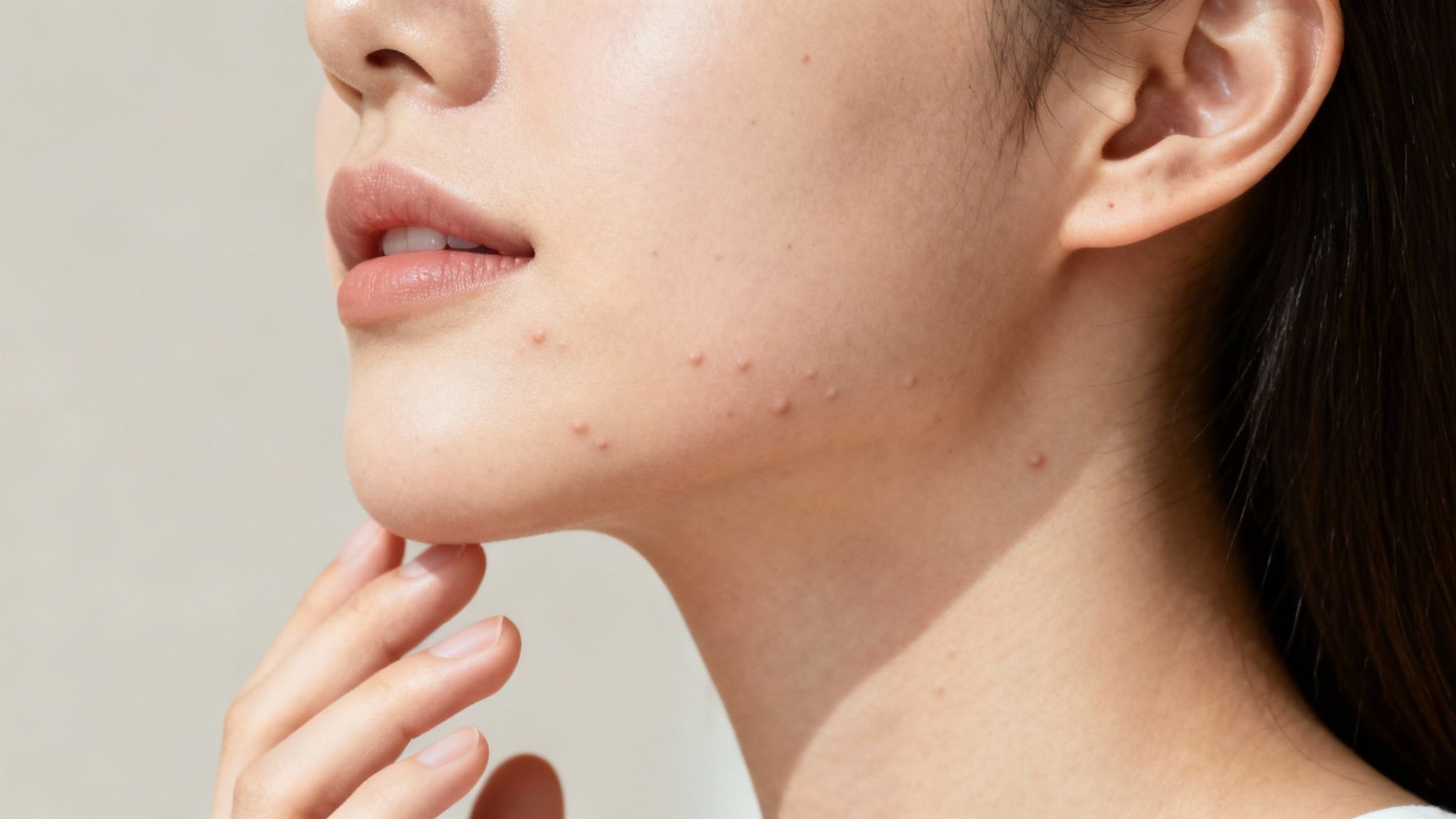
Before you start overhauling your routine, let’s make sure we’re actually dealing with hormonal acne. This isn't about a random pimple or two. We're talking about a very specific pattern of breakouts that is undeniably linked to your body's internal hormonal rhythm.
If that sounds all too familiar, you are far from alone. Acne is the eighth most common disease in the world, and adult female acne is incredibly widespread. In a recent review of over 50,000 patients, researchers found that 21.95% of adult women are affected. The number is even more staggering for women in their 20s, with a prevalence of 50.9%.
You can dig into the hormonal drivers of adult female acne in this 2023 research piece, but the connection is clear. This is precisely why just slathering on creams often doesn't lead to long-term results.
The Tell-Tale Signs of Hormonal Acne
Hormonal acne isn't just about where it shows up, but also when and how. It’s a cyclical problem that requires a bit of detective work to pinpoint. Think of it as your skin sending you clear signals about what’s happening on the inside.
Here are the key identifiers I tell my clients to look for:
- Predictable Timing: Do your breakouts flare up like clockwork every single month? This is the biggest clue. It's often the week before or during your period.
- Specific Location: The classic hormonal acne pattern hits the lower third of the face. We’re talking about the jawline, chin, and around the mouth.
- Type of Blemish: These aren't your average little whiteheads. Hormonal breakouts tend to be deep, tender, and cystic. They sit far under the skin and can take forever to heal.
To make it even clearer, here’s a quick comparison to help you distinguish between hormonal acne and other common types like bacterial or fungal acne.
Identifying Hormonal Acne vs Other Types of Acne
| Characteristic | Hormonal Acne | Bacterial Acne | Fungal Acne |
|---|---|---|---|
| Location | Jawline, chin, neck | Cheeks, forehead, t-zone | Forehead, chest, back |
| Appearance | Deep, cystic, painful nodules | Whiteheads, blackheads, pustules | Small, uniform, itchy bumps |
| Timing | Cyclical, linked to menstrual cycle | Can be random or persistent | Often appears after sweating/humidity |
| Feel | Tender, sore, deep under the skin | Can be inflamed but often superficial | Itchy, not usually painful |
This table is a great starting point, but remember, you can sometimes experience a mix of types. Still, identifying the dominant pattern is key.
Connecting Breakouts to Your Hormones
So what's actually going on in your body? The primary culprits behind these frustrating flare-ups are fluctuations in your key hormones.
Androgens, like testosterone, rev up your oil glands, causing them to produce excess sebum that can clog pores. Just before your period, your estrogen and progesterone levels take a nosedive. This gives those androgens a much stronger influence on your skin, kicking off an inflammatory cascade that leads to those deep, painful cysts.
The crucial first step in your journey to clear skin is shifting your focus. Stop seeing acne as a surface-level skin problem and start viewing it as a symptom of an internal imbalance. This perspective is what empowers you to build a smarter, more effective strategy for lasting clarity.
Eating to Support Your Hormonal Health
Vague advice like "just eat healthy" is pretty useless when you're trying to figure out how to clear hormonal acne. Let’s get specific. The truth is, certain foods have a direct and powerful impact on your hormonal balance, and understanding these connections is a total game-changer for your skin.
It’s all about focusing on specific nutrients that calm inflammation and avoiding the triggers that send your hormones into a tailspin.
The main objective here is to stabilize your blood sugar. When you eat high-glycemic foods—think sugary snacks, white bread, and processed carbs—your blood sugar skyrockets. This forces your body to pump out more insulin, a hormone that, in excess, can tell your ovaries and adrenal glands to produce more androgens.
And those androgens? They’re the very hormones that ramp up sebum production, leading to clogged pores and the deep, painful cysts that are the hallmark of hormonal breakouts. It’s a clear chain reaction: high-sugar food → insulin spike → more androgens → more acne.
Building an Anti-Inflammatory Plate
To break this cycle, the key is prioritizing whole, anti-inflammatory foods that nourish your body and keep your blood sugar steady. This isn’t about some crazy restrictive diet; it’s about making smart, sustainable additions to your everyday meals.
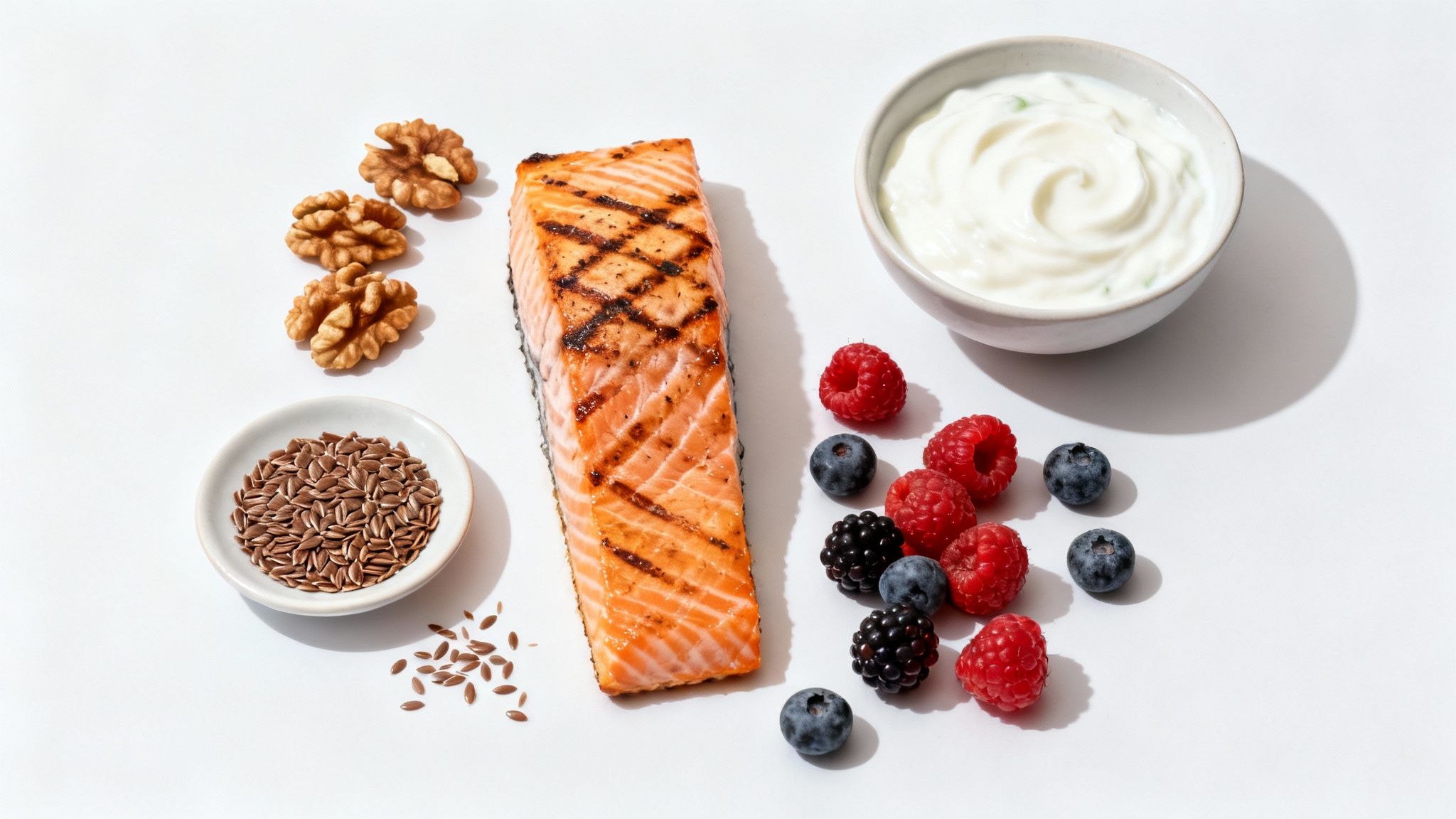
Start by bringing in foods rich in omega-3 fatty acids. These are fantastic for taming systemic inflammation—think of them as your skin's internal calming crew.
- Fatty Fish: Salmon, mackerel, and sardines are absolutely packed with EPA and DHA, which are potent anti-inflammatory omega-3s.
- Seeds: Flax and chia seeds are amazing plant-based sources that also deliver a healthy dose of fiber for hormone regulation.
- Nuts: Walnuts are another go-to for healthy fats and anti-inflammatory compounds.
Next up, focus on fiber-rich carbohydrates. A high-fiber diet can help lower circulating androgens, effectively turning down the volume on the hormones that trigger acne. Try swapping white rice for quinoa, white bread for a whole-grain sourdough, and load up on leafy greens and cruciferous veggies like broccoli and cauliflower.
Foods to Limit for Clearer Skin
Just as important as what you add is what you limit. While everyone’s triggers can be a bit different, a couple of major culprits are consistently linked to hormonal acne flare-ups. You can take a deeper dive into the specific link between diet and breakouts by exploring our guide on what foods cause acne on face.
For many people, dairy—especially skim milk—can be problematic. This is often due to the hormones present in the milk that may interfere with your own. Similarly, high-sugar and processed foods are direct triggers for that insulin spike we just talked about.
Instead of looking at this as a strict diet, think of it as a personal experiment. Try reducing your intake of dairy and sugar for 30 days and just observe your skin. This gives your body enough time to show you if these foods are personal triggers for you.
Understanding how our internal systems are all connected is so important. For instance, digging into the crucial gut-skin axis can offer deeper insights into how nutrition impacts skin health from the inside out. Making these dietary shifts isn't about being perfect—it's about making progress toward balanced hormones and, finally, clearer skin.
Making Lifestyle Changes That Actually Work
While nutrition is a massive piece of the hormonal health puzzle, your day-to-day habits have just as much sway. How you handle stress, how well you sleep, and how you move your body can either be a stabilizing force for your hormones or send them completely haywire. Getting a handle on hormonal acne often means looking beyond what’s on your plate and taking a hard look at your daily routines.
Chronic stress is probably the biggest offender of them all. When you’re constantly wound up, your adrenal glands go into overdrive, pumping out cortisol, the main stress hormone. This constant elevation throws your reproductive hormones out of whack and can directly trigger a surge in androgens—the exact hormones behind those deep, painful cysts along the jawline.
Here’s the thing: your body doesn’t know the difference between an urgent work deadline and an actual life-or-death situation. It fires up the same "fight or flight" response every time, and your skin is often caught in the crossfire.
Master Your Stress Response
Look, getting rid of stress entirely isn't realistic. The real goal is to get better at how your body responds to it. Weaving small, consistent stress-management practices into your day can make a world of difference for your hormonal landscape.
You don’t need anything complicated. Simple, proven techniques can help bring down cortisol and calm your entire system:
- Mindful Breathing: Feeling that wave of overwhelm? Stop and take five minutes to focus on slow, deep belly breaths. It's a surprisingly powerful way to send a "you're safe" signal to your nervous system, which helps turn down the cortisol faucet.
- Journaling: Spend 10 minutes before bed just dumping your thoughts onto a page. It helps you process the day so worries don't fester overnight and torpedo your sleep quality.
- Gentle Movement: Sometimes the best thing you can do is just move a little. A short walk outside, some gentle yoga, or a good stretch can work wonders for stress without adding more physical strain to an already taxed body.
It's not just a feeling; it's physiology. Stress makes your adrenal glands produce extra androgens. For women, since a big chunk of our androgens come from the adrenals, that surge shows up directly and noticeably on our skin.
Prioritize Restorative Sleep
Sleep is prime time for hormonal repair and regulation. When you consistently short-change yourself on sleep—getting less than 7-9 hours a night—you're putting your body under a huge amount of stress. This jacks up cortisol and can worsen insulin resistance, both of which are direct tickets to more inflammation and more breakouts.
Getting your sleep hygiene in order is non-negotiable. This just means creating a calm environment and a solid routine that tells your body it's time to power down. Try shutting off screens an hour before bed, make your room cool and completely dark, and do your best to stick to a consistent sleep and wake time, even on the weekends.
Find Your Exercise Sweet Spot
Finally, let's talk about movement. Exercise is fantastic for busting stress and improving insulin sensitivity, but the kind of exercise you do really matters. Pushing your body to the limit with back-to-back high-intensity workouts can actually crank up cortisol and inflammation, making hormonal acne worse, not better.
The secret is balance. Aim for a healthy mix of restorative activities and more intense sessions spread throughout your week. For instance, you could schedule two days of strength training or a good run, then balance it out with two or three days of yoga, Pilates, or even just long, leisurely walks. This kind of approach supports your hormonal balance instead of fighting against it.
Building Your Targeted Skincare Routine
While getting your hormones in check from the inside is the long game, your daily skincare routine is your first line of defense. Think of it this way: a targeted topical strategy works hand-in-hand with everything you're doing internally. The goal is to manage inflammation, keep your pores clear, and support a healthy skin barrier. This means forgetting about those harsh, stripping products you might have used in the past. We're going for gentle but effective.
This isn't just a hunch. The rise of adult acne, especially in women, has been a huge trend over the past decade. In fact, recent analysis shows that cases have jumped by about 10% worldwide, now impacting over 640 million people. While genetics definitely play a part, your daily habits—and that includes your skincare—are powerful tools you can control. You can read the full 2022 review on this topic to get a sense of just how widespread this has become.
The Non-Negotiable Foundations
Before we even get into the powerhouse active ingredients, we need to lock in the two most critical steps: moisturizing and sun protection. When you're dealing with hormonal acne, it's so tempting to try and dry your skin out. I see it all the time, and it's a major mistake that will only make things worse.
Here's why: a compromised skin barrier can't defend itself, which just leads to more irritation and even more breakouts. A simple, non-comedogenic moisturizer is absolutely essential to keep your skin hydrated and resilient. Just as important is a daily sunscreen with at least SPF 30. Many acne treatments make your skin extra sensitive to the sun, and sun exposure can darken those post-acne marks, making them stick around for what feels like forever.
Key Takeaway: Your moisturizer and sunscreen aren't optional. They are the fundamental pillars of a routine that actually works. Without them, any active ingredients you use will be far less effective and are much more likely to cause irritation.
Choosing Your Active Ingredients Wisely
Okay, now let's talk about the ingredients that will do the heavy lifting. The good news is you don't need some complicated 12-step routine to clear hormonal acne. You just need a few proven actives, used correctly and consistently.
- Salicylic Acid: This is a beta-hydroxy acid (BHA) that's oil-soluble. That fancy term just means it can get deep down into your pores to dissolve the gunk—sebum and dead skin cells—that causes clogs in the first place. It’s fantastic for stopping blemishes before they even start. For anyone curious about its natural counterparts, you can dive deeper by reading about willow bark vs salicylic acid.
- Retinoids: This is a whole class of vitamin A derivatives, from over-the-counter retinol to prescription-strength tretinoin, and they are the gold standard for acne. They work by speeding up cell turnover, which helps shed dead skin cells before they can clog pores. Plus, they have amazing anti-inflammatory properties.
- Topical Anti-Androgens: This is something you'd get from a dermatologist. Ingredients like topical spironolactone work by blocking androgen receptors right there in the skin, which helps reduce sebum production at the source without the systemic side effects of an oral medication.
This infographic really brings it all together, showing how your internal health habits directly support your external skincare efforts. It creates a cycle of wellness that ultimately leads to clearer skin.
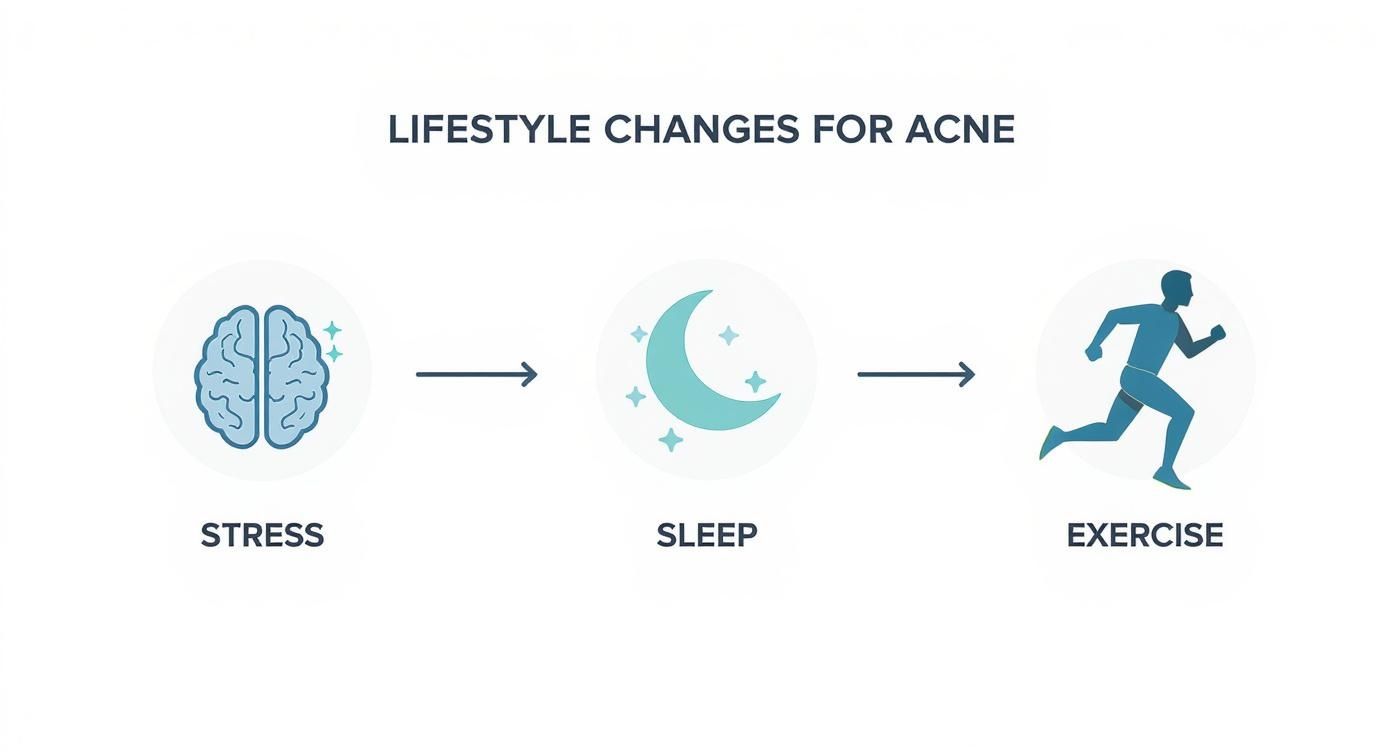
You can see the flow from managing stress to getting better sleep and finding a balanced exercise routine. It's a great reminder that internal calm is truly the foundation for skin clarity.
When to See a Dermatologist for Your Acne
There comes a point where even the most disciplined diet, lifestyle, and skincare routine just can't get you across the finish line. If your hormonal acne is stubborn, painful, or starting to leave scars, that’s a clear signal it’s time to bring in a professional.
Seeing a board-certified dermatologist isn't about giving up; it’s a smart, proactive move toward finally getting the clear skin you deserve. A dermatologist has access to medical-grade treatments that work from the inside out to tackle the hormonal root cause of your breakouts—something over-the-counter products simply can't do. They have the expertise to build a plan that goes way beyond just managing what you see on the surface.
Medical Treatments That Target Hormones
When you sit down with a dermatologist, the conversation will likely shift toward oral medications designed to regulate the specific hormones fueling your acne. For many people with persistent hormonal breakouts, these are the most effective tools in the entire arsenal.
- Spironolactone: This is a daily pill that functions as an androgen blocker. It works by preventing testosterone from over-activating the oil glands in your skin. The result? A major reduction in oil production and fewer of those deep, painful cystic breakouts.
- Oral Contraceptives: Certain types of birth control pills are actually FDA-approved to treat acne. They help by regulating your entire hormonal cycle and lowering the amount of circulating androgens, which are a primary driver of excess oil and inflammation.
In fact, research confirms that combination birth control pills are a first-line treatment for hormonal acne in women, proving very effective at reducing androgen levels and calming the skin. You can learn more about these hormonal therapy findings to dig into the science behind this approach.
A common myth is that you have to exhaust every other option before you "earn" a visit to the dermatologist. The truth is, getting expert help sooner rather than later can save you months of frustration and prevent long-term scarring.
In-Office Procedures for Faster Relief
Beyond prescriptions, dermatologists can also perform in-office procedures that offer more immediate relief. This is a game-changer when you're dealing with a painful cyst that just refuses to shrink. Exploring professional acne treatments can be a fantastic way to supercharge your at-home routine.
One of the most common and effective options is a corticosteroid injection. For this, a dermatologist injects a tiny amount of a diluted cortisone solution directly into a large, inflamed cyst. Within 24-48 hours, you'll notice a dramatic reduction in swelling and pain as the blemish flattens out and heals much faster. It's the go-to solution for those agonizing under-the-skin nodules that can otherwise linger for weeks.
Chemical peels are another incredibly valuable tool. A professional peel uses powerful ingredients like salicylic or glycolic acid to exfoliate the skin far more deeply than any at-home product can. This process helps to thoroughly unclog pores, calm inflammation, and even begin to fade the stubborn post-acne marks left behind.
Having an open conversation with your doctor about these options empowers you to create a truly comprehensive plan for clear skin.
Your Hormonal Acne Questions, Answered
When you're navigating hormonal acne, it's natural to have a million questions. Knowing what to expect—from timelines to supplements—is a huge part of staying motivated and trusting the process. Let’s clear up some of the most common concerns.
So, how long until you actually see a difference? Patience is key here. If you’re consistent with diet and lifestyle changes, you might start to notice some initial improvements in 4-6 weeks. But for the deeper, more lasting changes that come from balancing your hormones, you're really looking at 2-3 full months.
Topical treatments like retinoids need a solid 8-12 weeks of consistent use before you can truly judge how well they're working. And for medical-grade options from your dermatologist, like spironolactone or certain birth control pills, it can take anywhere from 3-6 months to see their full, skin-clearing potential.
Can Certain Supplements Really Help?
Supplements can definitely be a powerful piece of the puzzle, but this is one area where you absolutely need to consult a doctor before starting anything new.
Some of the most talked-about options include:
- Zinc: A go-to for its ability to help dial down inflammation.
- Omega-3 Fatty Acids: Known for their incredible anti-inflammatory benefits throughout the entire body.
- DIM (Diindolylmethane): Often discussed for its potential role in healthy estrogen metabolism.
But trying to self-prescribe can easily backfire. A healthcare professional can look at your specific hormonal picture and guide you toward the right supplements and dosages, making sure they’re both safe and truly beneficial for you.
The secret to success isn't one magic pill. It’s the cumulative effect of all your thoughtful, consistent changes—from your plate to your skincare routine—stacking up over time.
A big worry for many is whether the acne will just come roaring back if they stop treatment. The answer really depends on how you got your skin clear in the first place. If you’ve achieved clear skin by building sustainable diet and lifestyle habits, you're essentially putting long-term management strategies in place.
On the other hand, if you stop a medical treatment like spironolactone, the acne is likely to return unless the root hormonal imbalance has resolved on its own (which can sometimes happen with age). For most people, managing hormonal acne is about long-term maintenance, not a one-and-done cure.
At Face of Jules, we champion a supportive, inside-out approach to getting you clear skin for life. Our specialists create personalized plans that combine advanced in-clinic treatments with targeted at-home care to get to the root of your skin concerns. Book your consultation today and let's start your journey to balanced, beautiful skin.