

Fixing an uneven skin tone isn't about a single magic product; it's a long-term commitment. The real path to a clearer complexion involves a two-pronged attack: consistently protecting your skin while using targeted ingredients to fade existing discoloration. Think of it as playing both offense and defense.
This means making daily broad-spectrum sunscreen non-negotiable, working powerful ingredients like Vitamin C and retinoids into your routine, and regularly exfoliating to slough away those pigmented cells.
What Really Causes Uneven Skin Tone
Before we can craft a solid game plan, we have to understand what’s throwing your skin’s pigment production off balance in the first place. What we call "uneven skin tone" is clinically known as hyperpigmentation. It’s not just one issue but a catch-all term for any area of skin that appears darker than the rest. At its core, this darkening is caused by an overproduction of melanin—the natural pigment that gives our skin, hair, and eyes their color.
This overproduction isn't random. It's actually your skin's built-in defense mechanism. I often tell my clients to think of melanin as their skin's personal bodyguard. When it senses a threat, like harsh UV rays or inflammation from a breakout, it rushes to the scene to create a protective shield. The problem is, sometimes it does its job a little too well, leaving behind patches of discoloration long after the initial threat is gone.
This is an incredibly common struggle, and the numbers back it up. The global market for hyperpigmentation treatments hit a staggering USD 1.34 billion in 2023 and is expected to soar to USD 2.36 billion by 2032. This just goes to show how many of us are looking for a solution. For a deeper dive into the numbers, check out the market data from Precedence Research. It's also worth noting that certain skin types, especially those common in Asian, Latin American, and Middle Eastern populations, are naturally more prone to hyperpigmentation.
The Main Culprits Behind Discoloration
To truly get a handle on uneven skin, you have to play detective and identify your specific trigger. Is it the sun? A ghost of breakouts past? Or something else entirely?
Sun Exposure: This is, without a doubt, the number one cause. UV rays send your melanin-producing cells (called melanocytes) into hyperdrive. This leads to what we commonly call sunspots, age spots, or liver spots—basically, concentrated clusters of melanin that pop up on the areas that see the most sun, like your face, hands, and chest.
Post-Inflammatory Hyperpigmentation (PIH): Ever had a pimple heal, only to leave a stubborn dark mark that sticks around for months? That’s PIH. It can happen after any kind of skin injury or inflammation—acne, a bug bite, a scratch, or even irritation from a skincare product that was too harsh. Your skin's inflammatory response kicks melanin production into high gear as part of the healing process.
Hormonal Changes: Big shifts in hormones, especially estrogen and progesterone, can trigger a specific type of hyperpigmentation called melasma. Often called the "mask of pregnancy," it shows up as symmetrical, blotchy brown patches on the face. It’s not just limited to pregnancy, though; birth control pills and other hormone therapies can also be a trigger.
Here's something crucial I always emphasize: prevention is just as important as treatment. The dark spots you see today could be the result of sun damage that started forming years ago, deep beneath your skin's surface.
Understanding Your Skin's Response
And it’s not just the sun and our hormones we have to worry about. Even the air around us plays a part. Tiny pollution particles from traffic and smog can penetrate the skin, creating oxidative stress. This stress triggers inflammation, which can, in turn, wake up those melanocytes and contribute to dark spots, particularly on the face.
By figuring out if your uneven tone stems from sun damage, old breakouts, or hormonal shifts, you can finally move past generic advice. This knowledge is power. It allows you to select the right ingredients, seek out the most effective treatments, and adopt lifestyle habits that address the real root of the problem. This is how you build a targeted plan that sets the stage for a truly even and luminous complexion.
Your Daily Routine for a Brighter Complexion
Building a consistent skincare routine is where you truly gain control over uneven skin tone. This is your first line of defense against new discoloration and the most powerful tool for correcting the spots you already have. The strategy is actually quite simple: protect during the day, and repair at night.
Think of your morning routine as putting up a shield. At night, the focus shifts to cellular renewal and pigment correction, using key ingredients to gently resurface the skin and fade discoloration while you sleep.
This two-pronged attack ensures you’re not just chasing spots, but you're actively preventing their root causes from taking hold in the first place. Sticking with it is far more important than having a complicated, 10-step process.
This infographic breaks down the exact triggers your new routine will work to counteract.
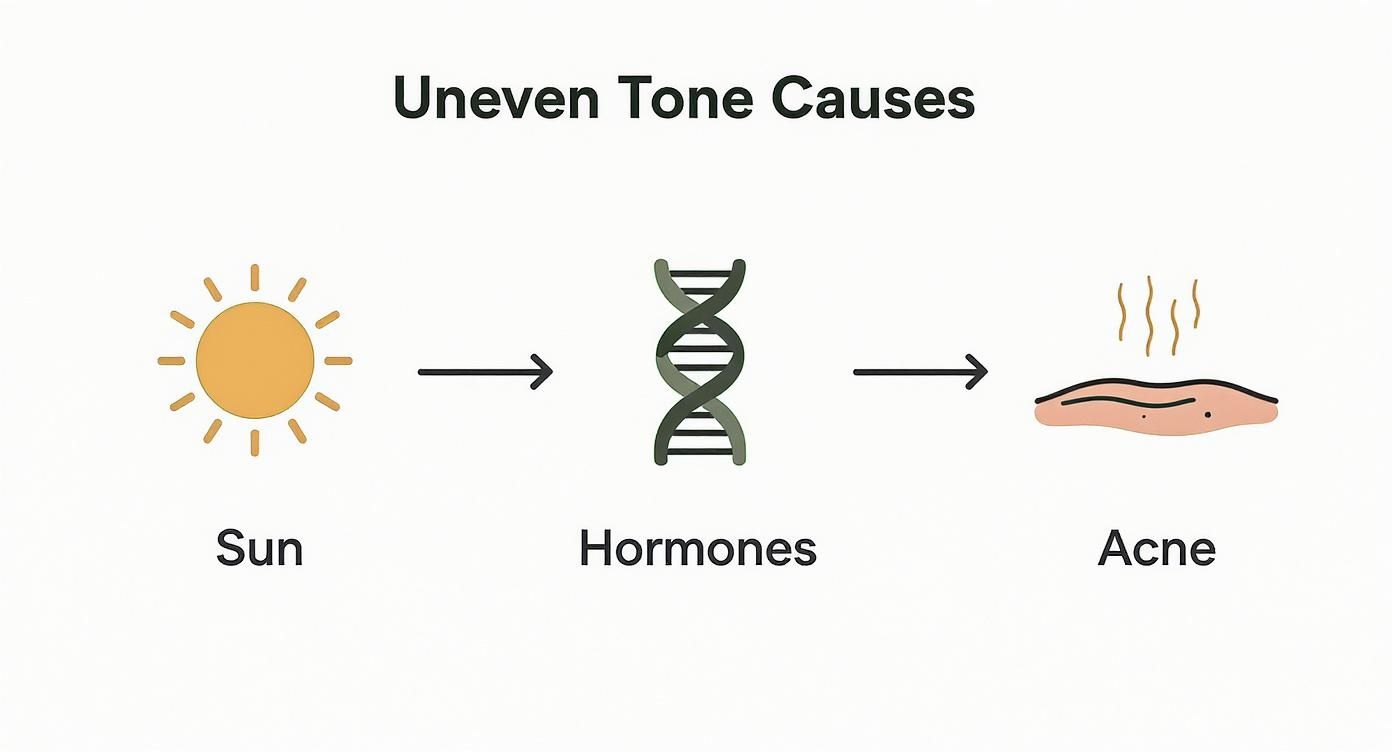
As you can see, the main culprits are the sun, hormonal shifts, and inflammation (especially from acne). This is exactly why we need both protective and corrective steps in our daily care.
Your Morning Shield Against Damage
Your morning skincare routine has one primary job: to protect your skin from the daily environmental assault that leads to discoloration. This means defending against UV rays and the free radical damage that comes from things like pollution.
First, after cleansing, get a potent Vitamin C serum on your skin. This is a powerhouse antioxidant that neutralizes free radicals before they can damage your cells and trigger melanin production. But it does more than just play defense; it also helps block the very enzyme responsible for creating dark spots, actively brightening your complexion over time. You can learn more about why Vitamin C is essential in our detailed guide.
Next up, the non-negotiable: sunscreen. Unprotected sun exposure is the number one cause of hyperpigmentation, period. Using a broad-spectrum sunscreen with an SPF of at least 30 is mandatory—every single day, rain or shine. This is what stops new spots from forming and keeps the old ones from getting darker.
A huge mistake I see people make is relying on the SPF in their makeup. It's simply not enough. You need to apply a separate, dedicated sunscreen product and apply it generously to get the actual protection promised on the bottle.
Your Evening Repair and Correct Mission
Nighttime is when your skin’s natural repair cycle kicks into high gear. Your evening routine should be all about supporting this process with active ingredients that speed up cell turnover and break down excess pigment.
This is where ingredients like retinoids, niacinamide, and alpha-hydroxy acids (AHAs) shine. They work to slough off those dead, pigmented cells on the surface while also helping to regulate melanin production deeper within the skin. The trick is to introduce them slowly and carefully to avoid irritation, which can ironically lead to more pigmentation.
- If you have sensitive skin: Start by layering niacinamide and a gentle retinoid. Apply your niacinamide serum first to calm the skin and strengthen its barrier. Let it sink in for a few minutes, then apply a pea-sized amount of a low-strength retinoid.
- If your skin is more resilient: You can try alternating nights between a retinoid and an AHA exfoliant, like glycolic acid. This gives you a powerful one-two punch against discoloration. Just never use them in the same routine, as that's a recipe for over-exfoliation.
It's clear people are catching on to how effective these ingredients are. The market for uneven skin tone solutions is projected to explode from USD 6.2 billion in 2025 to an incredible USD 15.1 billion by 2035. This boom is all thanks to a better understanding of what actually works.
Key Ingredients for Evening Out Skin Tone
To help you choose the right active ingredients for your skin, here's a quick look at the heavy hitters I recommend most often.
| Ingredient | Primary Function | Best For |
|---|---|---|
| Retinoids (Retinol) | Speeds up cell turnover, boosts collagen, and fades dark spots. | Most skin types, but start low and slow, especially if sensitive. |
| Vitamin C | Potent antioxidant that protects from free radical damage and inhibits melanin production. | All skin types, particularly for daytime protection and overall brightening. |
| Niacinamide | Reduces inflammation, strengthens the skin barrier, and blocks pigment transfer. | All skin types, including sensitive and acne-prone skin. |
| AHAs (Glycolic Acid) | Exfoliates the surface to remove pigmented dead skin cells. | Normal, combination, and oily skin. Use with caution on sensitive skin. |
| Azelaic Acid | Calms inflammation and inhibits an enzyme involved in melanin production. | Acne-prone and rosacea-prone skin. A gentler alternative. |
Choosing an ingredient that's well-suited to your skin's tolerance level is the key to seeing results without causing irritation.
A Practical Evening Routine for Beginners
Knowing how to layer these ingredients is just as important as choosing the right ones. The golden rule is to apply products from the thinnest to thickest consistency.
Here's a simple, effective evening routine to get you started:
- Cleanse: Always begin with a gentle cleanser to wash away makeup, sunscreen, and the day's grime.
- Treat with Niacinamide: Apply a few drops of a niacinamide serum. It’s incredibly well-tolerated and helps with redness and inflammation while it fades discoloration.
- Moisturize: Finish with a good hydrator to lock everything in and keep your skin barrier happy.
After a few weeks, you can consider adding a retinoid on the nights you aren't using niacinamide. To seriously target discoloration, you can also bring in a specialized product like Skinceuticals Discoloration Defense, a brightening serum. These targeted treatments are formulated with potent ingredients to get the job done.
Most importantly, be patient. It can take at least 30-60 days of consistent use to really start seeing a visible difference in your skin tone. Don't get discouraged if you don't see changes overnight
Taking Your Results to the Next Level with Professional Treatments
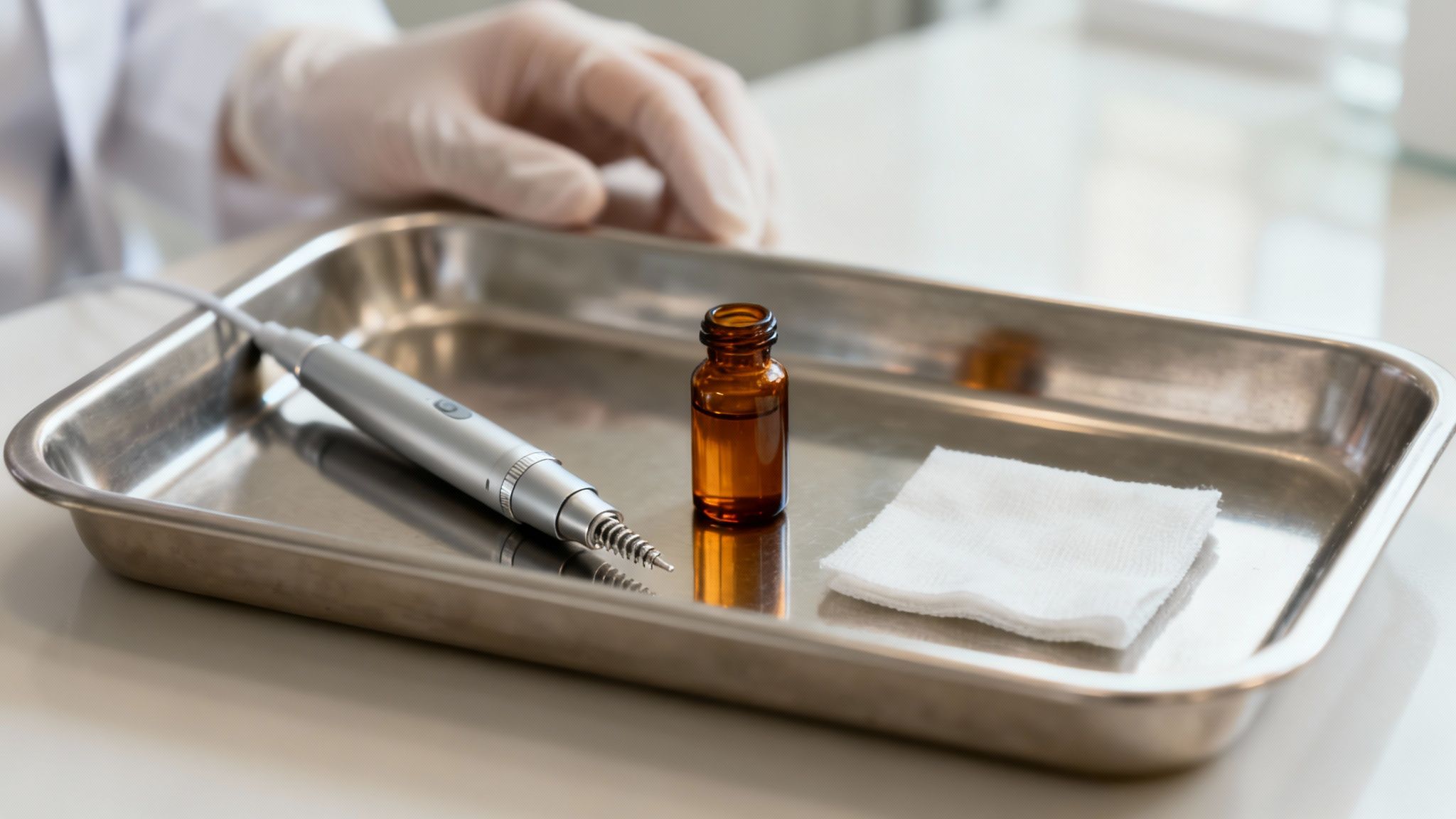
There comes a point when even the most dedicated at-home skincare routine hits a wall. You're doing everything right—using the best ingredients, applying sunscreen daily—but those stubborn dark spots just refuse to fade. This is where professional treatments come in. Think of them as the next chapter in your skincare journey, designed to work on a much deeper level for more dramatic, faster results.
Here at Face of Jules, we see professional treatments as a way to supercharge your progress. We can go beyond the surface to target pigmentation right at its source, breaking up melanin clusters and triggering cellular renewal in a way topical products simply can’t.
The science backs this up. Clinical studies show that in-office treatments can create noticeable improvements in just a few weeks. One piece of research looking at post-inflammatory hyperpigmentation (PIH) and sun spots saw major changes as early as week two. Considering that PIH affects up to 65% of Black individuals and 48% of Hispanic individuals, finding solutions that truly work is critical. You can read the full research on these treatment outcomes to dig into the data yourself.
Unveiling Brighter Skin with Chemical Peels
The term "chemical peel" can sound intimidating, but today's peels are far more sophisticated and controlled than the aggressive procedures of the past. The process involves applying a specialized acid solution that gently dissolves the "glue" holding dead, discolored cells to your skin's surface.
This controlled exfoliation encourages the dull outer layer to shed, making way for the brighter, more even-toned skin hiding underneath. It’s essentially a powerful reset for your complexion.
Not all peels are created equal, and the right one for you depends entirely on your skin's history and specific needs.
- Superficial Peels: These typically use alpha-hydroxy acids (AHAs) like glycolic or lactic acid. They’re fantastic for tackling mild discoloration and have little to no downtime, making them a perfect first step into professional treatments.
- Medium-Depth Peels: Using acids like Trichloroacetic Acid (TCA), these peels penetrate more deeply to work on stubborn sun damage and more significant hyperpigmentation. You can expect a few days of redness and light peeling as your fresh skin emerges.
At Face of Jules, we don’t do one-size-fits-all peels. We carefully assess your specific type of hyperpigmentation—whether it’s from sun damage, melasma, or old breakouts—to customize the perfect acid blend and strength for your skin.
Rebuilding Your Complexion with Microneedling
Microneedling, often called collagen induction therapy, tackles uneven skin tone from a completely different angle. Instead of removing layers of skin, it harnesses your body’s own incredible healing powers to regenerate the skin from the inside out.
Using a device with sterile, ultra-fine needles, we create thousands of tiny micro-channels in the skin. Your body responds to these controlled injuries by kicking collagen and elastin production into high gear. This process not only helps break apart pigment clusters but also rebuilds the skin with a smoother, more uniform texture.
One of the biggest perks of microneedling is how it boosts your at-home routine. Those tiny channels act as expressways, allowing your corrective serums to penetrate far deeper and work more effectively. It’s why we almost always pair a microneedling session with a potent brightening serum to maximize the results.
Choosing the Right Path for Your Skin
So, which is better: a chemical peel or microneedling? There’s no simple answer, because both are fantastic at treating hyperpigmentation. The best choice really comes down to the root cause of your discoloration and what you want to achieve.
| Treatment Factor | Chemical Peels | Microneedling |
|---|---|---|
| Primary Goal | Best for surface-level discoloration, sun spots, and melasma. | Ideal for post-inflammatory hyperpigmentation (PIH) and uneven texture from scarring. |
| Mechanism | Exfoliates and removes damaged outer layers of skin. | Stimulates collagen and new skin growth from within. |
| Typical Downtime | Varies from none to several days of peeling, depending on peel depth. | Usually 1-3 days of mild redness, similar to a sunburn. |
| Best Candidate | Individuals with sun damage or hormonal pigmentation. | Those with acne scarring, PIH, and textural concerns. |
Often, the most powerful strategy involves a combination of treatments tailored just for you. Our experts can design a long-term plan that might alternate between different procedures to tackle your concerns from all sides. To get an idea of what a personalized plan can do, explore our specialized pigmentation treatments at Face of Jules. A professional consultation is the first real step toward getting the clear, radiant complexion you’ve been working for.
How Your Lifestyle Impacts Skin Clarity

While the right serums and treatments are absolutely essential, they’re only one part of the puzzle. The path to a truly even, radiant complexion goes way beyond your bathroom counter. The truth is, your daily habits—what you eat, how you handle stress, and how much you sleep—create the internal environment that dictates your skin’s health and appearance.
Think of it like this: topical products work from the outside in, correcting surface-level issues and protecting your skin. A healthy lifestyle, on the other hand, works from the inside out. It builds stronger, more resilient skin that’s less likely to develop discoloration in the first place. When you combine both approaches, you get a powerful synergy that delivers clarity that actually lasts.
Fuel Your Skin with an Antioxidant-Rich Diet
You’ve heard it before, but it's true: you are what you eat. The food you put into your body directly impacts your skin's ability to defend itself against the very things that cause hyperpigmentation, like UV rays and pollution. An antioxidant-rich diet is your secret weapon for building up those natural defenses from within.
Antioxidants are amazing compounds that neutralize damaging molecules called free radicals, which are notorious for causing cellular damage and triggering inflammation. For skin health, two of the most important antioxidants are vitamins C and E.
- Vitamin C: This is a brightening powerhouse, found in things like citrus fruits, bell peppers, and leafy greens. It doesn't just help protect against sun damage; it also directly gets involved in slowing down the enzyme that produces excess melanin.
- Vitamin E: Found in nuts, seeds, and avocados, Vitamin E is Vitamin C's best partner. It works to strengthen cell membranes and protect against oxidative stress.
Loading up on these foods helps arm your skin with the tools it needs to fight back against the daily triggers that lead to an uneven tone.
A key takeaway I always share with my clients is that your diet can either fuel inflammation or fight it. What you choose to eat has a direct and measurable effect on your skin's clarity and overall health.
Manage Stress to Calm Your Complexion
Ever notice how a really stressful week often leads to a breakout or a flare-up? That’s not just in your head. When you’re stressed, your body pumps out more cortisol, a hormone that can send your entire system—skin included—into a tailspin.
This cortisol spike triggers an inflammatory response. For your skin, this can make conditions like acne and rosacea worse, and critically, it can stimulate your melanocytes—the cells that produce pigment. This means that being chronically stressed can actually make your hyperpigmentation darker and much more stubborn.
Finding healthy ways to manage that stress isn't just self-care; it's a non-negotiable skincare step.
- Mindful Movement: You don't have to run a marathon. Gentle practices like yoga or even a brisk daily walk can significantly lower cortisol levels.
- Breathwork: Taking just a few minutes for deep, intentional breathing can instantly calm your nervous system.
- Digital Detox: Seriously. Set aside time away from screens to give your mind a break and reduce that constant agitation.
The Critical Role of Sleep and Hydration
Your skin does its most important repair work while you’re asleep. During these crucial hours, your body is busy with cellular regeneration, mending daytime damage and producing new collagen. Skimping on sleep cuts this vital process short, which leads to a dull complexion and makes it harder for your skin to heal from any inflammation.
To give your skin the full restorative cycle it needs, aim for 7-9 hours of quality sleep every night.
Finally, let’s talk about water. Proper hydration is completely non-negotiable. Dehydrated skin can't function at its best, which often makes it look blotchy and uneven. Water is essential for flushing out toxins and delivering nutrients to your cells. Drinking plenty of it is one of the simplest, most effective things you can do to support a glowing, even skin tone.
It's also worth noting that some habits, like a high sugar intake, can actively work against your goals. To really understand this connection, you can explore our guide on how sugar might be the cause of your skin problems and see how smarter choices can lead to a clearer you.
Common Mistakes and Smarter Product Choices
Navigating the skincare aisle can feel like walking through a minefield, especially when you’re trying to correct an uneven skin tone. There are so many products promising the moon, and it's incredibly easy to make a wrong turn that sets you back or, worse, irritates your skin.
From my experience, real, lasting progress comes from understanding what not to do just as much as what you should be doing. Many well-meaning efforts backfire because they accidentally trigger more inflammation—the very thing that often causes pigmentation in the first place. Let’s sidestep those common pitfalls so your routine can actually work for you.
The Dangers of Over-Exfoliating
When you’re staring at discoloration in the mirror, the urge to just scrub it all away can be overwhelming. I get it. While exfoliation is a key part of the process, there’s a very fine line between revealing fresh skin and creating a bigger problem. Aggressive, frequent exfoliation is one of the biggest mistakes I see.
When you overdo it, you’re literally stripping away your skin's natural protective oils and compromising its barrier. This leaves it raw, vulnerable, and inflamed. And what does your skin do when it’s inflamed? It often goes into defense mode and ramps up melanin production, which can lead to even more hyperpigmentation. It's a frustrating cycle.
A tell-tale sign of over-exfoliation is a tight, shiny, or overly sensitive feeling. If your go-to products suddenly start to sting when you apply them, that’s a major red flag. It's your skin telling you to back off and give it a break.
Instead of reaching for harsh daily scrubs, a more controlled approach works wonders:
- Try Gentle Chemical Exfoliants: Look for products with alpha-hydroxy acids (AHAs) like glycolic or lactic acid. Start by using them just 2-3 times per week.
- Listen to Your Skin: If your skin feels sensitive one day, skip the exfoliation. Rest and hydration will do you more good.
Mixing Active Ingredients Incorrectly
Today's skincare is packed with powerful "active" ingredients—think retinoids, Vitamin C, and AHAs. Each one is a fantastic tool for tackling an uneven complexion, but layering them the wrong way can be a recipe for disaster.
Some combinations can cancel each other out, while others can cause some serious irritation.
A classic mistake is using a high-strength retinoid and a potent glycolic acid on the same night. Both ingredients are designed to speed up cell turnover. When used together, they can easily overwhelm your skin, leading to peeling, redness, and a damaged barrier.
The smarter strategy is to alternate. Use your retinoid one night and your AHA exfoliant the next. This gives you the full benefit of both ingredients without the fallout. As a rule of thumb, I always recommend using Vitamin C serums in the morning to take advantage of their antioxidant power for daytime protection.
At-Home Care vs. Professional Treatments
It’s so important to have realistic expectations about what your at-home routine can achieve and to know when it’s time to call in a professional. Both paths are incredibly valuable, but they’re designed to do different things.
Deciding between them often comes down to the severity of your pigmentation, your budget, and how quickly you want to see changes.
| Factor | At-Home Skincare Routine | Professional Treatments (e.g., Chemical Peels, Microneedling) |
|---|---|---|
| Intensity & Speed | Gradual improvement over weeks and months. | Faster, more dramatic results, often visible after just a few sessions. |
| Target Area | Works on the surface layer of the skin to manage mild to moderate discoloration. | Penetrates deeper to break up stubborn pigmentation and address underlying texture issues. |
| Cost | Lower initial investment but ongoing costs for product refills. | Higher upfront cost per session but can be more cost-effective for significant concerns. |
| Best For | Maintaining skin health, preventing new spots, and fading minor discoloration. | Stubborn melasma, deep sun damage, and post-inflammatory hyperpigmentation. |
Think of your at-home routine as your daily foundation—it’s for maintenance, prevention, and tackling lighter concerns. Professional treatments are the heavy lifters you bring in to accelerate results and deal with the stubborn issues that topical products just can't reach.
Choosing Products That Actually Work
Now that you know what to avoid, you can focus on building a simple, effective arsenal of products with proven ingredients. You don’t need a complicated 12-step routine to see a difference. You just need a few key players that are formulated to deliver results.
Here’s what I recommend prioritizing:
- A Protective Antioxidant Serum: A daily Vitamin C serum is non-negotiable. It helps shield your skin from the environmental triggers that cause dark spots while also helping to inhibit the enzyme that creates excess melanin.
- A Gentle Exfoliating Cleanser or Toner: A few times a week, use a product with AHAs or gentle enzymes to slough off those pigmented surface cells. This simple step helps your other brightening ingredients penetrate much more effectively.
- A Targeted Corrective Serum: This is your powerhouse product. Look for ingredients like niacinamide, retinoids, or azelaic acid. They work on a cellular level to regulate pigment and speed up turnover to fade existing spots.
- A Broad-Spectrum SPF 30+ Sunscreen: And finally, none of this matters without daily sun protection. Sunscreen is your insurance policy—it prevents new spots from ever forming and stops the ones you have from getting darker. Don't skip it
Your Questions About Uneven Skin Tone, Answered
Let's dive into some of the questions I hear most often from clients struggling with uneven skin tone. Getting clear, honest answers is the first step toward feeling confident in your skincare plan.
How Long Does It Realistically Take To See A Difference?
This is always the first question, and I get it—you want to see results. The honest answer? It's a marathon, not a sprint.
While you might notice some initial brightness from professional treatments within a few weeks, a solid at-home routine needs time to work its magic. You should give it at least 30 to 60 days before you expect to see noticeable changes.
Think about it this way: the discoloration you see didn't appear overnight. It likely developed over months, or even years, of sun exposure and inflammation. Reversing that damage requires consistency. You have to stick with your products, be religious about sunscreen, and let your skin's natural cell turnover cycle do its job. For major improvements, it can easily take up to four months, so please don't get discouraged if you're not seeing dramatic changes right away. Patience pays off.
Do Natural Home Remedies Actually Work?
I see so much about this online—lemon juice, apple cider vinegar, you name it. But as a professional, I have to advise you to steer clear. These DIY concoctions are often highly acidic and completely unpredictable. More often than not, they just lead to irritation, a damaged skin barrier, and can even make hyperpigmentation worse.
Instead of raiding your kitchen, you'll get much safer and more effective results from professionally formulated products. Look for ingredients that are actually proven to work, like Vitamin C, niacinamide, or azelaic acid. They're created to be stable, effective, and, most importantly, safe for your skin. For anyone curious about the different types of ingredients that can promote skin health, learning about the science of hypochlorous acid provides a fascinating look into a compound with a variety of uses in skincare.
The biggest risk with unproven home remedies isn't just that they won't work—it's that they can actively cause more damage. Sticking to scientifically validated ingredients is always the smarter choice for your skin's long-term health.
Can I Treat Uneven Skin Tone On My Body Too?
Absolutely! Discoloration doesn't just happen on the face. I regularly see clients concerned about hyperpigmentation on their chest, back, and arms, usually from sun damage or old breakouts (what we call post-inflammatory hyperpigmentation). The great news is that the same rules apply.
Here’s how you can tackle discoloration on your body:
- Sunscreen is non-negotiable: Your chest and arms get a ton of sun, even when you're just driving. A broad-spectrum SPF 30+ on these areas every single day is essential to keep spots from getting darker.
- Bring in an exfoliating body wash: Find a body wash with a gentle chemical exfoliant like glycolic or salicylic acid. This is an easy way to help lift away those dull, pigmented surface cells while you shower.
- Use a targeted body lotion: Don't be afraid to use serums or lotions with ingredients like niacinamide or even retinoids on the body. They work just as well on stubborn spots there—just be sure to follow up with a good moisturizer, as body skin can get dry, too.
By extending your skincare routine from head to toe, you can achieve that even, glowing look all over.
Tired of the trial and error? If you're ready for a professional plan that's actually designed for your skin, the team at Face of Jules is here to help. We create customized treatments that deliver real, lasting results.
Book your consultation today and take the first step toward your clearest complexion.