

If you want to stop getting breakouts, you first have to understand what’s causing them in the first place. This isn't just about surface-level stuff like not washing your face enough. Acne is a surprisingly complex issue, a perfect storm of what’s happening inside your body and the external factors you’re exposed to every day.
Why Breakouts Happen and How to Stop Them
Let's get down to the basics. At its core, a breakout is just a clogged pore. But what exactly is clogging it?
It’s usually a gnarly combination of two things:
- Excess Sebum: Your skin produces a natural oil called sebum to stay moisturized and protected. But sometimes, things like hormonal shifts, stress, or just your genetics can kick those oil glands into high gear.
- Dead Skin Cells: Your skin is constantly renewing itself, which means it’s always shedding old, dead cells. When this process doesn't go smoothly, those cells hang around and mix with that extra oil, forming a sticky plug that jams up the pore.
Once a pore is clogged, it becomes the ideal breeding ground for the C. acnes bacteria that live on everyone's skin. This sudden bacterial party alerts your immune system, which rushes to the scene, causing the redness, swelling, and inflammation we all know as a pimple.
The Role of Genetics and Environment
While that’s the basic science for everyone, your personal tendency to break out is unique. If your parents struggled with acne, you're probably more likely to deal with it, too. Genetics can dictate everything from how much oil your skin produces to how efficiently it sheds dead skin cells.
But your environment plays a massive role as well. Something as simple as the water you wash your face with can be a trigger. Did you know that the mineral content in tap water can wreak havoc on your skin? We get into all the details of how hard water can cause acne in our full guide on the topic.
To truly get a handle on breakouts, you have to look at the full picture. This means managing the things that trigger inflammation throughout your body. Getting to the bottom of this by addressing internal inflammation can be an absolute game-changer for so many people.
Acne is way more common than most people realize. It’s not just for teenagers—it’s a global skin condition that affects millions of adults who are all trying to figure out how to prevent breakouts for good.
If you’re struggling, you are far from alone. Acne impacts over 20.5% of the global population over the age of 16, and that number jumps to 28.3% for people between 16 and 24. These aren't just random numbers; they show that this is a widespread issue driven by a mix of biology and lifestyle. For a deeper dive into these stats, you can explore the 2025 acne prevalence update from MDacne.com.
Build Your Daily Acne Prevention Skincare Routine
Let’s be honest, the most powerful tool you have against breakouts is a consistent daily skincare routine. But this isn't about some complicated, 10-step ritual you’ll abandon in a week. Real, lasting acne prevention comes down to a few core pillars, practiced consistently, morning and night.
Think of it as your skin’s defense system. The goal isn't to punish your skin with harsh products but to gently manage oil, keep pores clear, and calm inflammation. A strategic, supportive approach always wins out over an aggressive one.
Before we get into the products, it helps to understand what we're up against. Most pimples follow a pretty simple path: excess oil leads to a clogged pore, which then becomes a playground for bacteria and inflammation.

Knowing this progression makes it clear why each part of your routine—cleansing, treating, and moisturizing—is designed to stop this cycle dead in its tracks.
The Morning Regimen: Shield Your Skin
Your morning routine is all about protection. You're gearing your skin up to face a day of environmental aggressors like pollution, UV rays, and even its own oil production.
- Start with a Gentle Cleanse: Kick things off with a mild, pH-balanced, and sulfate-free cleanser. You’re just rinsing away any oil and gunk that built up overnight, not scrubbing your face raw. Over-washing is a classic mistake that strips the skin’s protective barrier, which can backfire and actually trigger more oil.
- Add a Targeted Treatment (Optional): If you're fighting active inflammation or lingering dark spots, a lightweight antioxidant serum can be a game-changer. Vitamin C is a great choice here—it helps brighten the skin and shield it from free radical damage throughout the day.
- Use a Lightweight Moisturizer: And yes, even oily skin needs moisture. When skin gets dehydrated, its panic response is to pump out even more sebum. A non-comedogenic (meaning it won't clog your pores) gel or lotion-based moisturizer is your best friend for keeping things hydrated and balanced.
- Never, Ever Skip Sunscreen: This is non-negotiable. Sun exposure fuels inflammation, makes existing breakouts angrier, and leads to post-inflammatory hyperpigmentation—those stubborn red or brown marks that stick around long after a pimple is gone. A broad-spectrum sunscreen with at least SPF 30 is an absolute must, every single day.
The Evening Regimen: Repair and Renew
Nighttime is when your skin switches into repair mode. Your evening routine should focus on getting the day’s grime off completely and delivering the active ingredients that will work their magic while you sleep.
- Cleanse Thoroughly: If you wear makeup or heavy sunscreen, a double cleanse is the way to go. Start with an oil-based cleanser to melt everything down, then follow up with your gentle water-based cleanser to whisk it all away.
- Apply Your Active Treatments: Now it's time for the heavy hitters. This is where you bring in ingredients designed to get deep into your pores. Salicylic acid (a BHA) is fantastic because it’s oil-soluble and can dissolve the gunk that causes clogs. Benzoyl peroxide is another hero ingredient for its ability to kill acne-causing bacteria. Just remember to start slow, using these only a few times a week at first to let your skin adjust.
- Finish with Moisturizer: Always follow your treatment with your non-comedogenic moisturizer. This helps counteract any potential dryness from the active ingredients and supports your skin's natural healing process overnight.
Now, choosing the right active ingredients can feel overwhelming. To make it easier, here’s a quick rundown of the most effective over-the-counter options.
Your Go-To Ingredients for Preventing Breakouts
| Ingredient | What It Does | Best For | How to Use |
|---|---|---|---|
| Salicylic Acid (BHA) | Exfoliates inside the pore lining to dissolve oil, dead skin, and debris. | Blackheads, whiteheads, and general congestion. | In cleansers, toners, or leave-on treatments 2-4 times per week. |
| Benzoyl Peroxide | Kills C. acnes bacteria, the primary bacteria responsible for inflamed pimples. | Inflammatory acne (pustules, papules, and cysts). | As a spot treatment or in a cleanser. Start with a low percentage (2.5%-5%). |
| Niacinamide | Regulates oil production, reduces redness and inflammation, and strengthens the skin barrier. | Oily skin, redness, and post-acne marks. | In serums or moisturizers. Can be used daily, morning or night. |
| Retinoids (Adapalene) | Increases skin cell turnover to prevent pores from clogging and reduces inflammation. | All types of acne, including stubborn blackheads and inflammatory spots. | As a leave-on gel or cream at night. Start with a pea-sized amount 2-3 times per week. |
Picking one or two of these that best match your acne type is a great starting point for your evening treatment step.
Your skin doesn't need a dozen products to be clear. The real secret is a simple, consistent routine built on the right foundations: a gentle cleanser, a non-comedogenic moisturizer, and daily sunscreen. That’s the most effective strategy for preventing breakouts for good.
Find The Right Products For Your Skin Type
Using products that aren't a good fit for your skin can be like pouring fuel on a fire, sometimes making your breakouts even worse. The absolute first step in building a routine that actually works is figuring out if your skin is oily, dry, combination, or sensitive. This one piece of information changes everything.
For example, if you have oily, acne-prone skin, you'll probably want a lightweight gel moisturizer to avoid clogging pores. But someone with dry skin who also gets breakouts needs something totally different—maybe a nourishing cream that hydrates deeply without causing more congestion. The needs are miles apart, and using the wrong product can either clog your pores or strip your skin's protective barrier, leading to even more inflammation.
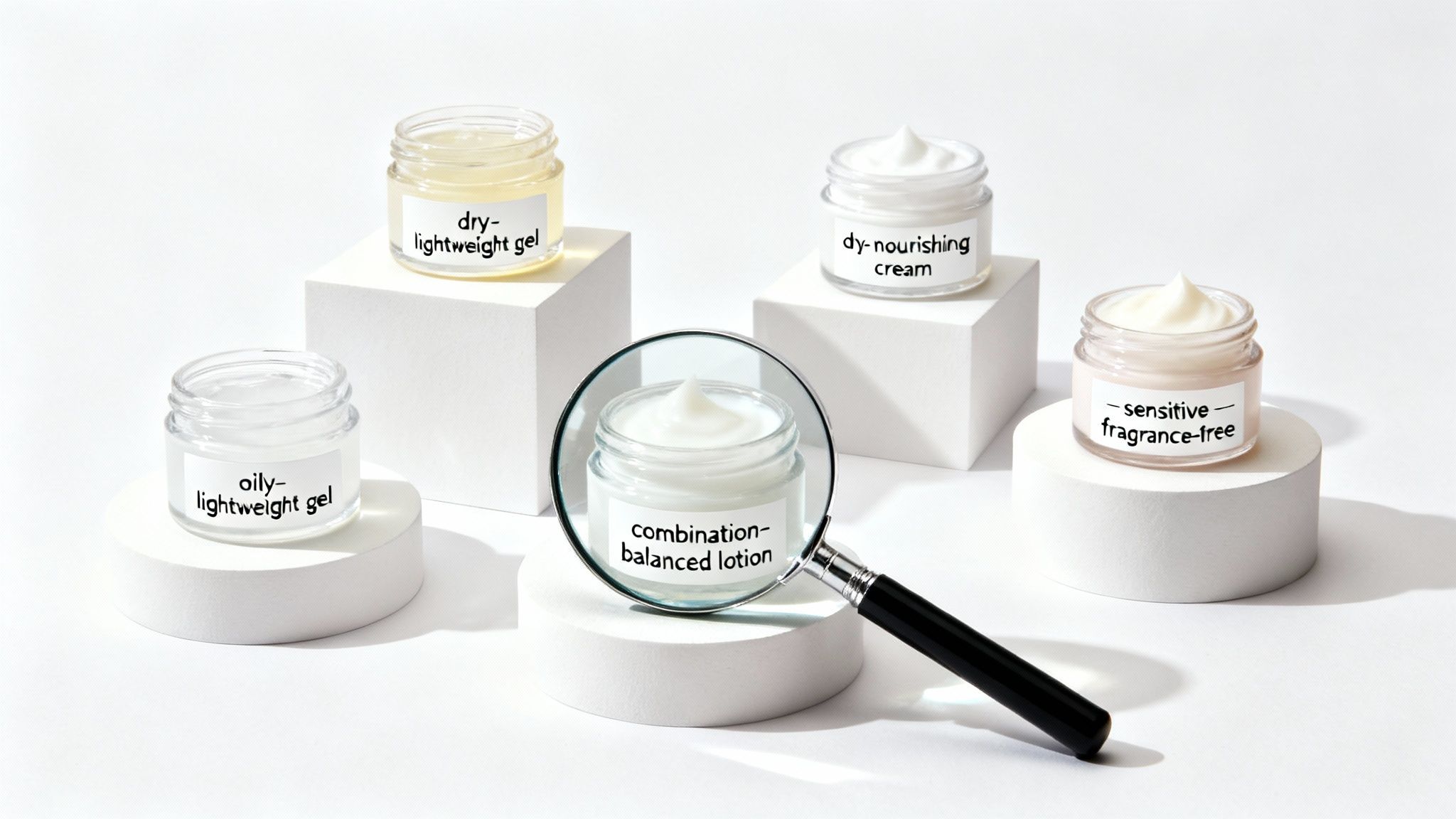
This is all about making your skincare work for you, not against you.
Become A Label Detective
That ingredients list on the back of the bottle? It's your new best friend. Learning to spot key terms will empower you to make smarter choices and steer clear of common triggers.
- Look for "Non-Comedogenic": This should be your baseline. It simply means the product was formulated in a way that’s less likely to clog pores. It’s not a 100% guarantee, but it’s an excellent starting point for anyone dealing with acne.
- Identify Your Actives: Get to know the ingredients that actually fight acne, like salicylic acid or benzoyl peroxide. When you're just starting out, it's smart to introduce only one active ingredient at a time to see how your skin reacts. Some people also find that certain natural remedies like witch hazel for acne can help with its antibacterial properties.
- Spot Potential Irritants: Keep an eye out for fragrance (often listed as "parfum"), certain essential oils, and denatured alcohol. For many people, these can be sensitizing and lead to redness and irritation that only makes breakouts angrier.
It's also really helpful to understand the differences between similar-sounding ingredients. For instance, you’ll often see willow bark extract compared to salicylic acid; our guide on https://jules.mockupdomain.com/willow-bark-vs-salicylic-acid-the-trut-about-natural-skincare-ingredients/ breaks down the real science behind these two.
Always, always patch-test a new product before slathering it all over your face. Just apply a small amount to a discreet spot, like behind your ear or on your inner arm, for a few days to see if a reaction pops up. This simple habit can save you from a major breakout or allergic reaction.
Match Products To Your Skin's Needs
Once you have a handle on your skin type and what to look for on a label, you can start piecing together a targeted routine.
Someone with very oily skin might do great with a foaming cleanser containing salicylic acid, followed by a niacinamide serum and an oil-free gel moisturizer. That combination helps manage oil production, calm inflammation, and keep pores clear without any heavy, suffocating ingredients.
On the flip side, a person with dry, sensitive, and acne-prone skin needs a totally different game plan. Their perfect routine might look like a creamy, non-foaming cleanser, a hydrating hyaluronic acid serum, and a ceramide-rich moisturizer to support their skin barrier. Their acne treatment might be a gentle leave-on product they only use a few nights a week.
It’s always about finding balance—not launching an all-out attack on your skin.
Lifestyle Habits That Actually Impact Your Skin
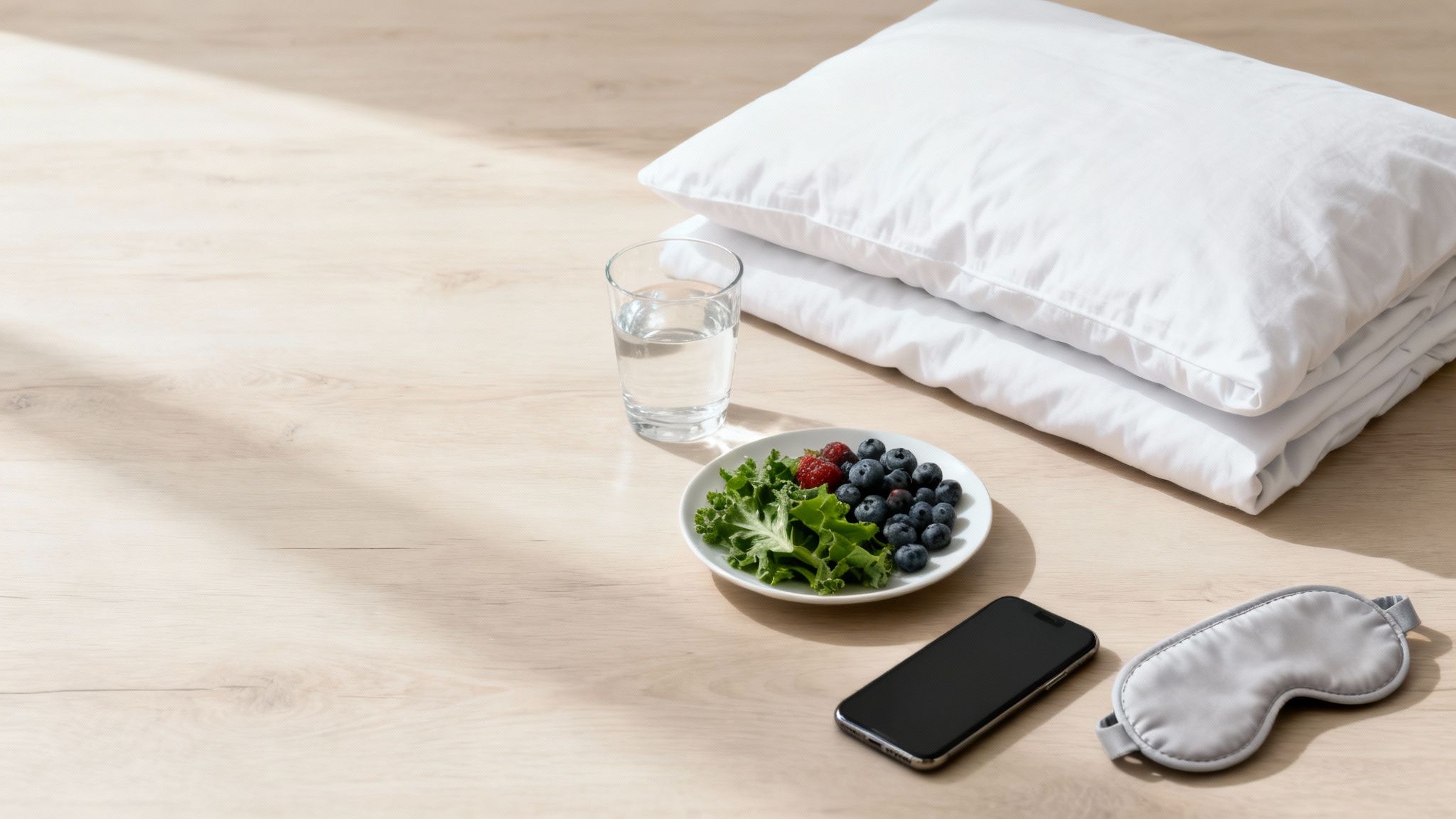
What you do when you’re not standing over the bathroom sink matters—a lot. Your skincare routine is essential, but if your daily habits are working against it, you're constantly fighting an uphill battle. I’ve seen it time and again: your skin is often a direct reflection of your overall wellness.
This is why understanding how to prevent acne breakouts involves looking beyond just products and considering the full picture of your lifestyle. It’s about creating an environment, both internally and externally, where clear skin can truly thrive.
The connection between our modern lives and skin health is becoming impossible to ignore. A recent study on young women (ages 15-49) showed that between 1990 and 2021, new acne cases jumped by 34%, and the number of people dealing with it rose by 38%. This isn't a coincidence; it's linked to modern diet, urban living, and environmental stress.
The Diet and Acne Connection
The old saying "you are what you eat" really holds some weight when it comes to your skin. While everyone's triggers are different, certain food groups are well-known for fanning the flames of inflammation and sending oil production into overdrive.
Two of the biggest culprits are:
- High-Glycemic Foods: Think sugary drinks, white bread, and processed snacks. These foods spike your blood sugar fast, setting off a hormonal chain reaction that increases inflammation and sebum. It's the perfect storm for a breakout.
- Dairy: For some of us, the hormones naturally present in milk can kick oil glands into high gear, leading to clogged pores. If you suspect dairy is an issue, try cutting it out for a few weeks and just observe how your skin responds.
This isn't about starting a crazy restrictive diet. It’s about making mindful swaps. Choosing oatmeal over a sugary cereal or grabbing water instead of a soda can make a huge difference over time.
Managing the Stress-Acne Cycle
Ever noticed a massive pimple erupting right before a big meeting or exam? That’s the stress-acne cycle in real-time. When you're stressed, your body pumps out cortisol, a hormone that basically tells your skin's glands to produce more oil.
Breaking this cycle is so important. You can't eliminate all stress—that’s just life—but finding healthy ways to manage it can calm your skin down significantly.
Regular exercise isn't just for your body; it's one of the best things you can do for your skin. It boosts circulation, which delivers oxygen and nutrients to your skin cells, and it's a powerful way to lower those cortisol levels. A brisk walk or a quick yoga session can be a form of skincare.
Overlooked Habits That Sabotage Clear Skin
Sometimes, the simplest habits make the biggest impact. You might be unknowingly contributing to breakouts through small, everyday actions. For a deeper dive, check out our guide on daily habits that are worsening your acne breakouts.
Here are a few game-changers to be aware of:
- Your Pillowcase: It's a nightly collection site for oil, dead skin cells, and bacteria. I always recommend changing it at least twice a week to give your face a clean surface to rest on.
- Your Phone Screen: Just think about it: you touch your phone all day, and then you press it right against your face. Wiping it down daily with an antibacterial wipe is a non-negotiable for preventing the transfer of grime to your cheeks and jawline.
- Getting Enough Sleep: Your body repairs itself while you sleep, and that includes your skin. Skimping on sleep raises cortisol and weakens your skin's barrier, leaving you wide open to breakouts. Aiming for 7-9 hours a night is a true skin reset.
Common Mistakes Sabotaging Your Clear Skin Goals
Even with the best of intentions, it's surprisingly easy to get in your own way when fighting breakouts. Some habits feel like you're being proactive, but they're often the very things setting you back. Pinpointing these common traps is a massive step toward letting your skincare routine finally do its job.
One of the biggest culprits? Over-exfoliating. When you see a new pimple, the gut reaction is often to scrub it into oblivion with a harsh physical exfoliant. This aggressive approach doesn't just fail to fix the problem; it actively damages your skin's protective barrier, leading to more irritation, redness, and inflammation. A compromised barrier can't do its job, leaving you wide open to bacteria and, you guessed it, more breakouts.
The Temptation to Pick and Pop
We’ve all been there. You know you shouldn't, but the urge to pop that pimple is just overwhelming. But trust me on this: squeezing a blemish is one of the absolute worst things you can do. It physically shoves bacteria and pus deeper into the pore, which can quickly turn a minor spot into a painful, inflamed cyst.
Beyond that, picking is a one-way ticket to scarring and post-inflammatory hyperpigmentation (those stubborn red or brown marks that stick around for months). Every single time you pick, you risk creating permanent damage that's way harder to deal with than the original pimple ever was.
Key Takeaway: Popping a pimple spreads bacteria, skyrockets inflammation, and dramatically increases the risk of permanent scarring. That moment of satisfaction is never worth the long-term damage.
Overloading Your Skin with Products
In the race for clear skin, it's easy to get carried away and start throwing every "acne-fighting" product you can find at your face. Think: a salicylic acid cleanser, a benzoyl peroxide spot treatment, and a glycolic acid toner all at once. This is a recipe for a full-blown skin meltdown. That kind of ingredient cocktail will completely overwhelm your skin, causing severe dryness, peeling, and raw irritation.
A much smarter approach is to introduce new active ingredients one at a time. This gives your skin a chance to adjust and lets you see what's actually working for you without causing a major freak-out. When it comes to powerful acne treatments, less is almost always more.
Another huge mistake I see is people skipping moisturizer, especially if they have oily skin. The logic seems sound—if your skin is oily, you should dry it out, right? Wrong. The opposite is true. When your skin gets dehydrated, it panics and goes into oil-production overdrive to compensate. The result? Even more clogged pores.
A lightweight, non-comedogenic moisturizer is non-negotiable for keeping your skin balanced and healthy, no matter your skin type. Consistency here really is your most powerful tool in the fight for clear skin.
Common Questions About Preventing Acne
It’s easy to feel like you're drowning in advice when trying to figure out how to stop breakouts. Let's cut through the noise and tackle some of the most common questions I hear all the time with some clear, no-nonsense answers.
Getting the facts straight is the best way to stay on track and avoid that frustrating cycle of trial and error. Think of this as your quick-reference guide for those nagging questions that pop up on your journey to clearer skin.
How Long Does a New Routine Take to Work?
This is the big one, and the honest answer is all about patience. It usually takes a solid 4-6 weeks to see a real, noticeable difference from a new acne prevention routine.
Why so long? Well, your skin has a natural cell turnover cycle—the process of shedding old cells and bringing fresh new ones to the surface—which takes about a month. Active ingredients need that full cycle to really start making an impact on a deeper level.
While you might see some minor improvements sooner, you really should give any new regimen up to three months before deciding it’s not the one for you. Consistency is what separates success from frustration in skincare.
The single most common reason a good routine fails is inconsistency. Your skin loves predictability. Stick with it, even on the days you don't feel like it, to give your products a real chance to deliver results.
Can My Makeup Cause Acne Breakouts?
Oh, absolutely. If you’re not careful, the wrong makeup or some less-than-ideal habits can be a major culprit behind clogged pores and new pimples. The key is to be smart about what you put on your skin and, just as importantly, how you take it off.
Here are the non-negotiables for anyone who wears makeup:
- Look for "Non-Comedogenic" Products: This is your first line of defense. It’s a fancy way of saying the product has been specifically formulated not to clog your pores.
- Never, Ever Sleep in Your Makeup: This is the most critical rule of them all. Leaving makeup on overnight traps oil, sweat, dirt, and bacteria against your skin, creating the perfect storm for a breakout.
- Clean Your Tools Weekly: Your brushes and sponges are a breeding ground for breakout-causing bacteria. Give them a good wash at least once a week to keep them from transferring all that gunk back onto your clean face.
When Should I See a Dermatologist?
Over-the-counter products can be incredibly effective, but they do have their limits. It’s probably time to call in a professional if you're experiencing any of these things:
- You've been consistent with an over-the-counter routine for 3-4 months with little to no improvement.
- Your acne is deep, painful, and cystic. This type of acne almost always requires a prescription-level intervention.
- Your breakouts are starting to leave scars or dark marks behind.
A dermatologist can offer powerful prescription treatments like retinoids, oral medications, or in-office procedures that are far stronger than anything you can buy at the store. Don't wait until scarring becomes a bigger issue—expert help is out there and can make all the difference.
At Face of Jules, we believe in a balanced approach that combines professional treatments with the right at-home care to help you achieve your skin goals. If you're ready for a personalized plan, book a consultation with one of our skin experts today.