

Tackling post-inflammatory hyperpigmentation really boils down to two key things: a consistent daily routine with the right topical ingredients and being absolutely relentless with your sun protection. We need to block new pigment from forming while simultaneously encouraging cell turnover to fade the spots you already have. Ingredients like retinoids, azelaic acid, and vitamin C are the heavy hitters here, but without daily sunscreen, you’re just spinning your wheels.
Getting to Know Post-Inflammatory Hyperpigmentation

Before you can really start to treat those stubborn dark spots, you have to understand what they are and where they come from. Post-inflammatory hyperpigmentation, or PIH, is your skin’s over-the-top reaction to some kind of injury or irritation. It's crucial to know that it's not a scar. It's simply a flat area of discolored skin left behind long after the original problem has healed.
Think of it like an echo of a past skin trauma. When your skin gets inflamed—whether from a breakout, a scratch, an insect bite, or a rash like eczema—it kicks into defense mode. As part of this protective response, your pigment-producing cells, the melanocytes, get the signal to work overtime.
They churn out way too much melanin (the stuff that gives your skin its color), and this excess pigment gets dumped into the upper layers of your skin. The result? A lingering dark mark that can be anywhere from light brown to nearly black, depending on your skin tone and how deep the inflammation was.
What Kicks Off This Skin Response?
The list of things that can trigger PIH is pretty long, but a few usual suspects are responsible for most cases. Pinpointing the cause is half the battle.
Common culprits include:
- Acne: This is hands-down the number one cause of PIH I see, especially with inflammatory types like cysts and pustules.
- Eczema or Psoriasis: If you deal with chronic inflammatory conditions, you know that once a flare-up finally calms down, it often leaves discolored patches behind.
- Allergic Reactions: A bad reaction to a new skincare product or something in the environment can easily set off the inflammatory process that leads to spots.
- Physical Injury: Simple cuts, burns, or even friction from scrubbing your face too aggressively can trigger this pigment response.
And if you’re dealing with this, you are far from alone. A massive global survey of 48,000 people across 34 countries revealed that around 50% of the population struggles with some form of hyperpigmentation, PIH included. You can dive deeper into the clinical practice insights on EMJ Reviews to see just how common this is.
Key Takeaway: PIH isn't a permanent scar; it’s an overproduction of pigment triggered by inflammation. The first step to clear skin is figuring out what’s causing the inflammation in the first place so you can stop new spots from forming.
PIH vs. Other Dark Spots: Telling Them Apart
It’s so important to be sure you’re actually dealing with PIH, because the game plan for treating it is different from other types of discoloration, like melasma or sun spots.
Melasma usually shows up as larger, symmetrical patches—almost like a mask on the cheeks, forehead, and upper lip—and is heavily tied to hormonal shifts. Sun spots (solar lentigines) are a totally different beast, caused by years of sun exposure, and pop up on the areas that see the most daylight.
PIH, on the other hand, always follows an inflammatory event. If you can point to a dark spot and remember, "That's where I had that horrible pimple last month," then you're almost certainly looking at PIH. Making that distinction is what lets you choose the right treatments to get real results.
Preventing Dark Spots Before They Form
The best way to deal with post-inflammatory hyperpigmentation is to stop it from showing up in the first place. This is about so much more than just “not picking your spots.”
Real prevention means getting ahead of the inflammation, treating your skin gently, and shielding it from the environmental triggers that make discoloration so much worse. When you focus on prevention, you dramatically cut down the chances of getting those stubborn marks that hang around long after a breakout is gone.
This proactive mindset changes the whole game. Instead of just reacting to dark spots after they appear, you’re creating an environment where your skin is far less likely to pump out extra pigment when it's stressed.
Address Inflammation Gently and Quickly
When you've got an active pimple or a patch of irritated skin, your only job is to calm it down—fast. But you have to do it without making things worse. Aggressively squeezing or picking at a blemish is the fastest way to crank up the inflammatory response, which practically guarantees a dark spot will move in.
Instead of attacking your skin, think gentle.
- Use targeted spot treatments: Look for products with ingredients like salicylic acid or benzoyl peroxide. These treat the blemish directly without torching the healthy skin around it.
- Ditch the harsh scrubs: Physical exfoliants can literally tear at inflamed skin, making the problem worse and setting you up for a much deeper, darker mark.
- Keep it simple: When your skin is angry, strip your routine back to the basics. A gentle cleanser, a soothing moisturizer, and your spot treatment are all you need.
This careful approach minimizes the initial trauma, which is the very thing that kicks off PIH. Less inflammation means fewer signals telling your skin to produce excess melanin. Simple as that.
A Gentle Approach Is Your Best Defense: The more you irritate an active blemish or rash, the more you damage the tissue. This damage is a direct signal to your melanocytes to go into overdrive, resulting in a darker and more persistent mark.
The Absolute Necessity of Sun Protection
If there's one non-negotiable rule in preventing PIH, this is it: you must wear sunscreen every single day.
UV radiation is a massive trigger for melanin production. Sun exposure doesn't just darken the spots you already have (making them more obvious and harder to treat), it can actually cause new ones to form.
Think of it this way—all the hard work you put into fading pigmentation with your fancy serums can be completely undone by just a few minutes of unprotected time in the sun. The sun is basically telling your pigment cells to keep making more melanin, working directly against everything you're trying to achieve.
To make your sun protection actually work, here's what to do:
- Choose Broad-Spectrum: Your sunscreen must protect against both UVA (aging) and UVB (burning) rays. No exceptions.
- Go for SPF 30 or Higher: This is the bare minimum for daily protection to adequately shield your skin.
- Apply Generously and Reapply: You need about a nickel-sized amount just for your face. And yes, you really do have to reapply it every two hours if you're outdoors or sweating.
Making a good sunscreen part of your morning routine is the single most important thing you can do to prevent dark spots. It’s a shield, protecting your skin from the number one trigger that makes PIH worse.
For an extra layer of defense, you can also add an antioxidant like Vitamin C into the mix. You can learn more about the benefits of Vitamin C and how it protects your skin from environmental damage. Consistency is everything; a daily sunscreen habit is your best insurance policy against hyperpigmentation.
Your At-Home PIH Treatment Routine
Alright, let's talk about tackling those stubborn dark spots from your own bathroom. When it comes to fading existing PIH, there’s no single “miracle” product that will do the trick. The real magic happens with a smart, strategic approach.
Think of it as a multi-pronged attack. You need certain ingredients to stop new pigment from even forming, while others work to speed up the process of shedding the discolored cells you already have. By combining these, you interrupt the pigmentation process at different stages, which is what delivers real, visible results over time.
The Power Players in Your PIH Arsenal
When you're scanning an ingredient list, knowing what to look for is everything. A few key players have proven time and again to be incredibly effective at treating PIH. These are the heroes that will form the backbone of your routine.
They generally fall into three main categories:
- Tyrosinase Inhibitors: These are your pigment blockers. They work by getting in the way of an enzyme called tyrosinase, which is a critical component in melanin production. Less tyrosinase activity means less excess pigment gets made in the first place. Simple.
- Exfoliants: This is your cleanup crew. Ingredients like AHAs dissolve the bonds holding dead, discolored skin cells to the surface. This lifts away the darkness and reveals the newer, more evenly toned skin hiding underneath.
- Cell Turnover Boosters: This category is dominated by retinoids. They work on a deeper level to press the fast-forward button on your skin's natural renewal cycle, pushing fresh, unpigmented cells to the surface much quicker.
A Multi-Ingredient Strategy is Key: Relying on just one ingredient is like trying to build a house with only a hammer. You need the whole toolkit. Combining a pigment blocker, an exfoliant, and a cell turnover booster will address PIH from every angle for much faster, more noticeable results.
Choosing Your Key PIH-Fighting Ingredients
To build the most effective routine, you need to pick the right tools for the job. Not all active ingredients are created equal, and some are better suited for certain skin types than others. Here’s a breakdown of the top contenders to help you decide which ones belong in your arsenal.
| Ingredient | How It Works | Best For | Potential Side Effects |
|---|---|---|---|
| Retinoids | Accelerates cell turnover, pushing pigmented cells to the surface to be shed. | Most skin types, especially for texture issues and anti-aging benefits. | Dryness, peeling, redness, sun sensitivity. Start low and slow. |
| Glycolic Acid (AHA) | Exfoliates the surface by dissolving the "glue" between dead skin cells. | Normal to oily skin types; effective for stubborn, textured spots. | Tingling, redness, potential irritation if overused. |
| Lactic Acid (AHA) | A gentler, larger-molecule AHA that exfoliates the surface and hydrates. | Dry, sensitive, or reactive skin types new to chemical exfoliation. | Mild tingling or redness. |
| Azelaic Acid | Inhibits tyrosinase (blocks pigment) and has anti-inflammatory properties. | Acne-prone, oily, and sensitive skin. Great for PIH from breakouts. | Mild itching or burning initially. |
| Niacinamide | Blocks the transfer of pigment from melanocytes to skin cells. | All skin types, including very sensitive skin. Pairs well with other actives. | Very rare, but can cause flushing in high concentrations. |
| Vitamin C | An antioxidant that inhibits tyrosinase and protects against UV-induced pigment. | Most skin types, great for overall brightening and protection. | Can be unstable; some forms may cause stinging. |
Understanding how each of these ingredients functions helps you layer them intelligently. For instance, pairing a morning Vitamin C serum with a nightly retinoid gives you a powerful 24-hour cycle of protection and repair.
Building Your Morning Routine
Your morning routine has two main jobs: protection and prevention. The goal is to shield your skin from UV rays—the number one thing that will darken your spots—while also using gentle actives that brighten your complexion throughout the day.
A simple yet effective morning lineup looks something like this:
- Gentle Cleanser: Start with a non-stripping cleanser. You want to prep your skin without causing any irritation.
- Tyrosinase Inhibitor Serum: This is where you bring in a pigment blocker. A serum with vitamin C, azelaic acid, or niacinamide is perfect. They help suppress melanin production and offer antioxidant benefits to boot.
- Moisturizer: Lock in hydration with a moisturizer that works for your skin type.
- Broad-Spectrum Sunscreen (SPF 30+): I can't say this enough: this is the most critical step. Without it, all your other efforts are pretty much wasted. UV exposure will just keep the pigment party going.
This focused routine protects your skin while the active ingredients get to work.
Crafting Your Evening Routine
Nighttime is when your skin switches into repair mode. This makes it the perfect time to bring out the heavy hitters for exfoliation and cell renewal—the ingredients that are best used away from the sun.
Here’s a sample evening plan:
- Cleanse Thoroughly: You need to get everything off—makeup, sunscreen, and the grime of the day—so your treatment products can penetrate effectively.
- Apply Your "Treatment" Step: This is where you'll alternate between an exfoliant and a cell turnover booster. Don't use them on the same night!
- Hydrate and Repair: Always follow up with a nourishing moisturizer. This is especially important for supporting your skin barrier when you're using strong actives.
Alternating is crucial to avoid irritation. For example, you might use a glycolic acid serum one night and a retinoid the next. This gives your skin the benefits of each without overwhelming it.
The infographic below really nails the core principles of any good PIH routine: soothe the skin, protect it relentlessly, and avoid causing more irritation.
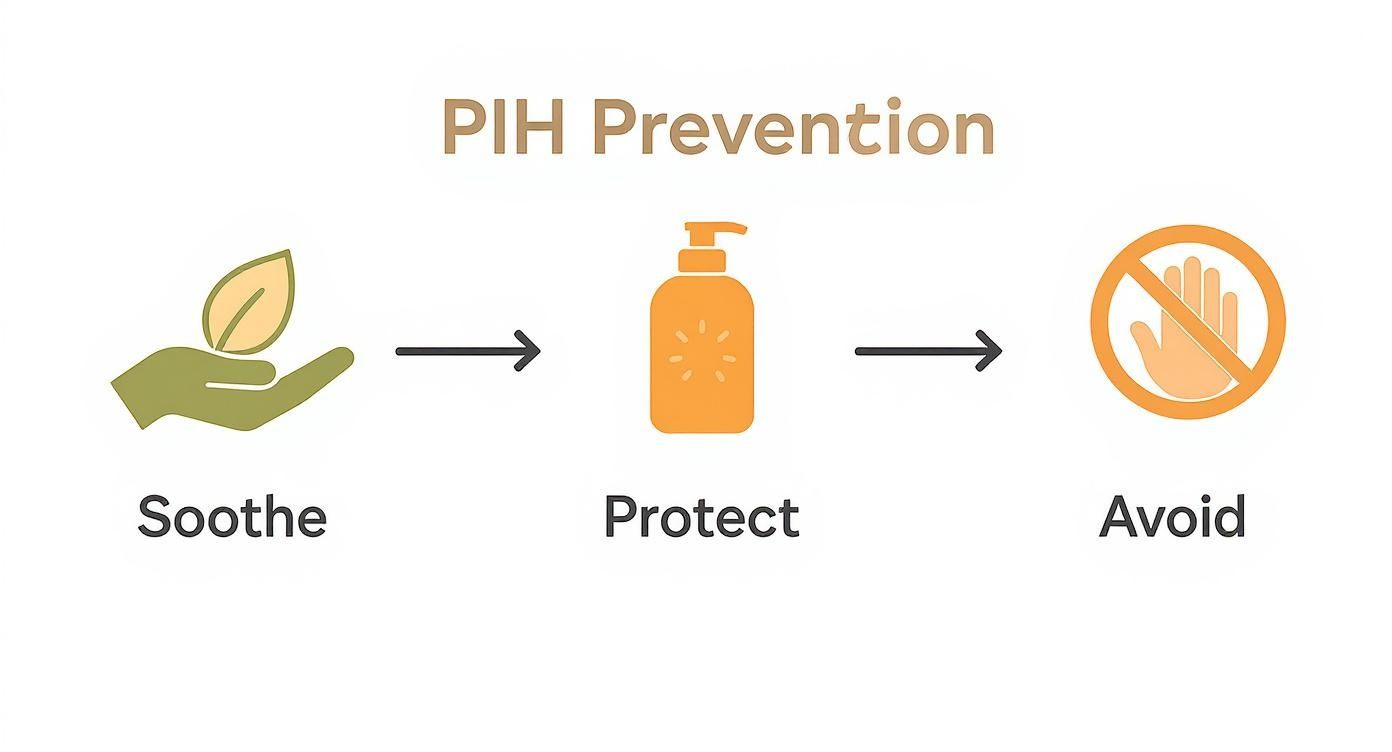
It’s a great reminder that success isn't just about the products you slather on, but also about the gentle habits you practice every single day.
When to See a Dermatologist for PIH
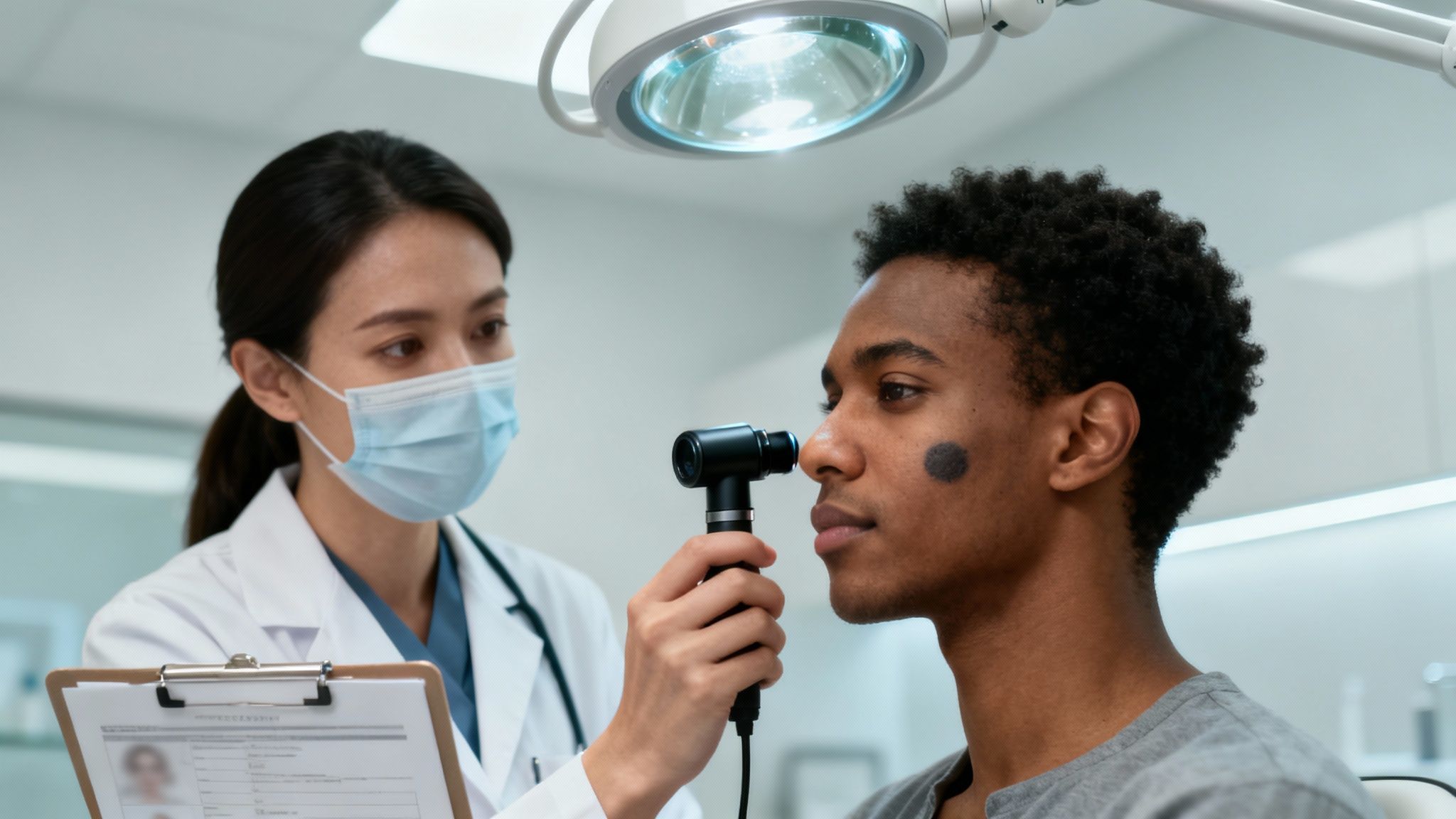
Sometimes, even the most dedicated at-home skincare routine just isn't enough. You can be doing everything right—using the best retinoids, vitamin C serums, and azelaic acid—and still feel like you've hit a plateau. If that sounds like you, it might be time to bring in the professionals.
Deciding to see a dermatologist for your post-inflammatory hyperpigmentation isn't admitting defeat. Think of it as a strategic move. You're simply ready to explore more powerful, effective options that can finally tackle those stubborn spots and speed up your progress.
Knowing When It's Time to Call an Expert
So, how do you know when it's really time to book that appointment? A few key signs tell you that professional intervention could make all the difference.
You should seriously consider a consultation if:
- You've been consistent for 6+ months with no real change. If you've given a solid routine a fair shot and the spots are stubbornly sticking around, a professional can offer treatments with a lot more muscle.
- Your PIH is very dark or covers a large area. Deeper, more widespread pigmentation often lies further down in the skin, making it incredibly difficult to fade with topical products alone.
- You're not even sure it's PIH. What you think is PIH could be melasma or another condition entirely. A dermatologist provides a definite diagnosis, ensuring you’re on the right treatment path from the start.
- You have a darker skin tone. Skin of color is more susceptible to both PIH and potential side effects from aggressive treatments. An experienced provider is crucial for navigating your options safely and effectively.
The Six-Month Rule: Consistency is key, but it shouldn't be a life sentence. If six months of diligent at-home care hasn't produced noticeable fading, it’s a clear signal your PIH needs a more direct, professional approach.
What to Expect: Professional PIH Treatments
Once you're in the dermatologist's office, the conversation will shift to in-office procedures. These treatments are designed to work on a much deeper, more targeted level than anything you can buy over the counter. A good provider will assess your skin type, the depth of the pigmentation, and your lifestyle to create a plan that works for you.
The best pigmentation treatments are never one-size-fits-all, but your dermatologist will likely walk you through a few core options.
Chemical Peels for Fresh, New Skin
Chemical peels are a classic for a reason—they work. This treatment involves applying a controlled acid solution to the skin, which meticulously exfoliates the top layers and lifts away those pigmented cells. This process kicks cell turnover into high gear, revealing fresher, more evenly toned skin underneath.
Peels come in different strengths:
- Superficial Peels: Using acids like glycolic, lactic, or salicylic acid, these are the gentlest route. Downtime is minimal—maybe a bit of redness for a day or two—and they're often done in a series for cumulative results.
- Medium Peels: These use stronger stuff, like trichloroacetic acid (TCA), to get deeper into the skin. The results can be much more dramatic, but you'll need to plan for a longer recovery of a week or more.
Microneedling to Kickstart Skin Repair
Microneedling, or collagen induction therapy, works a little differently. This procedure uses a specialized device with tiny, fine needles to create thousands of micro-injuries in the skin.
Don't let that scare you. This controlled trauma triggers your body's natural healing response. As your skin repairs itself, it ramps up collagen and elastin production. For PIH, this process helps to break apart melanin clusters and remodel the skin, leading to a smoother, more even complexion over time.
Laser and Light Therapies for Pinpoint Precision
Lasers are the heavy hitters of pigmentation treatment. Devices like fractional or Q-switched lasers send specific wavelengths of light energy deep into the skin, where the excess melanin absorbs it. This energy essentially shatters the pigment into tiny particles, which your body’s immune system then naturally clears away.
The biggest advantage of lasers is their precision; they can zero in on pigment without harming the surrounding healthy skin. However, they are also the most powerful option and carry real risks, especially for deeper skin tones, if the person operating the laser isn't experienced. Finding a provider who specializes in treating skin of color is absolutely critical to get great results and avoid complications.
Keeping Your Skin Clear and Preventing a Comeback
You did it. After all that work, your skin is finally clear and even-toned. That’s a huge win. But now comes the real test: keeping it that way. The last thing you want is for those dark spots to creep back in.
This is where we shift gears from an all-out attack on pigmentation to a smart, sustainable maintenance plan. It’s not about a dozen steps or complicated rituals. It’s about consistency with a few core habits that keep your skin healthy and resilient, so you can protect the amazing results you’ve worked so hard for.
Dial Back Your Actives (But Don't Ditch Them)
When you were actively fighting PIH, you were probably hitting it with a powerful lineup of ingredients. In maintenance mode, you can ease up. Your skin doesn't need that level of intensity anymore; it just needs a steady hand to keep cell turnover humming and pigment production quiet.
A smart, scaled-back routine might look something like this:
- Stick with your retinoid: Instead of using it every single night, try applying it just 2-3 times per week. That’s usually plenty to maintain that healthy cell turnover and stop new spots from forming.
- Keep your antioxidant shield: A daily Vitamin C serum in the morning is non-negotiable. It’s your front-line defense against the environmental aggressors that can trigger a new round of pigmentation.
- Use other actives on an as-needed basis: Hang on to your azelaic or glycolic acid, but think of them as your secret weapons. Instead of applying them all over every day, use them as a spot treatment when you feel a breakout brewing.
This "less is more" strategy is brilliant because it gives your skin everything it needs to stay clear while dramatically reducing the risk of irritation—which, as we know, is a major PIH trigger.
The One Rule You Can Never, Ever Break
If there's one thing you take away from this, let it be this: you must wear sunscreen. Every. Single. Day.
I can't stress this enough. Even when your skin looks flawless, UV radiation is whispering to your melanocytes, telling them to ramp up pigment production. If you skip the SPF, you’re essentially leaving the door wide open for PIH to return.
Think of Sunscreen as Your Insurance Policy: It’s not just for beach days. It's the single most powerful tool you have for preventing hyperpigmentation. A consistent daily habit is what stands between long-lasting clarity and a frustrating cycle of spots coming back.
A Simple Maintenance Plan That Actually Works
When you put it all together, a solid maintenance routine is surprisingly simple. The goal is protection, gentle renewal, and targeted action only when you need it.
Your Morning Game Plan:
- Gentle Cleanser: Start fresh.
- Vitamin C Serum: Antioxidant power.
- Moisturizer: Lock in hydration and support your skin barrier.
- Broad-Spectrum SPF 30+: The most important step. Don’t leave home without it.
Your Evening Wind-Down:
- Thorough Cleanse: Get rid of the day's sunscreen, makeup, and grime.
- Alternate Actives: Use your retinoid one night. The next night, give your skin a break with just a simple, hydrating moisturizer.
- Moisturizer: Always finish by giving your skin a drink.
To really round out your approach, you can look into wellness practices that support your skin from the inside. For example, exploring infrared sauna skin benefits can offer a way to reduce systemic inflammation, which is a known contributor to skin issues. Taking this holistic view means you're covering all your bases for healthy, clear skin in the long run.
Answering Your Top PIH Questions
When you're starting the journey to fade those stubborn dark spots, it’s only natural to have a million questions pop up. Even with the best plan in place, you’ll hit moments of uncertainty. Let’s clear up some of the most common questions I hear from clients dealing with post-inflammatory hyperpigmentation.
How Long Does This Actually Take?
This is always the first question, and the most honest answer is: it really depends. There's no magic timeline. How long it takes to fade PIH is different for everyone, depending on how dark the spots are, your skin type, and—the biggest factor of all—how consistent you are with your routine.
Generally speaking, if you stick to a solid at-home regimen with the right active ingredients and, crucially, daily sun protection, you should start seeing some initial brightening in about 8 to 12 weeks. For deeper, more stubborn marks, you have to be more patient. It can easily take six months to a year, sometimes even longer, to see the results you're hoping for.
Can I Use More Than One Active Ingredient?
Yes, you absolutely can, but you have to be strategic. Using a few different actives can definitely speed things up, but piling them on all at once is a fast track to irritation and a damaged skin barrier. The trick is to separate them.
A classic, effective pairing I often recommend is:
- Vitamin C in the morning: It’s a great antioxidant that protects your skin during the day while offering a gentle brightening boost.
- A Retinoid at night: This is when your skin is in repair mode, so the retinoid can get to work on cell turnover without interruption.
Whatever you do, don't layer a retinoid and an exfoliating acid (like glycolic or salicylic acid) in the same routine. That’s just too much for your skin to handle and can easily lead to more inflammation—exactly what we're trying to prevent.
My Pro Tip: Always introduce new active ingredients one by one. Give your skin a good two weeks to get used to a new product before you even think about adding something else. This way, you can easily spot any signs of irritation and know exactly which product is doing the heavy lifting.
Once PIH Fades, Can It Come Back?
Unfortunately, the answer is yes. If your skin is prone to creating these dark spots, any new source of inflammation—whether it's a new breakout, a bug bite, or a rash—can leave a new mark behind. This is why long-term maintenance is just as important as the initial treatment.
Your number one defense against PIH returning is an unwavering commitment to sunscreen. UV exposure is a primary trigger that tells your skin to produce more melanin. Using a broad-spectrum SPF 30+ every single day, no exceptions, is the single most effective thing you can do to keep your skin tone even. Think of it as your daily insurance policy against dark spots.
At Face of Jules, we know how frustrating and complex treating concerns like post-inflammatory hyperpigmentation can be. Our specialists build personalized plans that get to the root of the issue, combining powerful treatments with a deep understanding of long-term skin health. Start your journey to clear, confident skin by booking a consultation with us today.