

Proper skincare after microneedling comes down to one simple idea: for the first 72 hours, you need to be incredibly gentle. Your skin is busy healing thousands of tiny micro-channels, so your job is to support it with hydration, protect it from the sun, and stay away from anything harsh.
Think of it this way: what you do in these first few days directly impacts your final results. This isn't the time for your usual active ingredients or heavy makeup.
Your First 72 Hours Post-Treatment
Right after your session, your skin will probably feel warm, a little tight, and look like you got a mild sunburn. This is completely normal! It’s the starting point of the healing process, where all the magic of collagen and elastin production begins.
The microneedling market is booming for a reason—it works. It's projected to climb to nearly $979.39 million by 2030, which just goes to show how many people are investing in this treatment. So, protecting that investment with a solid aftercare plan is key, and it starts the second you leave the clinic. You can dig into more market trends at Stellar Market Research.
The Three Pillars of Immediate Aftercare
Let's strip your routine back to the bare essentials. Forget that complex, multi-step regimen for now. Your skin craves simplicity.
Here’s what to focus on:
- Gentle Cleansing: Use only clean hands, lukewarm water, and a very mild, non-foaming cleanser. Absolutely no washcloths, scrubs, or cleansing brushes—they are way too aggressive for your skin right now.
- Deep Hydration: With its barrier temporarily compromised, your skin is losing moisture fast. A hyaluronic acid serum is a must-have. It pulls hydration deep into the skin without causing any irritation. Immediately follow it with a simple, ceramide-rich moisturizer to seal everything in.
- Strict Sun Protection: This is the most important rule of all. Your fresh, new skin is highly susceptible to sun damage, which can quickly lead to hyperpigmentation. A mineral-based, broad-spectrum sunscreen with an SPF of 30 or higher is non-negotiable.
Key Takeaway: The goal for the first 72 hours isn't to treat your skin—it's to create the perfect environment for it to heal itself. Less is always more here.
To help you keep track, here's a quick cheat sheet for those critical first two days.
Immediate Aftercare At-a-Glance (First 48 Hours)
| Action | What to Do | What to Avoid |
|---|---|---|
| Cleansing | Use a gentle, non-foaming cleanser and lukewarm water with clean hands only. | Hot water, scrubs, exfoliants, washcloths, or cleansing brushes. |
| Hydrating | Apply a hyaluronic acid serum to damp skin. | Fragranced products, essential oils, or heavy creams. |
| Moisturizing | Use a simple, ceramide-based moisturizer to lock in hydration. | Active ingredients like retinoids, vitamin C, or exfoliating acids. |
| Protecting | Apply a mineral-based (zinc oxide/titanium dioxide) SPF 30+ sunscreen. | Chemical sunscreens (can sting), direct sun exposure, and tanning beds. |
| General Care | Sleep on a clean pillowcase and drink plenty of water. | Makeup, sweating, swimming pools, saunas, and intense workouts. |
Sticking to these guidelines is your best bet for a smooth, complication-free recovery.
Once you’re past this initial sensitive phase, you can start thinking about other ways to support your skin's recovery. For instance, many people find that gentle treatments like LED therapy can help calm any lingering inflammation and boost cellular repair. If you're curious, you can learn more in the complete guide to LED facials.
Your Day-by-Day Recovery Timeline
Trying to figure out what your skin needs after microneedling can feel a bit overwhelming, especially the first time. Knowing what’s normal, what’s not, and how to tweak your routine will make all the difference in getting the amazing results you’re after.
Let's walk through that first week together, so you know exactly what to expect.
This visual gives you a quick snapshot of your main goals for the first 72 hours.
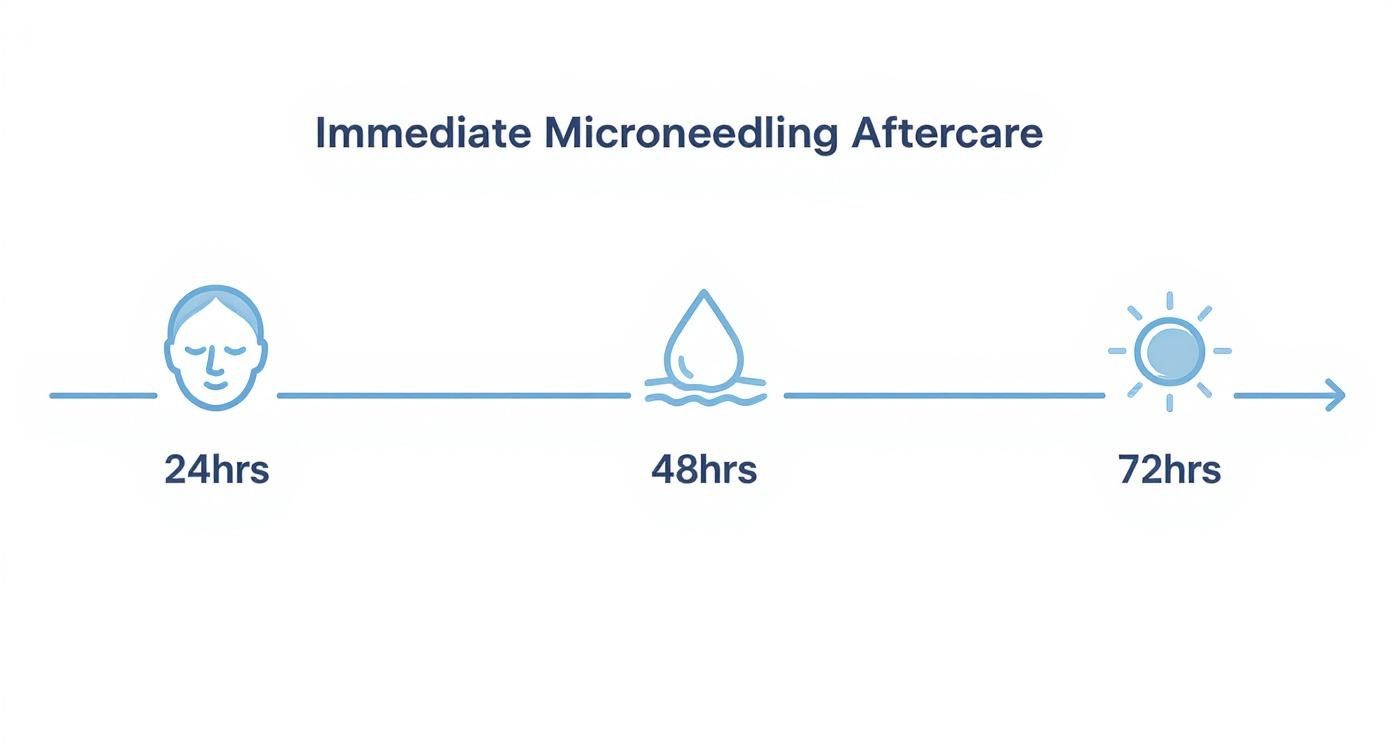
As you can see, the game plan shifts from simply calming things down to intensely hydrating, and finally, to making sun protection your absolute priority. Nailing these three phases is the secret to a smooth recovery.
The First 24 Hours
Right after you leave the clinic, your skin is going to look and feel like you’ve had a moderate sunburn. We’re talking redness, warmth, and a definite feeling of tightness. Don't panic—this is the normal, healthy inflammation that signals your body to start building beautiful new collagen.
For the next 24 hours, your one and only job is to be incredibly gentle. Keep your skin clean, calm, and leave it alone. No makeup, no active serums, nothing from your usual lineup. It’s a total “hands-off” day where you let your skin just breathe and do its thing.
- Your Skincare Focus: Simplicity is everything. Less is truly more.
- Morning/Evening Routine: Use only cool water and your clean hands to gently rinse your face. No cleanser just yet. Pat your skin dry with a fresh, soft towel—no rubbing!
- Products to Use: If your aesthetician gave you a specific post-procedure product, use that as directed. If not, leaving your skin completely bare is often the best move for this initial healing window.
Expert Tip: Sleep on a clean pillowcase tonight. It's such a simple thing, but it dramatically reduces the chance of introducing bacteria to your skin while it’s in this super-vulnerable state.
Days 2-3
By day two or three, that initial sunburn-like redness will begin to soften into a more subtle pinkish tone. Your skin will likely feel quite tight, dry, and maybe even a little sandpapery to the touch. This is all part of the plan and shows the healing process is well underway.
You can now re-introduce a very basic skincare routine. The focus is purely on hydration and supporting your skin's healing barrier.
- Gentle Cleansing: Time to bring back a cleanser, but it has to be the right kind. Go for a mild, soap-free, non-foaming formula and use only lukewarm water.
- Hydration is Key: While your skin is still a little damp, apply a hyaluronic acid serum. Think of it as a big drink of water for your skin—it pulls moisture deep into the tissue without causing any irritation.
- Lock It In: Immediately follow up with a simple, bland moisturizer, ideally one with ceramides. This helps rebuild your skin’s protective barrier and stops all that precious moisture from escaping.
- Sunscreen is Non-Negotiable: This is the most critical step. You absolutely must apply a broad-spectrum mineral sunscreen with at least SPF 30. Zinc oxide or titanium dioxide-based formulas are much gentler on post-procedure skin.
Stay far away from any "active" ingredients during this phase. That means no retinoids, vitamin C, exfoliating acids (like glycolic or salicylic), or any kind of facial scrub. Your skin just isn't ready for that yet.
Days 4-7
Around this time, you'll probably start to notice some light flaking or peeling, often around the nose and mouth. This is a great sign! It’s the old, dull skin making way for the fresh, new cells underneath. The temptation to pick or scrub it off will be real, but you have to resist.
Your skincare goals are still hydration and protection. The good news is the most sensitive part of the recovery is behind you.
Your routine will look a lot like it did on days 2-3. The main goal is to keep your skin constantly moisturized to help manage any flakiness and keep it comfortable.
- Continue with: Your gentle cleanser, hyaluronic acid, supportive moisturizer, and, of course, your daily mineral sunscreen.
- What to do about peeling: Absolutely nothing. Let it slough off naturally in its own time. Forcibly exfoliating it away can cause scarring or post-inflammatory hyperpigmentation, completely undermining the benefits of your treatment.
- Can you wear makeup? If you feel you need to, you can usually start wearing a bit of mineral-based makeup around day four. Just make sure your brushes are impeccably clean to avoid any risk of irritation or breakouts.
By the time you hit the one-week mark, your skin should be well on its way to being fully recovered. You’ll start to catch glimpses of that smoother, brighter, more radiant complexion you were hoping for.
Building Your Post-Treatment Skincare Routine
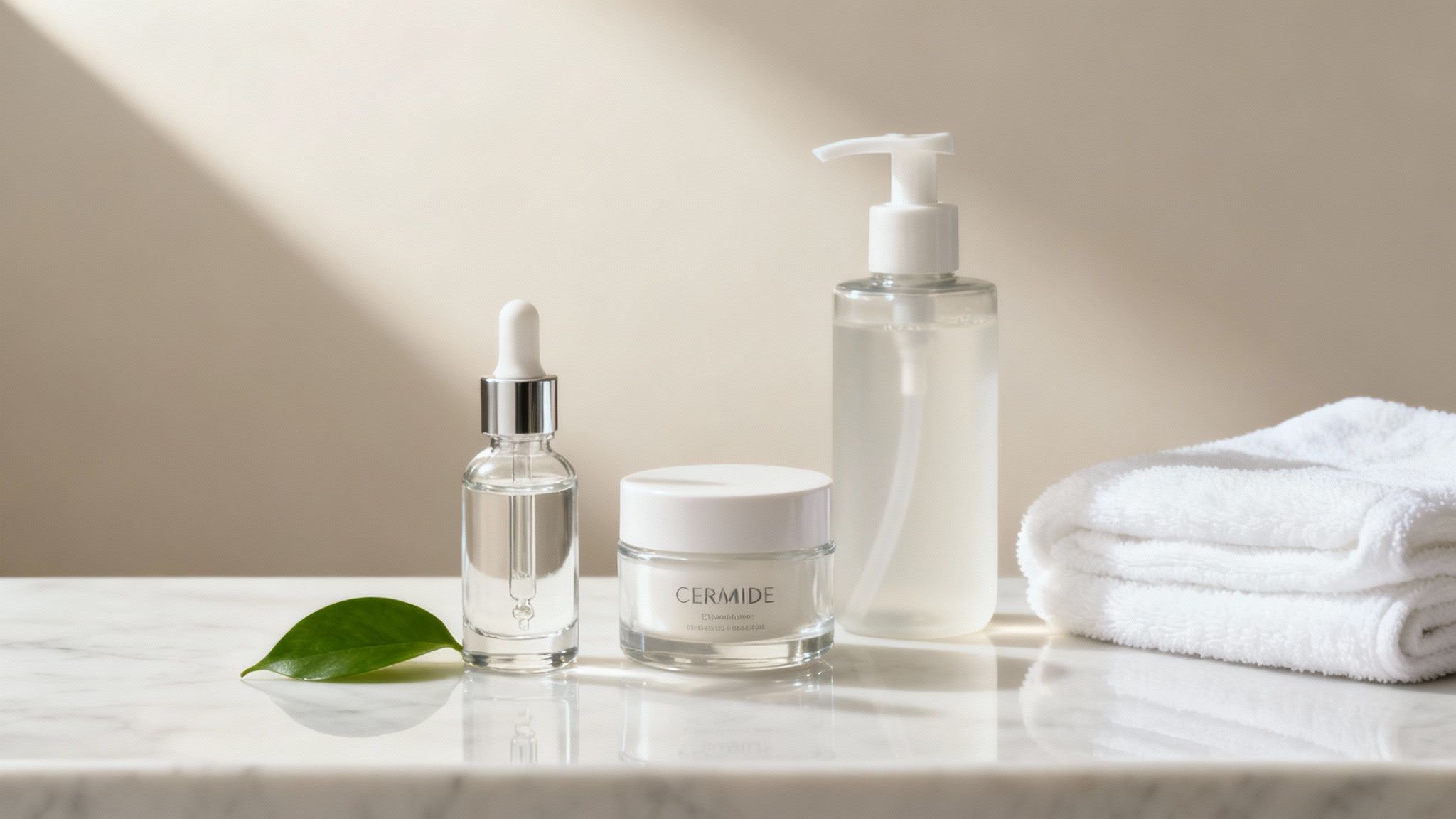
Once the initial redness and tenderness from your microneedling session start to calm down, your skincare strategy needs to evolve. We're moving from immediate, gentle care to actively supporting the long-term healing process. This is the crucial phase where you give your skin the exact building blocks it needs to generate all that fresh, new collagen.
Your routine doesn't have to be complicated, but it absolutely must be intentional. Those tiny micro-channels are closing up, but your skin is still incredibly receptive to the right ingredients—and just as sensitive to the wrong ones. Nailing your product choices here is what separates a good result from a great one.
Must-Have Ingredients for Barrier Repair
Your top priority is to rebuild your skin’s protective barrier. Microneedling creates controlled micro-injuries that temporarily disrupt this barrier, so we need to put back what was lost. A few hero ingredients are absolutely essential for this job and should form the foundation of your skincare after microneedling.
Here’s what I always tell my clients to look for:
- Hyaluronic Acid: This is a non-negotiable. It's a powerhouse humectant that pulls moisture deep into the skin, keeping it hydrated and comfortable. Pro tip: always apply it to slightly damp skin to maximize its plumping effect.
- Ceramides: Think of these as the "mortar" holding your skin cells together. Using a moisturizer rich in ceramides helps lock in that hydration from your hyaluronic acid and fortifies your skin's defenses.
- Peptides: These are the messengers that tell your skin cells to get to work producing more collagen. Adding them to your routine helps supercharge the very process you got microneedling for in the first place.
Many of my clients have seen fantastic results using specialized skincare products that combine these gentle, restorative ingredients.
Choosing the Right Cleanser
Even as your skin starts feeling more like itself, a gentle touch during cleansing is still critical. The wrong cleanser can easily strip away your skin's natural oils, causing dryness and irritation that will only set your recovery back.
Stick with cleansers that have a milky, creamy, or gel-based texture and are specifically labeled "non-foaming." Foaming agents are often too harsh for post-procedure skin. Right now, your cleanser has one job: to gently lift away impurities without disrupting the delicate healing going on underneath. If you're looking for a complete, no-guesswork system, something like the Fundamental DMK Kits can offer a perfectly streamlined and gentle regimen. https://jules.mockupdomain.com/fundamental-dmk-kits/
It’s amazing what the skin can do. Clinical studies show microneedling can trigger a staggering 400% increase in collagen and elastin production. That remodeling process is exactly why aftercare is so important. Supporting your skin with the right ingredients is what allows it to capitalize on that incredible natural response.
What to Keep Off Your Counter
What you don't put on your skin is just as important as what you do. Reintroducing strong, active ingredients too early is a recipe for irritation, inflammation, and even post-inflammatory hyperpigmentation. The last thing you want is to undermine the very benefits you're trying to achieve.
Put these ingredients on a temporary hold for at least the first week, or until your esthetician gives you the go-ahead:
- Retinoids (Retinol, Tretinoin)
- Vitamin C serums (especially potent forms like L-Ascorbic Acid)
- Exfoliating Acids (AHAs like glycolic and BHAs like salicylic acid)
- Physical scrubs or any kind of abrasive exfoliant
- Toners that contain alcohol
By sticking to a simple routine built around a gentle cleanser, intense hydration, and diligent sun protection, you create the perfect environment for your skin to heal beautifully and reveal that coveted, radiant glow.
Common Aftercare Mistakes to Avoid
Knowing what to put on your skin after microneedling is only half the battle. Just as important is knowing what not to do. It’s easy to make a small mistake that can set your healing back, cause irritation, or even undo the benefits you were so excited about.
Let’s get past the obvious “don’t pick at your skin” advice and dive into the subtle errors I see people make all the time that can sabotage their results.
The first slip-up often happens with sunscreen. Everyone knows sun protection is non-negotiable, but the type of sunscreen you grab is what really counts. Chemical formulas work by absorbing UV rays and turning them into heat, which is the last thing your sensitive, healing skin needs.
Instead, stick exclusively to a physical (mineral) sunscreen. Look for zinc oxide or titanium dioxide on the label. These ingredients create a gentle shield on your skin's surface, reflecting the sun's rays away without causing more irritation.
Rushing Back to Your Old Routine
I get it—you love your skincare routine and can't wait to get back to your favorite products. But patience truly is key here. The biggest mistake I see is people reintroducing powerful active ingredients like retinoids and exfoliating acids way too soon.
Your skin is in major repair mode, diligently building new collagen. Slathering on harsh actives can completely disrupt that delicate process. Your skin will naturally shed and flake as it heals; trying to speed that up with exfoliants can cause serious setbacks. If you're feeling the urge to scrub away flakes, take a look at our guide on why you should let your skin exfoliate naturally to understand what’s really happening under the surface.
Here's a real-world scenario I see all the time: It’s day three post-treatment. Your skin feels tight, and you notice some light flaking around your chin and nose. Your first instinct is probably to grab a "gentle" scrub to smooth things over. Don't do it. That flaking is a good sign—it means new, healthy cells are on their way. Forcing it off can lead to raw skin, potential scarring, and even dark spots. The right move is to apply more hyaluronic acid and a rich ceramide cream to soothe and hydrate.
Another thing people often underestimate is the effect of heat and sweat. You might feel totally fine, but your skin is still vulnerable. For at least 48-72 hours, you absolutely must avoid intense workouts, saunas, hot yoga, and steam rooms.
Sweat can carry bacteria straight into those fresh micro-channels, creating the perfect environment for a breakout or even an infection. On top of that, excessive heat just ramps up inflammation, making you redder for longer.
This isn’t just my advice. The American Academy of Dermatological Association warns that poor aftercare is a direct cause of complications like infection and scarring. Their guidelines are firm: for the first 24–48 hours, no makeup, no harsh skincare, no swimming, and no strenuous activity. By sidestepping these common mistakes, you’re doing more than just following instructions—you're protecting your investment and paving the way for gorgeous, healthy skin.
Long-Term Care to Maximize Your Microneedling Results
That first week of babying your skin is absolutely critical, but the real magic of microneedling happens over the next few weeks and months. This is when all that new collagen starts to mature. Your long-term skincare after microneedling is all about protecting that investment and smartly reintroducing the powerhouse ingredients that will amplify your results.
I like to think of post-procedure skin as a collagen construction site. The first week was about keeping the site clean, safe, and undisturbed. Now, it's time to bring in the specialized tools—your active ingredients—to ensure the final build is strong, smooth, and glowing. The trick is to do it slowly and methodically, not all at once.
Reintroducing Active Ingredients Safely
Patience is everything here. If you rush to slather on your most potent serums, you risk triggering a new wave of inflammation and undoing all your hard work. The goal is to support your skin's healing process, not shock it back into defense mode.
As a general rule, you can start thinking about reintroducing actives 7 to 14 days after your treatment. But this is only an estimate. The real signal is your skin itself—wait until every last bit of redness, peeling, and sensitivity is completely gone.
- Vitamin C: This is usually the first one I have clients add back in. Start by using it every other morning for a week to make sure your skin is happy before going back to daily use. It's a fantastic antioxidant that will shield all that new, delicate skin from environmental stress.
- Retinoids (Retinol): Save this one for last. Because it's so powerful at speeding up cell turnover, it can be too much for freshly healed skin. When you do bring it back, try it just twice a week (on nights you're not using anything else) for a couple of weeks. You can slowly increase the frequency from there.
- Exfoliating Acids (AHAs/BHAs): Give these at least two weeks off. When you reintroduce them, start with a very gentle formula just once a week and pay close attention to how your skin feels the next day.
Key Takeaway: The golden rule is to reintroduce just one active ingredient at a time. Give it at least a week. This way, if any irritation pops up, you know exactly what caused it and can pull back without having to guess.
Your Skincare Routine from Week Two and Beyond
Once your skin feels totally back to normal, you can settle into a maintenance routine designed to keep that glow going strong. For a deeper dive into all the nuances, checking out a comprehensive microneedling aftercare guide can be a huge help in the long run.
Here’s what a solid, post-healing routine might look like:
Morning Routine:
- Gentle Cleanser: Stick with a mild, hydrating formula that won't strip your skin.
- Vitamin C Serum: Your daily shield against pollution and UV damage.
- Hydrating Serum: A layer of hyaluronic acid keeps skin plump and hydrated.
- Moisturizer: Seal in all that goodness.
- Broad-Spectrum SPF 30+: This is non-negotiable. Sun exposure is the number one threat to your beautiful new collagen. Make it a daily habit, rain or shine.
Evening Routine:
- Gentle Cleanser: Wash away makeup, sunscreen, and grime from the day.
- Treatment Serum: Alternate your actives. Use a peptide serum on most nights and your retinoid on designated nights.
- Moisturizer: Finish with a nourishing cream to support your skin's overnight repair cycle.
Frequently Asked Questions About Aftercare
Even with the best game plan, questions always pop up once you're actually in the healing phase. Let's walk through some of the most common things people ask so you can feel completely confident about your skincare after microneedling and know exactly what to do.
When Can I Wear Makeup After Microneedling?
I know how tempting it is to cover up the post-treatment redness, but you absolutely have to wait at least 24 to 48 hours. Think of it this way: your skin is full of tiny, open channels that need to close up. Slathering on makeup too soon is a recipe for clogged pores, which can easily lead to breakouts or irritation and just slow everything down.
When you're ready to get back to it, opt for a mineral-based makeup. And this is crucial—make sure your brushes or sponges are impeccably clean. The last thing your healing skin needs is a dose of bacteria.
Is Peeling Normal and What Should I Do?
Yes, a little peeling or flaking around day three to five is totally normal. In fact, it's a good sign! It means your skin is doing its job, shedding the old, damaged layer to reveal the fresh, new skin underneath.
The golden rule here is simple: do not pick, scrub, or exfoliate the flaky skin. Let it come off on its own time. If you force it, you're risking scars or hyperpigmentation. Your best bet is to just keep the area well-hydrated with a gentle moisturizer to help manage any dryness.
How Soon Can I Exercise After My Session?
You'll need to press pause on any intense workouts, saunas, or hot yoga for at least 48-72 hours. Anything that makes you sweat heavily is off-limits. Sweat can introduce bacteria into those open micro-channels, and that's a risk for infection or just more inflammation than you need.
Plus, the heat and increased blood flow from a hard workout can make any redness worse and drag out that initial recovery time. A light walk is totally fine, but save that high-intensity interval training for a few days down the road.
Can I Use My Vitamin C Serum Right Away?
Hold off on this one. Your favorite Vitamin C serum, especially a potent L-Ascorbic Acid formula, is likely too acidic for your skin right after a treatment. It will probably sting and cause irritation, creating more inflammation when your goal is to calm things down.
Give your skin a solid 5-7 days to heal, or wait until all the redness and sensitivity are gone. When you do reintroduce it, ease back in. Try using it every other day for a week to make sure your skin is happy with it before you go back to daily use.
At Face of Jules, we know that professional guidance is what turns a good treatment into a great result. Our specialists are here to support you through the whole process, from your in-clinic session to a personalized aftercare plan that works for you.
Ready to start your journey to clear, healthy skin? Schedule your consultation with us today!