

If there’s one secret to great skin, it isn't a miracle product or an expensive treatment—it's consistency. Building a skincare routine for healthy skin that you stick with day in and day out is what truly creates lasting change.
Why a Consistent Skincare Routine Matters
Let's be honest, sticking to a daily practice can sometimes feel like a chore. But when it comes to your skin, that simple repetition is where the magic happens. Think of it like this: you can’t expect a single gym session to get you in shape. The same goes for your skin. Small, daily investments compound over time, paying off in a big way.
A sporadic approach—using a strong exfoliant one day and forgetting moisturizer the next—might give you a temporary glow, but it often just leads to a frustrating cycle of irritation and breakouts. True skin health is built on a foundation of stability, and that comes from a dedicated daily regimen that helps your skin find its natural balance.
The Power of Predictability
Your skin is a creature of habit; it absolutely thrives on a predictable schedule. When you give it a stable environment through a consistent routine, you’re helping it regulate all its key functions. Over time, that discipline really pays off.
- Balanced Oil Production: When you cleanse and moisturize regularly, you’re essentially training your skin not to overproduce oil. The result? Fewer breakouts and a less greasy T-zone.
- A Stronger Skin Barrier: A consistent routine is like reinforcing a fortress. It strengthens your skin’s natural protective barrier, making it tougher against daily aggressors like pollution and UV rays.
- Getting More from Your Products: Applying products in the right order, every single time, ensures they can actually do their job. This helps them penetrate effectively and maximizes the investment you’ve made.
- Long-Term Anti-Aging Benefits: Ingredients like retinoids and antioxidants don’t work overnight. They need consistent application to build up in the skin and deliver those visible improvements in fine lines, wrinkles, and overall texture.
This shift toward structured, long-term skin health isn't just a niche trend. The global skincare market was recently valued at a staggering USD 167.44 billion, driven by a massive collective desire for healthy, functional skin. People are looking beyond quick fixes and embracing the journey, and you can dive deeper into these skincare market trends to see the bigger picture.
Before we dive into the nitty-gritty of building a routine, let's look at the core principles that make any regimen successful. This table breaks down the absolute must-haves for healthy skin.
Foundations of a Healthy Skincare Routine
A quick look at the core principles that form the backbone of any successful skincare regimen, giving you an immediate overview of what really works.
| Principle | Why It's Crucial | Simple Action |
|---|---|---|
| Cleanse Gently | Removes impurities without stripping natural oils, preventing dryness and irritation. | Use a pH-balanced, sulfate-free cleanser morning and night. |
| Moisturize Daily | Hydrates the skin and strengthens the lipid barrier, locking in moisture. | Apply moisturizer to damp skin to boost absorption. |
| Protect with SPF | Shields skin from UV damage—the #1 cause of premature aging and skin cancer. | Wear broad-spectrum SPF 30 or higher every single day, rain or shine. |
| Be Consistent | Allows active ingredients to work and helps your skin maintain a healthy balance. | Pick a simple routine you can commit to twice a day. |
These pillars are non-negotiable. Whether you have three steps or ten, these fundamentals should always be part of your routine.
"A truly effective minimal routine consists of only three steps: cleanse, treat, protect. The optimal simplified skin-care routine is one that supports your skin’s natural barrier while addressing your core needs and nothing more."
This philosophy really gets to the heart of it—focus on the foundational steps that matter instead of overwhelming your skin with an army of products.
Building a Habit That Sticks
The best skincare routine is the one you'll actually do. It doesn't need to be a complicated, 12-step ordeal to be incredibly effective. The goal is to create a sustainable practice that fits right into your life.
If you’re just starting out, keep it simple. A gentle cleanser, a solid moisturizer, and a daily sunscreen are the perfect entry point. Once that feels like second nature, you can slowly start introducing targeted treatments like a vitamin C serum in the morning or a gentle exfoliant a few times a week. This way, you avoid overwhelming your skin (and yourself), making it much more likely you’ll stay the course for the long haul.
Your Essential Morning Skincare Ritual
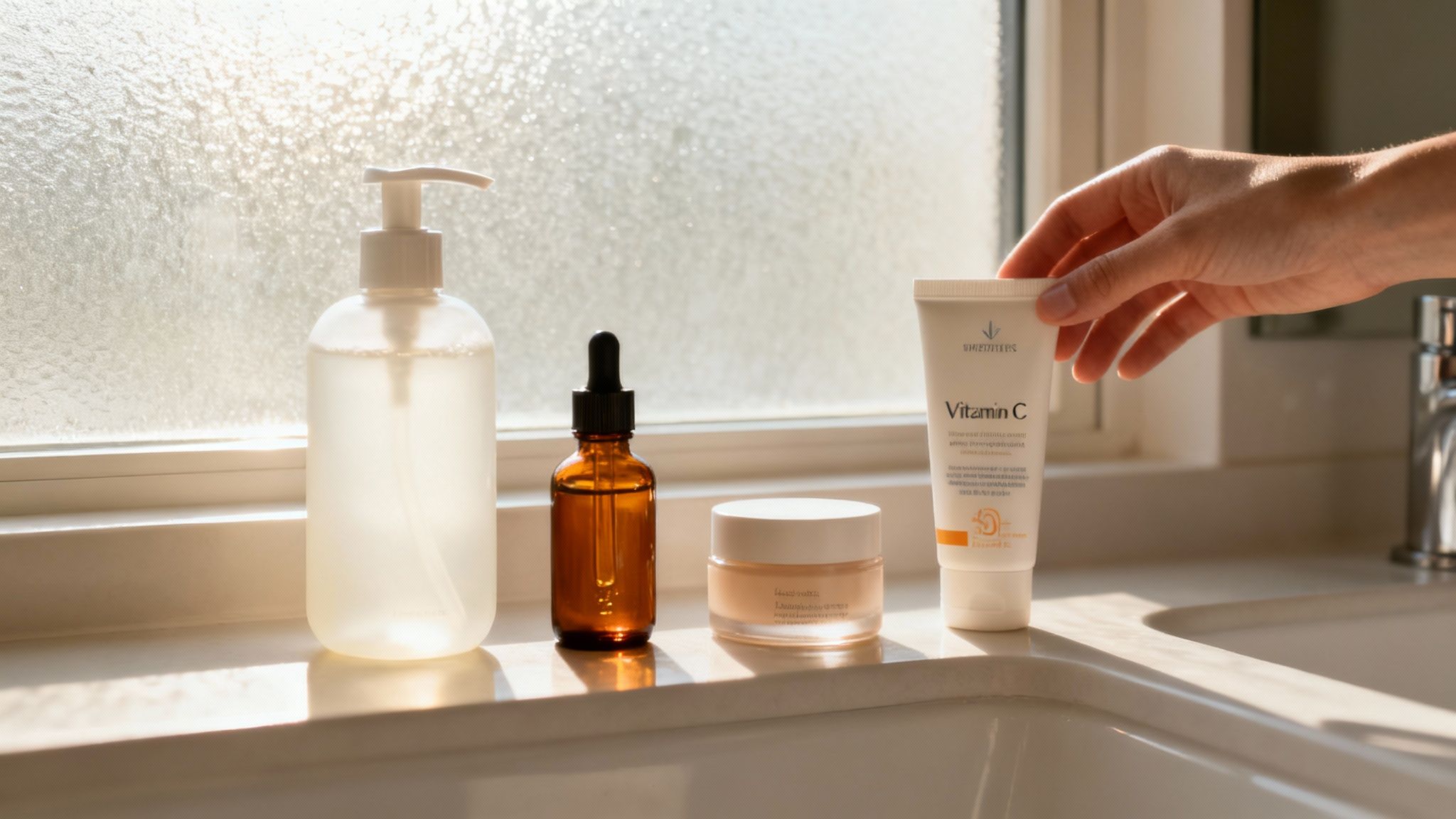
Your morning routine is all about defense. Think of it as putting on armor to shield your skin from everything the day throws at it, from pollution to damaging UV rays. It's less about piling on products and more about a strategic approach to keep your skin balanced, hydrated, and protected.
This daily ritual also creates the perfect canvas for whatever comes next. We all know how skin preparation impacts lasting makeup, and a well-prepped base is the secret to a flawless look that doesn't fade by lunchtime.
Start with a Gentle Cleanse
The first thing to remember in the morning is that your skin has been repairing itself all night. You don't want to undo all that good work with a harsh, stripping cleanser. For many people, a simple splash of lukewarm water is plenty.
If you have oily skin or just love that fresh, clean feeling, a gentle cleanser is the way to go. Over-cleansing can actually backfire by disrupting your skin's natural barrier, leading to dryness, irritation, or even causing your skin to produce more oil to compensate.
- For Oily or Combination Skin: A light gel or foaming cleanser will do the trick, removing excess oil without leaving your skin feeling tight.
- For Dry or Sensitive Skin: I always recommend a cream or milk cleanser. It cleanses effectively while giving your skin an extra dose of much-needed hydration.
The goal here is a clean, comfortable starting point—not a squeaky-clean, stripped one.
Apply a Protective Antioxidant Serum
If you only add one "active" step to your morning routine, make it a Vitamin C serum. I tell my clients to think of it as their skin's personal bodyguard against the environmental assault of daily life.
Throughout the day, your skin is constantly fighting off free radicals from UV rays and pollution. These are the culprits behind premature aging and cell damage. A good antioxidant serum, especially one with Vitamin C, neutralizes these troublemakers before they can cause any real harm. It's the perfect partner for your sunscreen, giving you an even stronger layer of protection.
Consistently using a Vitamin C serum not only protects your skin but also helps to brighten your complexion, fade dark spots, and even support collagen production over time.
This single step can make a huge difference in the long-term health and glow of your skin. If you want to dive deeper, you can learn more about it here: https://jules.mockupdomain.com/vitamin-c-why-you-need-it/
Lock in Hydration with a Moisturizer
Moisturizer is a non-negotiable step. It’s what locks in the hydration from your previous steps and keeps your skin barrier strong and healthy. A strong barrier is what keeps moisture in and irritants out.
Your skin type dictates your moisturizer. If your skin is on the oily side, you'll love a lightweight, gel-based formula that sinks in quickly without feeling heavy. But if you're dealing with dryness, you'll need a richer cream packed with ingredients like ceramides or hyaluronic acid to provide that deep, lasting comfort.
And yes, even oily skin needs a moisturizer! Dehydrated skin often goes into overdrive producing oil, so giving it the right kind of hydration can actually help it find its balance.
Finish with Broad-Spectrum Sunscreen
I can't say this enough: this is the single most important step of your morning. Sunscreen is your number one weapon against UV damage, which is the primary cause of premature aging, sun spots, and, most importantly, skin cancer.
You need a broad-spectrum sunscreen with an SPF of 30 or higher. Every single day. No exceptions. It doesn't matter if it's cloudy or if you're just sitting by a window—UVA rays are persistent.
Application Tips for Maximum Protection
- Use Enough: The biggest mistake I see is people not applying enough sunscreen. A good rule is the "two-finger" method: squeeze a line of product down your index and middle fingers. That’s how much you need for your face.
- Cover All Exposed Skin: Don’t stop at your jawline! Get your neck, chest, and even the tops of your ears. These spots are often forgotten and can show sun damage quickly.
- Give It a Minute: Let your sunscreen sink in and set for a few minutes before moving on to makeup. This helps it form a complete, protective shield.
Making sunscreen a daily habit is the best long-term investment you can make for your skin. It truly is the ultimate anti-aging product.
Your Nighttime Repair and Reset Routine
When the sun goes down, your skin’s workday is just getting started. During the day, it’s all about defense—fighting off UV rays, pollution, and all the other environmental stressors. But at night? That’s when it switches gears into full-on repair mode, healing and regenerating while you sleep. A solid evening routine is your way of giving your skin the best tools for the job.
Think of it this way: your nighttime ritual has two main goals. First, to get rid of every last trace of the day. Second, to deliver powerful, restorative ingredients that can work their magic uninterrupted overnight. This is your chance to tackle specific skin concerns and wake up with a complexion that looks and feels refreshed.
Start with a Deep Clean: The Double Cleanse
Before you can even think about applying those fancy serums, you have to get your skin truly clean. And I mean really clean. A quick once-over with a face wash often isn’t enough to dissolve the layers of sunscreen, makeup, and city grime that have settled on your skin throughout the day.
This is exactly why the double-cleanse is a game-changer for so many people. It’s a simple, two-step method that gets your skin immaculately clean without stripping it of its natural moisture.
Melt It All Away (Oil-Based): You’ll start with an oil-based cleanser or a cleansing balm. Massage it directly onto your dry face. You'll literally feel the makeup, SPF, and excess oil breaking down. This works because oil dissolves oil. After a good massage, add a splash of water to emulsify it into a milky texture, then rinse.
Wash the Day Off (Water-Based): Now that the surface-level stuff is gone, it’s time for your regular cleanser. Grab your favorite gentle gel, cream, or foam face wash and cleanse like you normally would. This step removes any lingering residue and cleans your actual skin, leaving it perfectly prepped for what comes next.
Once you try it, you'll see why it's a non-negotiable step. Your pores will thank you, and your other products will be able to sink in so much more effectively.
Trying to apply a potent serum on top of skin that isn't fully cleansed is like painting over a dirty wall. You're just wasting good product and not getting the results you're paying for.
Bring in the Heavy Hitters: Targeted Treatments
With your skin fresh and clean, it's time to bring out the targeted treatments. Night is the perfect time for the really potent ingredients—the ones that make a visible difference. Actives like retinoids and chemical exfoliants can make your skin more sensitive to the sun, so using them in the evening is always the smartest move.
What you use here depends entirely on your personal skin goals. Are you focused on smoothing fine lines, clearing up breakouts, or just getting a brighter glow?
Choosing Your Nightly Treatment
Retinoids: These are the superstars of skincare, hands down. Derived from Vitamin A, they speed up cell turnover, kickstart collagen production, and help keep pores clear. If you’re just starting with a retinoid, go slow. A pea-sized amount just two or three nights a week is plenty to start. This lets your skin build up a tolerance without getting red and irritated.
Exfoliating Acids (AHAs/BHAs): Think of these as your secret weapon for dull, textured skin. Glycolic acid (an AHA) and salicylic acid (a BHA) dissolve the "glue" that holds dead skin cells together, revealing the brighter, smoother skin underneath. They're fantastic for everything from dullness to breakouts, but you only need to use them a few times a week.
Repair and Hydration Serums: If you're not using a strong active, or it's an "off" night, a serum packed with ingredients like peptides, hyaluronic acid, or niacinamide is perfect. These focus on strengthening your skin's barrier and flooding it with hydration.
A word of advice from experience: always introduce new active ingredients one at a time. Give your skin a few weeks to adjust before adding something else new. It’s the best way to see what’s actually working and avoid accidentally irritating your skin.
Layer Like a Pro: Thinnest to Thickest
How you put your products on matters just as much as what you're using. The golden rule is simple: go from the thinnest texture to the thickest. This just makes sense—a lightweight, watery serum needs to go on first so it can absorb properly, rather than trying to penetrate through a heavy, occlusive cream.
Here’s a look at a typical evening layering sequence:
- Double Cleanse: The foundation of your routine.
- Toner or Essence (Optional): Pat it onto damp skin for an extra layer of hydration.
- Treatment Serum: This is where your retinoid, AHA/BHA, or other targeted serum goes.
- Eye Cream: Gently tap your eye cream around your orbital bone using your ring finger.
- Moisturizer: Finish by sealing everything in with a good night cream to nourish your skin barrier.
Try to give each product a minute or so to sink in before applying the next. It doesn't take much extra time, but this little bit of patience ensures each product can do its job to the fullest, turning your nightly routine into a truly effective repair session.
How to Customize Your Skincare Routine
Let's be honest: a one-size-fits-all approach to skincare is pretty much destined to fail. Your best friend might rave about a moisturizer that leaves your skin feeling like a grease slick, or that cult-favorite serum could be way too harsh for your complexion. The real secret to a successful skincare routine for healthy skin is personalization—learning to listen to your skin and hand-picking ingredients that cater to its specific needs.
This move toward customized regimens isn't just a passing trend; it's a fundamental shift in how we approach skincare. The global personalized skincare market was recently valued at an incredible USD 22.5 billion, a figure that speaks volumes about how many of us are looking for solutions beyond generic, off-the-shelf advice. You can read more about the personalized skincare boom to see just how big this movement has become. At its core, customizing your routine is about making smarter, more informed choices that actually deliver results.
Tailoring Your Routine to Your Skin Type
First things first, you need to figure out what your skin is trying to tell you. This usually starts with identifying your skin type. Is it oily and prone to breakouts? Or is it dry and constantly thirsty for hydration? Maybe it’s a little bit of both, or it reacts to just about everything.
- For Oily Skin: The goal here is to manage excess oil without completely stripping your skin of moisture. Always look for lightweight, non-comedogenic products. A gel moisturizer can provide hydration without feeling heavy, and a clay mask once a week is great for drawing out impurities.
- For Dry Skin: Your focus should be on deep nourishment and locking in every last drop of moisture. Creamy, gentle cleansers are your best friend, along with serums packed with hyaluronic acid. A thicker moisturizer with ceramides is non-negotiable for strengthening your skin's barrier.
- For Combination Skin: This one can feel tricky, but it’s all about creating balance. You might use a gentle foaming cleanser everywhere but then apply a richer cream to dry spots (like your cheeks) while using a lighter lotion on your T-zone.
- For Sensitive Skin: Keep it simple. Seriously. Stick to fragrance-free products with short ingredient lists. Calming and soothing components like cica (centella asiatica), colloidal oatmeal, and niacinamide will work wonders to reduce redness and irritation.
"The best routine is one that supports your skin’s natural barrier while addressing your core needs and nothing more."
That’s really the heart of customization. It’s not about piling on more products or adding more steps; it’s about making every single step as effective as possible for your skin.
Making Smart Ingredient Swaps
Once you have a handle on your skin type, you can start making strategic swaps with your ingredients. This is where you can really fine-tune your routine and see a major impact. Sometimes, a single ingredient change can make a massive difference in how your skin looks and feels.
Take acne-prone skin, for example. Lots of products claim they'll clear up breakouts, but the active ingredient is what truly does the work. For clogged pores and stubborn blackheads, salicylic acid is a fantastic choice. Because it's oil-soluble, it can get deep into the pores to clear out all the gunk. You can explore how salicylic acid compares to other acne treatments to better understand how different ingredients function.
To get started, it helps to know which ingredients are best for your skin type. This table breaks down some key players to look for—and which to be a little wary of.
Key Ingredients for Your Skin Type
| Skin Type | Morning Must-Have Ingredient | Evening Power Ingredient | Ingredient to Use with Caution |
|---|---|---|---|
| Oily / Acne-Prone | Niacinamide (for oil control & pores) | Salicylic Acid (to clear pores) | Heavy oils like coconut oil |
| Dry / Dehydrated | Hyaluronic Acid (to pull in moisture) | Ceramides (to repair the skin barrier) | High-concentration alcohol in toners |
| Combination | Vitamin C (for antioxidant protection) | A gentle Retinoid (for cell turnover) | Abrasive physical scrubs |
| Sensitive | Centella Asiatica (Cica) (to calm) | Azelaic Acid (to reduce redness) | Fragrance and essential oils |
Finding the right ingredients is like building a perfect team for your skin—each one plays a specific role, and when they work together, the results are fantastic.
The infographic below shows how this customization works in a real-world scenario: your evening cleanse.
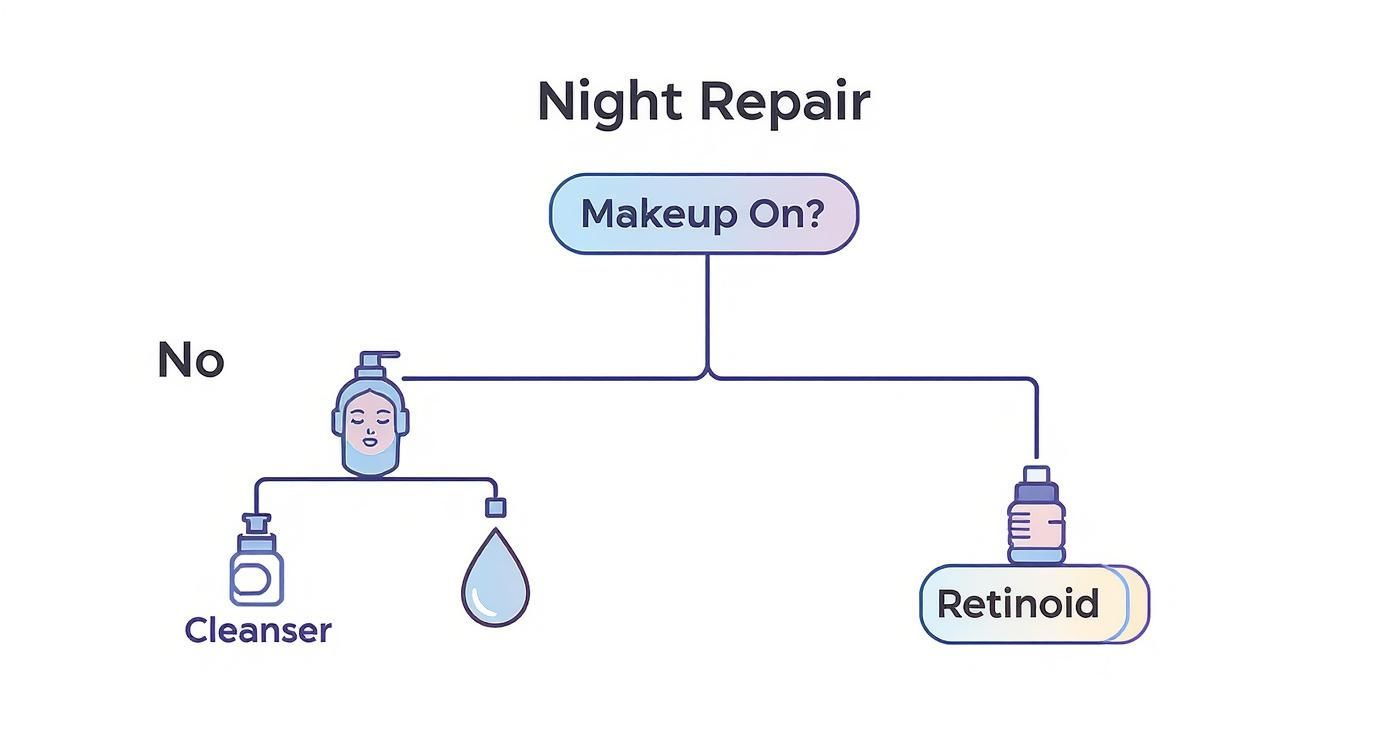
As you can see, it breaks down a key decision point in any evening routine: choosing your first cleanse based on whether or not you're wearing makeup. It’s a perfect example of how a personalized routine isn’t rigid. It responds to simple, daily variables to give your skin exactly what it needs, setting the stage for more powerful treatments like retinoids to work their magic.
Weekly Rituals to Elevate Your Skincare
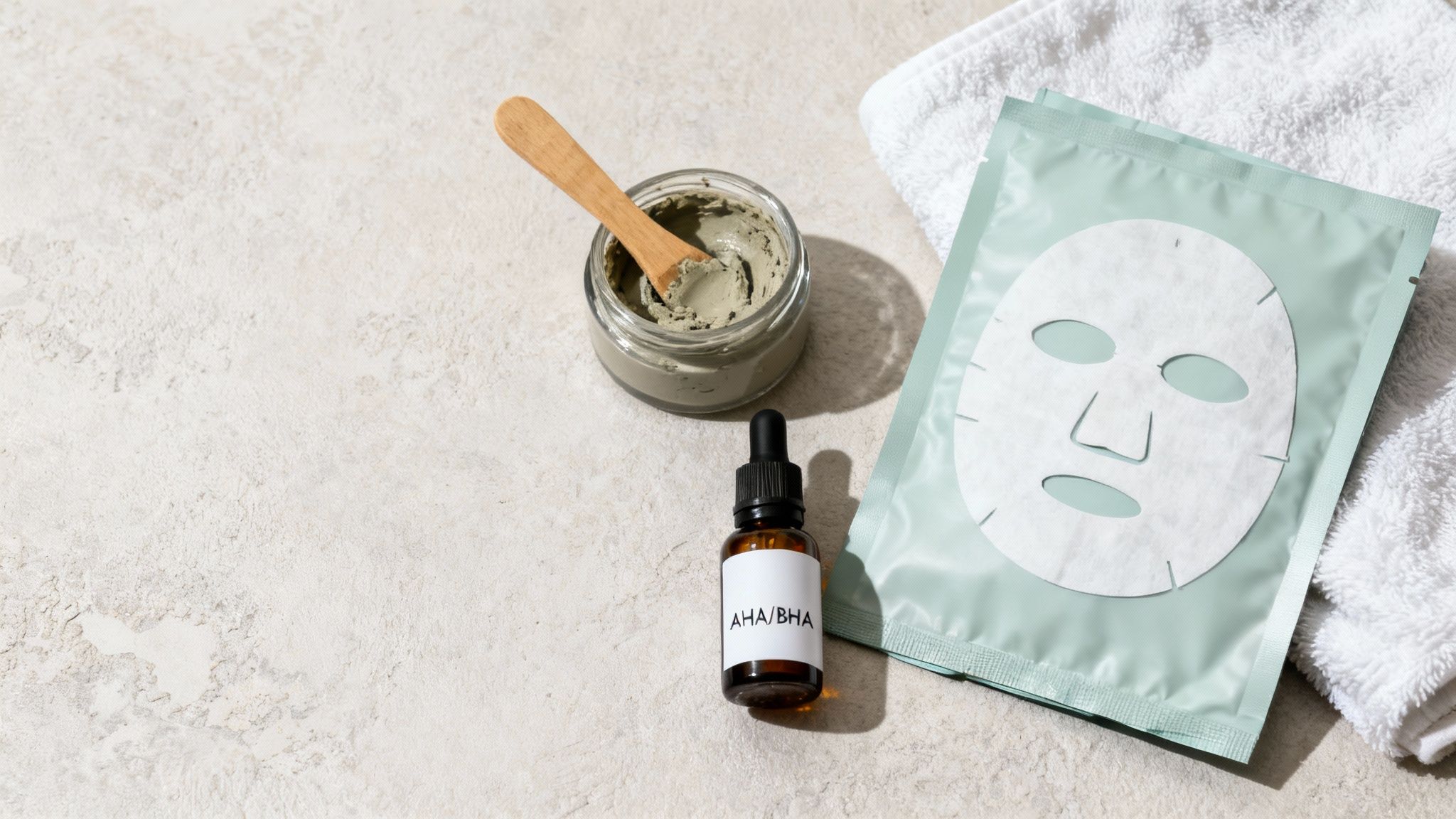
If your daily routine is the foundation of great skin, think of weekly treatments as the high-impact supplements that really amplify your results. These are your targeted boosters, the rituals that go beyond basic maintenance to tackle specific concerns and give your complexion that extra push toward radiance.
Setting aside time just once or twice a week for these more intensive steps can make a world of difference. This is your chance to focus on deep cleansing, intensive hydration, or promoting cellular renewal—things a daily cleanser or moisturizer just can't do alone. It's about being strategic and listening to what your skin is asking for.
The Power of Exfoliation
One of the most transformative things you can do for your skin each week is exfoliate. Throughout the week, dead skin cells build up on the surface, and this accumulation is what often leads to dullness, clogged pores, and uneven texture.
Getting rid of that buildup is key. Regularly clearing away those dead cells reveals the brighter, smoother skin just waiting underneath. It also has a fantastic side effect: all the other products in your routine can penetrate deeper and work so much more effectively.
When it comes to exfoliating, you have two main options, and the best choice really boils down to your skin type and what you're comfortable with.
Physical Exfoliants: These are the scrubs you're probably familiar with, using fine particles like sugar or jojoba beads to manually buff away dead skin. They offer that instant-gratification smoothness, but you have to be gentle. A light touch is crucial to avoid causing micro-tears, especially if your skin is on the sensitive side.
Chemical Exfoliants: Instead of scrubbing, these products use gentle acids—like Alpha-Hydroxy Acids (AHAs) and Beta-Hydroxy Acids (BHAs)—to dissolve the "glue" that holds dead skin cells together. AHAs (think glycolic acid) are fantastic for surface-level brightening, while oil-soluble BHAs (like salicylic acid) are pros at getting deep into pores to clear them out.
Knowing which to use and when is the secret sauce. If you want to get into the nitty-gritty of it, this guide explains more about how to exfoliate your skin effectively and safely.
Choosing Your Weekly Mask Treatment
Masking is another weekly ritual that delivers a concentrated dose of active ingredients exactly where you need them. I like to think of it as a dedicated therapy session for your skin. The trick is to pick a mask that addresses what your skin is going through right now, because its needs can definitely change from one week to the next.
Feeling parched and tight after a few long days? A hydrating sheet mask or a creamy overnight mask loaded with hyaluronic acid and ceramides can be a total game-changer, bringing back that plump, supple feeling.
On the flip side, if you're battling some congestion or your skin is feeling oily, a detoxifying clay or charcoal mask is your best friend. These ingredients are like magnets for impurities, drawing everything out of your pores and leaving your skin feeling clean and refreshed. In fact, research shows a weekly clay mask can reduce surface sebum by over 90% immediately after use.
The best thing about masks is how flexible they are. You can even "multi-mask" by applying different formulas to different parts of your face at the same time. Try a clay mask on an oily T-zone and a hydrating cream mask on drier cheeks. This custom-tailored approach turns a simple ritual into a seriously effective part of your skincare strategy.
Common Skincare Blunders (And How to Fix Them)
Even if you’ve invested in the best products on the shelf, a few common habits can completely sabotage your results. A solid skincare routine for healthy skin is fantastic, but it won't do much good if you're accidentally working against it. Think of this as your troubleshooting guide to the simple, yet costly, errors that might be keeping you from the skin you want.
It's not just about what you use, but how you use it. Sometimes, a tiny tweak in your technique is all it takes to go from feeling frustrated with your routine to seeing real, noticeable changes.
Applying Your Products Out of Order
I see this all the time. One of the most frequent slip-ups is simply layering products the wrong way. If you get the sequence wrong, you can stop your products from absorbing properly, which basically means you’re just wasting expensive goo.
Just picture trying to get a thin, watery serum to soak into your skin after you’ve already slathered on a thick, heavy cream. It's just not going to work.
The golden rule here is simple: go from thinnest to thickest. This lets those lightweight but powerful serums get deep into the skin before you lock everything in with a heavier moisturizer.
Here’s a sequence that actually works:
- Cleanser: This is non-negotiable. You need a clean canvas to start.
- Toner/Essence: If you use one, its watery texture preps the skin for the next steps.
- Serums: This is the time for your targeted, active treatments.
- Moisturizer: Think of this as the sealant that locks in your serums and hydrates your skin's surface.
- Sunscreen (in the morning) / Face Oil (at night): This is always your final protective layer.
Stick to this order, and you'll give every product a fighting chance to do its job.
Going Overboard with Exfoliation
Who doesn't want that super smooth, glowing look? The problem is, this desire can lead people to get a little too enthusiastic with their exfoliants. While sloughing off dead skin is great, overdoing it is the fastest way to wreck your skin barrier. The result? Redness, irritation, sensitivity, and sometimes even more breakouts.
When you over-exfoliate, you're essentially stripping away the natural oils and lipids that form a protective barrier. Instead of revealing a healthy glow, you're left with angry, stressed-out skin that’s way more susceptible to damage.
So, what should you do instead? Dial it back. Limit exfoliation to just one to three times a week, and always listen to your skin. If you're also using potent actives like retinoids, you might find that once a week is plenty. If your skin ever feels tight, raw, or starts to sting, that’s your signal to take a break.
Not Giving Your Products a Fair Shot
We live in a world of instant gratification, but skincare just doesn't operate that way. It’s a huge mistake to toss a new product after only a week or two just because you haven't seen some miraculous transformation. Building healthy skin is a marathon, not a sprint.
It takes your skin roughly 28 to 40 days to go through a full renewal cycle. That means you need to stick with a new product for at least a month to see what it can really do. For heavy-hitting ingredients like retinoids, you might not see the full effect for up to three months.
Patience is key. Before you write something off as a dud, make sure you've given it enough time to actually prove itself.
Answering Your Biggest Skincare Questions
Diving into the world of skincare can feel a bit overwhelming, and it's natural for questions to pop up. Let's clear up some of the most common queries I hear from clients when they're trying to build a routine that actually works for healthy, happy skin.
How Long Does It Really Take to See a Difference?
This is probably the number one question I get, and the answer is always: patience is key. While your skin might feel softer or more hydrated almost immediately, the real, visible changes take time.
Think about it this way: your skin cells naturally turn over in a cycle that takes about 4 to 6 weeks. That's the absolute minimum time you'll want to give any new routine to see a baseline effect. For more targeted concerns like acne, fine lines, or stubborn dark spots, you'll need to be even more consistent. I usually tell my clients to stick with active ingredients for at least three months before expecting significant improvement.
A huge mistake people make is jumping from product to product without giving anything a fair shot. Skincare isn't an overnight fix; it's a long-term commitment. The most amazing transformations come from simple consistency.
Do I Actually Need Different Products for Day and Night?
In a word, yes. For the best possible results, your morning and evening routines should have different goals because your skin's needs change throughout the day.
- Your morning routine is all about protection. You're arming your skin for the day ahead. This is the time for antioxidants like Vitamin C to fight off environmental stressors and, without question, a broad-spectrum SPF to block damaging UV rays.
- Your evening routine is focused on repair and treatment. Nighttime is when your skin goes into recovery mode. It's the perfect opportunity to use powerful active ingredients like retinoids or exfoliating acids that work best without sun exposure.
What’s the Correct Order to Apply My Products?
How you layer your products makes a huge difference in how well they work. If you apply them in the wrong order, you can actually prevent them from being absorbed properly. The easiest rule to remember is to go from the thinnest texture to the thickest.
Here’s a simple, effective sequence:
- Cleanser
- Toner or essence (if you use one)
- Serum(s)
- Eye Cream
- Moisturizer
- Sunscreen (in the morning) or Face Oil (at night)
Remember, what you put in your body can be just as important as what you put on it. A truly holistic approach often includes looking at internal health, and many people find that exploring gut health supplements complements their topical routine. This simple layering strategy is designed to get the absolute most out of every single product you use.
Ready to build a routine that delivers real results? At Face of Jules, we combine advanced treatments with a holistic philosophy to help you achieve your healthiest skin. Explore our personalized services and curated products to start your journey. Discover your ideal skincare plan at Face of Jules.