

Exosome therapy is a fascinating field in regenerative medicine, and it's all about communication. At its core, this treatment uses the body's own sophisticated messaging system to kickstart repair and rejuvenation at a cellular level.
Think of it this way: your cells are constantly talking to each other. Exosomes are the tiny "text messages" they send, carrying vital instructions. In this therapy, we're essentially sending a flood of positive, instructional messages to your cells, telling them how to heal and refresh themselves without introducing any foreign cells.
Decoding the Power of Cellular Messengers
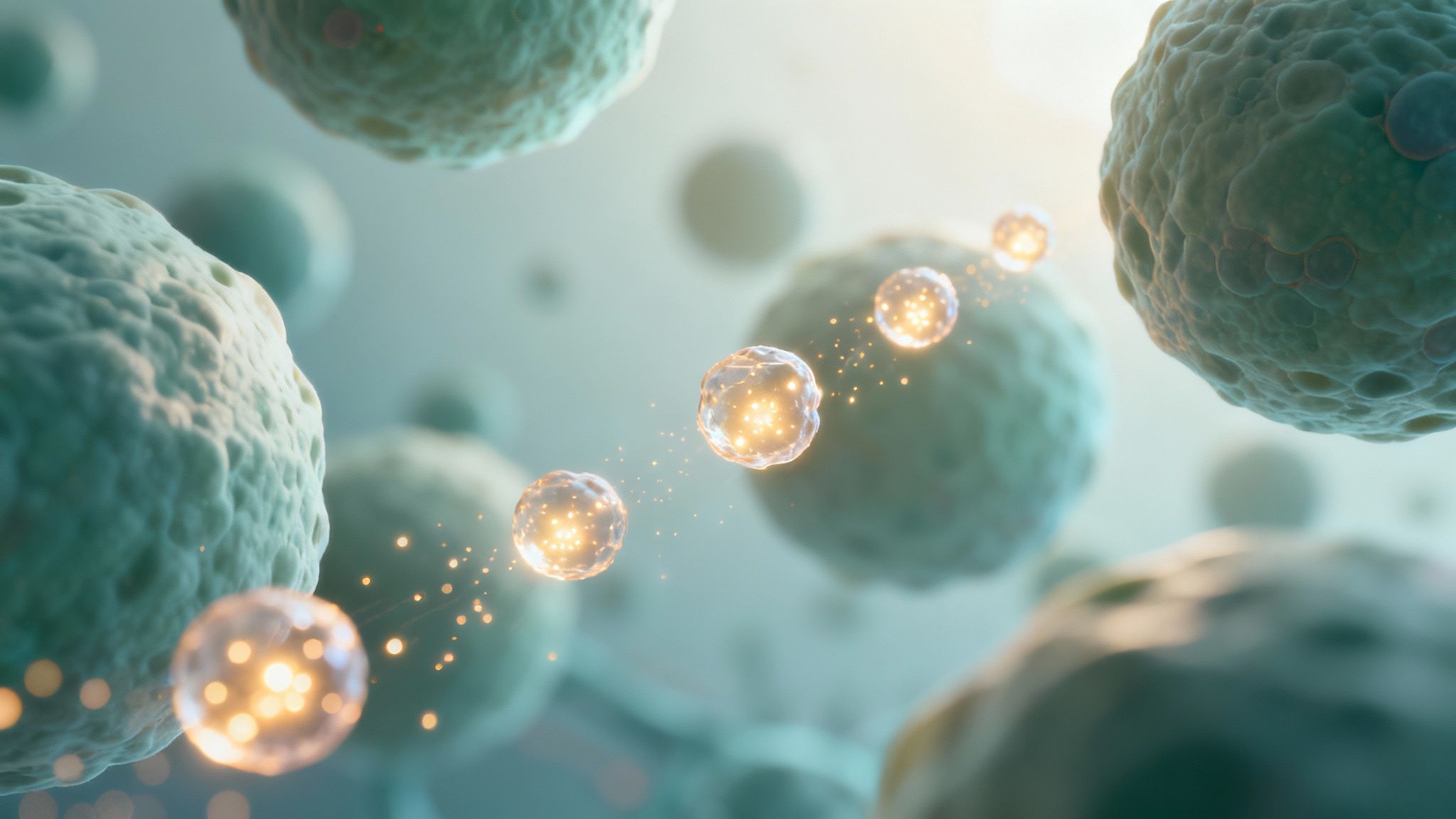
To really get what exosome therapy is, it helps to compare it to something you might already know, like stem cell therapy. Stem cells are incredible; they're the body's "builders." But exosomes? They're the "foremen" on the construction site, delivering the blueprints and directing the work.
Exosomes aren't actually cells. They're incredibly small vesicles—like tiny bubbles—that are released by almost every cell in your body. The ones used in therapy are typically harvested from powerful cells known for their healing ability, like mesenchymal stem cells (MSCs).
The Message in the Bubble
These little messengers are packed with a potent cargo of growth factors, proteins, and genetic instructions (like mRNA and miRNA). Their entire job is to travel through the body and deliver these packages to cells that are damaged or have slowed down due to aging.
When an exosome docks with a target cell, it releases its contents inside. This payload provides a fresh set of instructions, essentially telling the cell what to do. It's a highly efficient and natural process.
This cellular "pep talk" can trigger several key actions:
- Prompting Regeneration: The signals encourage cells to divide and get to work repairing damaged tissue.
- Calming Inflammation: The contents can help dial down chronic inflammation, which is a key culprit behind aging and many health issues.
- Boosting Production: When used for skin rejuvenation, they can tell fibroblast cells to ramp up collagen and elastin production, which is exactly what you need for firmer, smoother skin.
Exosomes Treatment At a Glance
This approach is so exciting because it works with your body's existing systems. Instead of introducing new cells to do the work, it gives your own cells the high-quality information they need to function better.
To pull it all together, here’s a quick snapshot of what we're talking about.
| Component | Description |
|---|---|
| What Are Exosomes? | Tiny vesicles released by cells that act as messengers, packed with proteins and genetic material. |
| Primary Source | Typically derived from ethically sourced mesenchymal stem cells (MSCs) due to their potent regenerative signals. |
| Main Goal of Therapy | To deliver targeted repair signals to damaged or aging cells, activating the body's own healing mechanisms. |
This makes it a truly unique and promising option in both aesthetic and regenerative medicine, focused on optimizing your body from the inside out.
The Science Behind How Exosomes Work
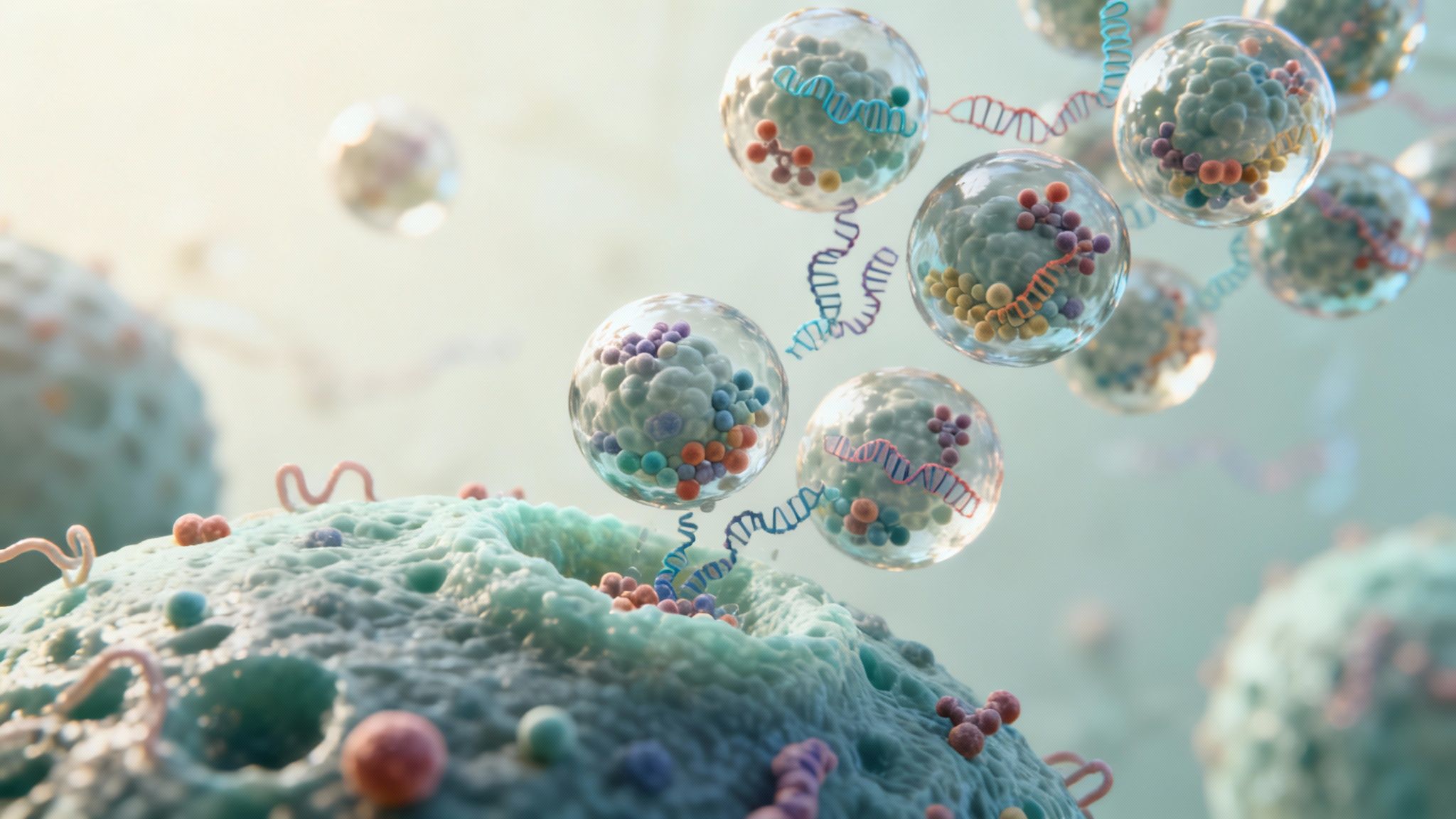
It’s one thing to talk about "cellular messengers," but the real biology of how exosomes actually pull off cellular repair is pretty incredible. First, it's important to know that exosomes aren't cells themselves. They’re incredibly small vesicles—think of them as tiny biological bubbles, only about 30 to 150 nanometers across—that are packed with a powerful cargo of instructions.
You can almost picture them as nature's own high-tech delivery service. Each exosome is loaded with a specific payload designed to get a particular job done once it reaches its target cell. This cargo is the secret sauce that makes exosome treatments so effective.
Their whole purpose is to communicate between cells. They travel through the body and hand-deliver their contents to recipient cells, where they can kickstart specific actions like calming inflammation, speeding up tissue repair, or telling the cells to produce more collagen. It’s this incredibly precise delivery system that allows for such targeted, regenerative results.
Unpacking the Cargo: A Look Inside
So, what’s actually inside these biological packages? The contents of an exosome are diverse and potent, all working together to send a very clear message to the target cell.
Here are the key players:
- Growth Factors: These are the workhorse proteins that stimulate cell growth, division, and healing. They're the primary drivers behind tissue regeneration.
- Messenger RNA (mRNA): This molecule carries the genetic blueprint for creating new proteins. It's like giving the recipient cell a new set of instructions to build what's needed for repair, such as collagen or elastin.
- MicroRNA (miRNA): These are tiny but mighty molecules that act like switches for your genes. They can dial down genes responsible for inflammation or turn up genes that promote healing.
- Lipids: These fatty molecules form the protective outer bubble of the exosome, making sure the precious cargo inside gets to its destination safe and sound.
This powerful combination of signaling molecules allows exosomes to carry out complex tasks and guide cellular behavior with remarkable accuracy. They don't just deliver one message; they provide a complete toolkit for cellular rejuvenation.
The Importance of the Exosome Source
Where the exosomes come from is absolutely critical to their therapeutic power. Not all exosomes are created equal, because their cargo is a direct reflection of the cell that made them. For regenerative medicine, the best exosomes come from young, vibrant cells known for their powerful healing abilities.
This is exactly why mesenchymal stem cells (MSCs) are the gold standard source. MSCs are famous for their potent anti-inflammatory and regenerative properties. When exosomes are derived from these master-healer cells, they come pre-loaded with the exact growth factors and signaling molecules needed to orchestrate repair.
In essence, using MSC-derived exosomes is like borrowing the cellular wisdom of the body's most effective healers and delivering it exactly where it's needed most. This ensures the signals sent are focused squarely on rejuvenation and repair.
The source dictates the quality of the instructions being delivered. That’s why using high-quality, purified exosomes from a reputable lab is non-negotiable for getting the results you want from an exosome treatment.
How Exosomes Find and Activate Target Cells
One of the most fascinating things about exosomes is how they know where to go. Their outer membrane is dotted with proteins that act like a specific key, allowing them to bind only to cells that have the matching "lock," or receptor. This smart targeting system ensures their regenerative payload is delivered to damaged or aging cells that actually need help, instead of being wasted on healthy ones.
Once an exosome "docks" with its target cell, it merges with the cell’s membrane and releases its cargo directly inside. This sets off a chain reaction known as a signaling pathway.
The whole process happens in a few elegant steps:
- Binding: The exosome finds and latches onto the surface of a target cell.
- Fusion: It fuses with the cell membrane, becoming one with the cell.
- Delivery: Its cargo of proteins, mRNA, and miRNA is released into the cell's interior.
- Activation: These delivered molecules get to work, instructing the cell to kickstart its repair and regeneration functions.
This targeted communication is what makes exosome therapy such a precise and efficient form of regenerative medicine. It works by tapping into the body’s own systems to create visible, lasting change. It's no surprise that this field is exploding; the global exosome research market, valued at around USD 241.5 million in 2025, is projected to hit approximately USD 751.2 million by 2032. You can learn more about this rapid growth and its potential on Coherent Market Insights.
What Exosome Therapy Can Do For You

Now that we've pulled back the curtain on the science, let's talk about what really matters: the results. The real magic of exosome therapy is how versatile it is. By delivering targeted repair signals, it can zero in on specific concerns, from the fine lines on your face to thinning hair.
Because exosomes work by giving your own cells a much-needed boost, their applications are incredibly broad and effective. They don't just put a bandage on the problem; they give your cells new instructions to work better, leading to changes you can actually see and feel. Let's look at the three areas where this therapy is truly making a name for itself: skin rejuvenation, hair restoration, and joint health.
Revitalizing Skin From the Inside Out
For many people, the most exciting use for exosome therapy is in the world of aesthetics, especially for turning back the clock on skin aging. As the years go by, our cells get a little lazy, producing less of the collagen and elastin that keep our skin firm and smooth. This leads to wrinkles and sagging.
Exosomes jump right in to tackle this problem at its source.
When applied to the skin—often paired with a treatment like microneedling to help them penetrate deeper—exosomes deliver their cargo of proteins and growth factors straight to your fibroblasts. Think of fibroblasts as your skin's tiny collagen factories. The exosomes send them a powerful "wake-up call," telling them to get back to work and ramp up production.
The outcome of this cellular pep talk is pretty remarkable:
- Fewer Fine Lines and Wrinkles: More collagen means the skin plumps up from within, smoothing out those frustrating lines.
- Better Skin Texture and Tone: The therapy helps reduce the appearance of old acne scars and sunspots, giving you a more even, glowing complexion.
- Tighter, Firmer Skin: With a fresh supply of elastin, your skin gets back that youthful bounce and resilience.
This is exactly the kind of smart, regenerative approach that defines modern skincare. If you're interested in learning more, you can see how these same principles apply in our other anti-aging treatments.
Awakening Dormant Hair Follicles
Hair loss is another huge area where exosomes are making a real difference. Most of the time, thinning hair is caused by follicles that have gone dormant—they haven't died, they've just stopped producing healthy hair.
Exosome therapy can help wake them up.
By delivering a concentrated dose of growth factors directly to the scalp, these powerful messengers coax inactive follicles back into the growth phase. They also improve blood flow and calm inflammation in the area, creating the perfect environment for healthy hair to grow again. For both men and women, this can lead to visibly thicker, fuller hair without needing surgery.
Exosome therapy for hair loss isn't just about growing new strands. It's about restoring the entire ecosystem of your scalp, allowing your own follicles to behave the way they did when they were younger.
The goal is to reboot your body’s own natural hair growth cycle, addressing the root cause instead of just trying to manage the symptoms.
Supporting Joint Health and Repairing Tissue
Beyond looks, exosomes are showing incredible promise for helping people manage joint pain and inflammation, particularly in orthopedics. Conditions like osteoarthritis are driven by chronic inflammation that slowly wears away cartilage, causing pain and stiffness.
Exosomes can help by delivering potent anti-inflammatory signals directly into the joint.
By calming that inflammation, they can significantly reduce pain and make it easier to move. Even better, the growth factors they carry encourage your body’s own cells to start repairing the damaged cartilage and surrounding tissues. This makes it a compelling option for anyone looking to improve their joint function and potentially put off more invasive procedures.
The aesthetics world, in particular, has fully embraced exosomes. The global exosomes skincare market was valued at around USD 417.8 million in 2025 and is on track to hit USD 809.5 million by 2032. Serums are leading the charge, making up over 40% of the market share in 2025, thanks to a growing understanding of how well they work.
What to Expect During Your Exosome Treatment
Walking into any new treatment can feel a little intimidating, so let’s pull back the curtain on what actually happens during an exosome therapy session. Knowing the flow from start to finish helps take the guesswork out of the equation and makes the whole process feel much more comfortable.
It all starts with a good old-fashioned conversation.
The Consultation and Prep
Your first step is always a one-on-one consultation. This isn't just a formality; it's the most important part of the process. This is where we’ll sit down and talk about what you're hoping to achieve—whether that’s softening fine lines, tackling thinning hair, or easing joint pain. It’s your chance to ask anything and everything that’s on your mind.
We'll go over your medical history to make sure you’re a great candidate and that this is truly the right path for you. Based on our chat, we’ll map out a plan that makes sense for your specific goals.
Before you come in for the actual treatment, we'll give you a few simple guidelines to follow. Think of it as setting the stage for the best possible results. This usually includes:
- Pausing certain meds: We’ll likely ask you to hold off on blood-thinning medications and supplements—like aspirin, ibuprofen, or fish oil—for a few days to help minimize any potential bruising.
- Hydrate, hydrate, hydrate: Drinking plenty of water is fantastic for your skin and body anyway, and it helps get you ready for the procedure.
- Gentle skincare only: If we're treating your face, it’s best to avoid harsh products like retinoids or exfoliants for a day or two beforehand.
A Step-by-Step Look at the Treatment Session
When you arrive on treatment day, you can expect a straightforward and relatively quick process. The exact method we use will depend entirely on what we're targeting.
There are three main ways we can get the exosomes delivered to where they need to go:
- Topical with Microneedling: This is the go-to for skin rejuvenation. We use a microneedling device to create thousands of tiny, invisible micro-channels in the skin. This not only kickstarts your natural collagen production but, more importantly, it opens up a direct pathway for the exosome serum to get deep into the dermal layers where it can really work its magic. To see how this powerful combo works, check out our in-depth guide to Los Angeles microneedling treatments.
- Direct Injection: For very specific targets—like stimulating hair follicles on the scalp or addressing discomfort in a particular joint—we’ll use direct injections. This approach delivers the highest possible concentration of those regenerative messengers right to the source of the problem.
- IV Infusion: If you're looking for more of a whole-body boost, like calming systemic inflammation or supporting overall wellness, an IV drip is the best option. This lets the exosomes circulate throughout your entire system, offering widespread benefits.
The right method is all about making sure the exosomes get exactly where they can do the most good. For skin, we need those micro-channels. For a knee joint, we need to go direct. For a systemic effect, IV is the answer.
No matter which path we take, your comfort is key. We almost always apply a topical numbing cream before any injections or microneedling to make sure you barely feel a thing.
Most sessions are wrapped up in about 30 to 60 minutes. Afterward, you're typically free to get right back to your day with little to no downtime.
Who Is an Ideal Candidate for Exosome Therapy?
Figuring out if exosome therapy is the right move for you really comes down to what you’re hoping to achieve and your overall health. While it’s incredibly versatile, the best fit is usually someone looking for a natural, non-surgical way to tackle the common signs of aging or help heal damaged tissue.
If you’re starting to see fine lines, notice your skin isn’t as firm as it used to be, or are dealing with thinning hair, you’re exactly the kind of person who could benefit. It’s all about tapping into your body's own repair crew. It’s also a fantastic option for those struggling with persistent joint pain who want to calm inflammation and support healing without jumping into surgery.
Profiling the Perfect Candidate
The people who see the best results are generally in good health and, just as importantly, have realistic expectations. This isn't a magic wand; it’s a process that works with your body to create gradual, lasting improvements.
You’re likely a great candidate if any of these sound familiar:
- You want to push back on the signs of aging. This could mean softening wrinkles, smoothing out your skin's texture, and bringing back that healthy, youthful glow.
- You're seeing more hair in the brush than you'd like. Exosomes can be a game-changer for waking up dormant hair follicles and encouraging thicker, healthier growth.
- You're tired of living with joint pain or inflammation. Many athletes and people with degenerative conditions turn to this therapy to find relief and help their bodies repair from within.
- You’re looking to minimize the appearance of scars. For those who prefer a non-invasive approach, we offer several effective scarring treatments that work beautifully alongside a regenerative philosophy.
Bottom line: if your goal is to supercharge your body’s natural healing power instead of relying on synthetic fillers or going under the knife, exosome therapy is definitely worth looking into.
When Exosome Therapy Might Not Be Right
Knowing who shouldn't get this treatment is just as critical as knowing who should. Certain health conditions can get in the way of the treatment's success or even pose a risk.
It's absolutely vital to be upfront with your provider if you have any of the following:
- Active Infections: Your body needs to be in a healthy state to properly receive and act on regenerative signals.
- Certain Autoimmune Disorders: How exosomes interact with an already complex immune system needs to be carefully evaluated by a professional.
- A History of Cancer: Because exosomes are all about cell communication and growth, this therapy is typically avoided for anyone with a history of malignancies.
- Pregnancy or Breastfeeding: At this time, there isn't enough safety data to recommend the treatment for expecting or nursing mothers.
A detailed, honest conversation during your consultation is the best way to make sure this is a safe and effective choice for you.
The infographic below breaks down the different ways exosomes can be administered, comparing things like session time, how invasive it is, and what to expect comfort-wise.
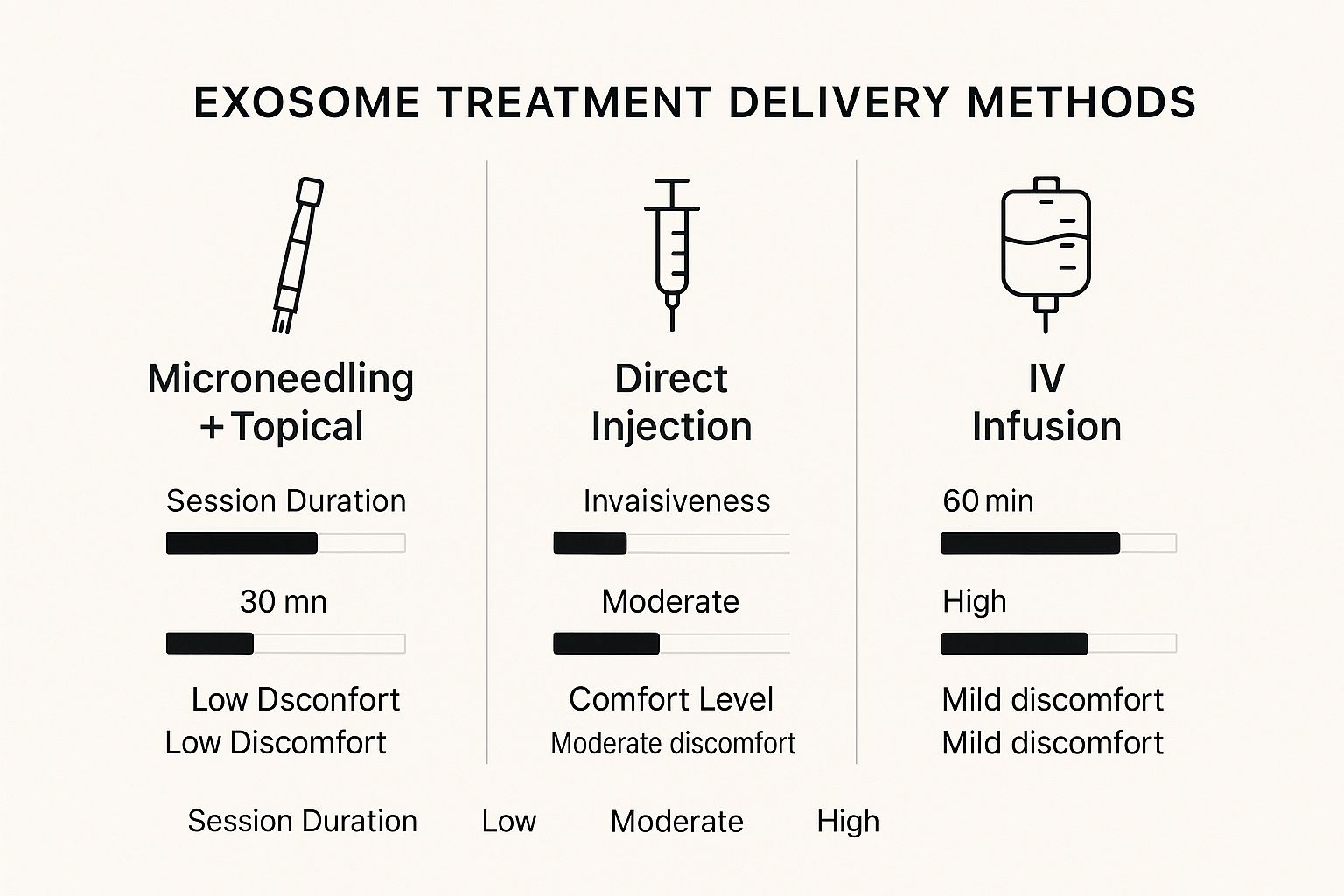
As you can see, the method we choose is carefully matched to your specific goals, finding the right balance between effectiveness and your comfort.
Understanding the Risks and Regulatory Side of Things
It’s easy to get excited about the potential of exosome therapy, but a smart conversation also needs to cover the risks and regulations. Just like any powerful treatment, it's not without potential side effects, and the official guidelines are still catching up with the fast-moving science. Let's walk through what you need to know to make a safe and informed decision.
Most of the time, any side effects from exosome treatments are minor, temporary, and pop up right where the treatment was applied. For instance, if you get exosomes through an injection or microneedling, you might see a bit of redness, some mild swelling, or feel a little tenderness in that spot. This is all pretty normal and usually clears up on its own within a day or two.
Sourcing and Purity: The Make-or-Break Safety Factor
When it comes to the safety of what is exosomes treatment, one thing stands above all else: the source and purity of the exosomes themselves. Because these are biological products, the quality can be all over the map. Using exosomes from a sketchy or unverified lab is a huge gamble—you risk contamination or, at the very least, getting a product that simply doesn’t have the horsepower to deliver results.
This is exactly why choosing the right provider is an absolute must. A reputable clinic will be completely transparent and only use exosome products that meet strict criteria:
- They come from ethical, FDA-compliant labs.
- The source cells (like mesenchymal stem cells) are from healthy, carefully screened donors.
- The final product is rigorously purified, ensuring it’s free from unwanted contaminants or leftover cellular junk.
Don't ever hesitate to ask your provider for the paperwork on their exosome source. It's not being difficult; it's being a smart, responsible patient.
What the Regulators Say
It’s also crucial to know where official bodies like the Food and Drug Administration (FDA) stand. The FDA is keeping a close eye on all regenerative therapies. While the science is incredibly exciting, many exosome therapy applications are still considered experimental and haven't gone through the long process of being approved as a "drug" to treat specific diseases.
The FDA has put out consumer alerts about certain regenerative medicine products. They basically warn people to be cautious of treatments that are marketed illegally or make claims that can't be backed up by solid evidence. This really drives home the point: you must work with a qualified medical professional who uses lab-verified products for well-understood aesthetic and wellness purposes.
This field is moving at lightning speed, backed by a huge wave of healthcare investment and clinical trials. The global market for exosome therapeutics was pegged at around USD 789.4 thousand in 2024 and is expected to rocket to over USD 4,020.7 thousand by 2034. You can see the numbers behind this massive growth over at Precedence Research.
This boom shows just how much promise the therapy holds, but it also means you need to be vigilant. Putting your safety first by partnering with a trusted, knowledgeable provider ensures you're getting a professional service with a high-quality product.
Your Top Questions About Exosomes, Answered
Jumping into the world of regenerative medicine can bring up a lot of questions. As more and more people get excited about exosome therapy, it's totally normal to want some straight-up, clear answers. This little Q&A is here to tackle the most common things people ask, so you can feel totally in the loop and confident about the treatment.
We've pulled together the questions we hear most often to give you a real sense of what to expect, from how long it takes to how it feels.
How Long Does It Take to See Results from Exosomes?
This is one of those times where patience really pays off. Exosome therapy isn't an overnight fix; it works by waking up your body's natural repair crews and letting them get to work.
When it comes to skin rejuvenation, you'll likely notice an initial glow and a nice boost in hydration within just a few weeks. But the real magic—that deep-down collagen rebuilding and skin firming—unfolds over the next two to three months.
It's a similar story for hair restoration and joint support. The improvements are gradual but steady as your body's tissues regenerate. Your provider will be able to give you a much more specific timeline based on what's being treated and what you're hoping to achieve.
Is Exosome Therapy Painful?
Honestly, most people are pleasantly surprised by how comfortable the treatment is. Any discomfort is minimal and really just depends on how the exosomes are delivered.
- With Microneedling: We use a good topical numbing cream before we start, so most people say it just feels like a light vibration or gentle pressure on the skin.
- With Injections: If you're getting exosomes for hair loss or joint pain, the injections feel about the same as any standard shot. It's a quick pinch, and then it's over.
- With an IV Drip: This method is typically painless, just like getting a standard vitamin infusion or any other IV.
The bottom line is, we do everything we can to make the entire process as easy and comfortable as possible.
How Many Treatments Will I Need?
There's no single answer here, because your treatment plan is built completely around you, your body, and your goals. For general skin enhancement and a vibrant refresh, a series of one to three treatments, spaced a few weeks apart, is usually enough to deliver fantastic results.
Now, if you're dealing with something more stubborn, like significant hair thinning or a nagging joint issue, we might recommend a longer series of treatments to get you the best outcome. It all starts with a conversation where we'll map out a plan that makes sense for you.
The key thing to remember is that exosome therapy is a team effort between the treatment and your body's own healing rhythm. Some perks show up early, but the full, lasting improvements build over time, giving you results that look and feel completely natural.
Are Exosomes a Better Option Than Stem Cells?
This is a great question. Both exosomes and stem cells are heavy hitters in regenerative medicine, but they play different roles. Think of it this way: stem cell therapy introduces whole, living cells into your body. On the other hand, what is exosomes treatment is all about using the "cell-free" messengers—the exosomes themselves—to deliver instructions to the cells you already have.
Many experts believe the exosome approach is more precise and, in some cases, a bit safer. You aren't introducing foreign cells; you're just sending in the critical repair signals, which can reduce the risk of your body reacting negatively. For a lot of skin and joint goals, this targeted signaling offers a powerful and clear advantage.
At Face of Jules, our passion is helping you reach your skin health goals with smart, science-backed treatments. If you're curious about how regenerative therapies can bring new life to your skin, we'd love to chat.