

So, what exactly is a Platelet-Rich Plasma (PRP) facial? You might know it by its more dramatic name, the "Vampire Facial," but the science behind it is all about harnessing your body's incredible, natural ability to heal and regenerate itself.
This innovative treatment uses a concentrated serum made from your own blood to give your skin a major boost, helping to rejuvenate your entire complexion from the inside out.
Unlocking Your Skin's Natural Potential
Think of it this way: your blood contains tiny powerhouses called platelets. Whenever you get an injury, like a cut, these platelets are the first responders. They rush to the site, carrying an arsenal of potent proteins known as growth factors. These growth factors are the command-and-control center for healing, signaling your body to rebuild tissue and repair damage.
A PRP facial isolates these platelets and concentrates them. What we're left with is a powerful, golden-hued serum that's packed with your body's own unique healing agents.
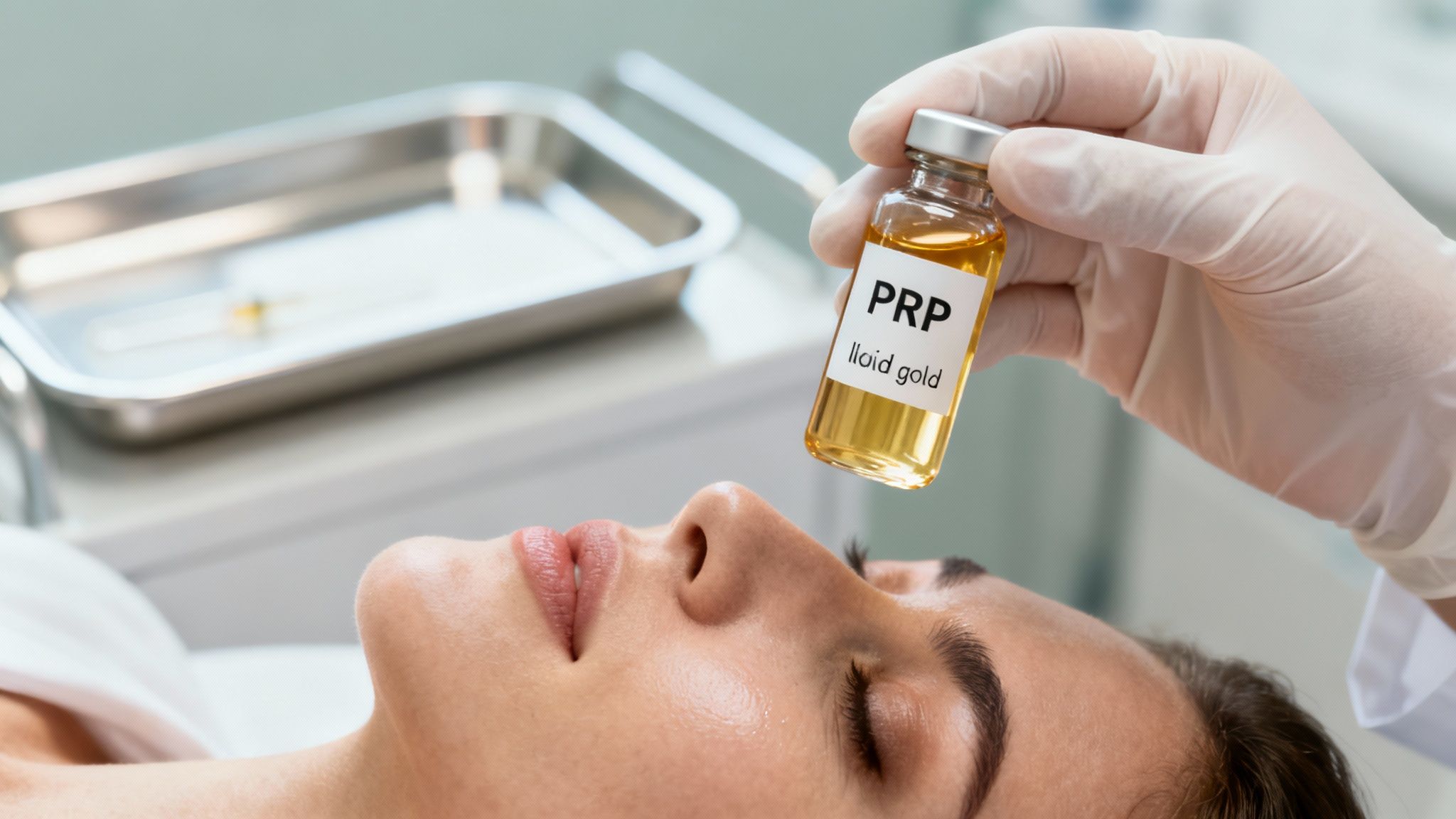
This "liquid gold" is then applied to your skin, almost always in conjunction with another treatment: microneedling. By creating thousands of tiny, controlled micro-channels in your skin, microneedling opens the door for the PRP to penetrate much deeper than it could on its own. This combination is key to getting the best results. You can find out more about how our approach to microneedling in Los Angeles sets the stage for this powerful treatment.
Once that PRP gets down into the deeper layers of the skin, the growth factors get right to work, triggering a cascade of renewal processes. They essentially tell your skin to:
- Build fresh, strong collagen to restore firmness and structure.
- Generate healthy new cells, improving overall skin tone and texture.
- Repair and reverse signs of damage from the sun and the natural aging process.
For a quick overview, here’s a look at the treatment's key details.
PRP Facial At a Glance
| Aspect | Description |
|---|---|
| Common Name | Vampire Facial |
| Primary Goal | Skin rejuvenation, collagen stimulation, texture improvement |
| Key Ingredient | Your own Platelet-Rich Plasma (PRP) |
| How It Works | Uses growth factors from your blood to trigger natural healing |
| Combined With | Almost always performed with microneedling for deep penetration |
| Results In | Firmer, smoother, more radiant skin |
This quick summary shows why the PRP facial has become such a go-to for natural, effective skin renewal.
PRP isn't just a trend; it's a well-established medical and dermatological treatment that has been gaining serious traction since the 2000s. Its applications are incredibly broad because it's based on a fundamental biological process. At its core, a PRP facial is about giving your body the supercharged tools it already has to kickstart its own renewal cycle.
The Science Behind Your Skin's Renewal
To really get why a PRP facial works so well, we first have to look at the amazing biology that’s already hard at work inside you. Your blood isn’t just red liquid; it’s a powerhouse made of red cells, white cells, plasma, and—the star of this show—platelets.
Think of platelets as your body's personal paramedic team. When you get a cut, they’re the first responders, rushing in to form a clot. But their job is far from over. They’re also packed with potent proteins called growth factors, which act like little foremen on a construction site, telling your cells it’s time to rebuild and repair.
Creating the "Liquid Gold"
The magic of a PRP facial comes from isolating and concentrating this natural healing force. It all starts with a simple blood draw, no different than one you'd get at a doctor's office.
That blood is then spun in a special machine called a centrifuge. As it spins at high speed, the blood separates into layers. We’re left with a beautiful, golden-hued serum that’s packed with platelets—this is your Platelet-Rich Plasma (PRP). The concentration of growth factors here is incredible, often 5 to 10 times richer than what's in your normal blood.
By concentrating these platelets, we're essentially creating a super-charged dose of your body's own regenerative power, ready to be applied right where you want it.
When this "liquid gold" is reintroduced to your skin, particularly after a treatment like microneedling, it signals a massive healing response. The growth factors tell your skin cells to get busy building fresh, new collagen and elastin—the very proteins that give your skin its youthful structure and bounce. It’s your body’s natural repair system, just kicked into high gear.
This boost in collagen is what creates all the visible benefits:
- Firmer Skin: More collagen literally firms up your skin's foundation from the inside.
- Smoother Texture: As new cells come to the surface, the look of fine lines and old acne scars softens.
- Brighter Tone: The regenerative process helps fade sun spots and even out your complexion.
At its core, the science behind a PRP facial is beautifully simple. We're just borrowing your body's own incredible ability to heal itself and focusing it on rejuvenating your skin.
A Step-by-Step Guide to Your PRP Facial Journey
If you’re curious about what actually happens during a PRP facial, it helps to break it down. Knowing what to expect can make the whole experience feel much more comfortable. From start to finish, the entire process is surprisingly straightforward and involves three main phases.
Phase 1: The Initial Blood Draw
It all begins with a simple blood draw, no different from a routine test you'd get at your doctor's office. We only need a small amount of blood—just a few tablespoons drawn from your arm. This quick step is the foundation for creating your very own "liquid gold" serum.
While this is happening, a topical numbing cream is usually applied to your face. The cream takes about 30 minutes to kick in, ensuring you're completely comfortable for the main event.
Phase 2: Creating Your Liquid Gold
Next, your blood sample goes for a spin. It’s placed in a machine called a centrifuge, which whirls the vial around at high speed. This separates your blood into its core components, isolating the star of the show: the platelet-rich plasma.
What we're left with is a potent, golden serum packed with powerful growth factors ready to rejuvenate your skin. Think of it as a super-concentrated healing potion made just for you.
This simple infographic shows how that standard blood sample is transformed into the powerful PRP serum we use.
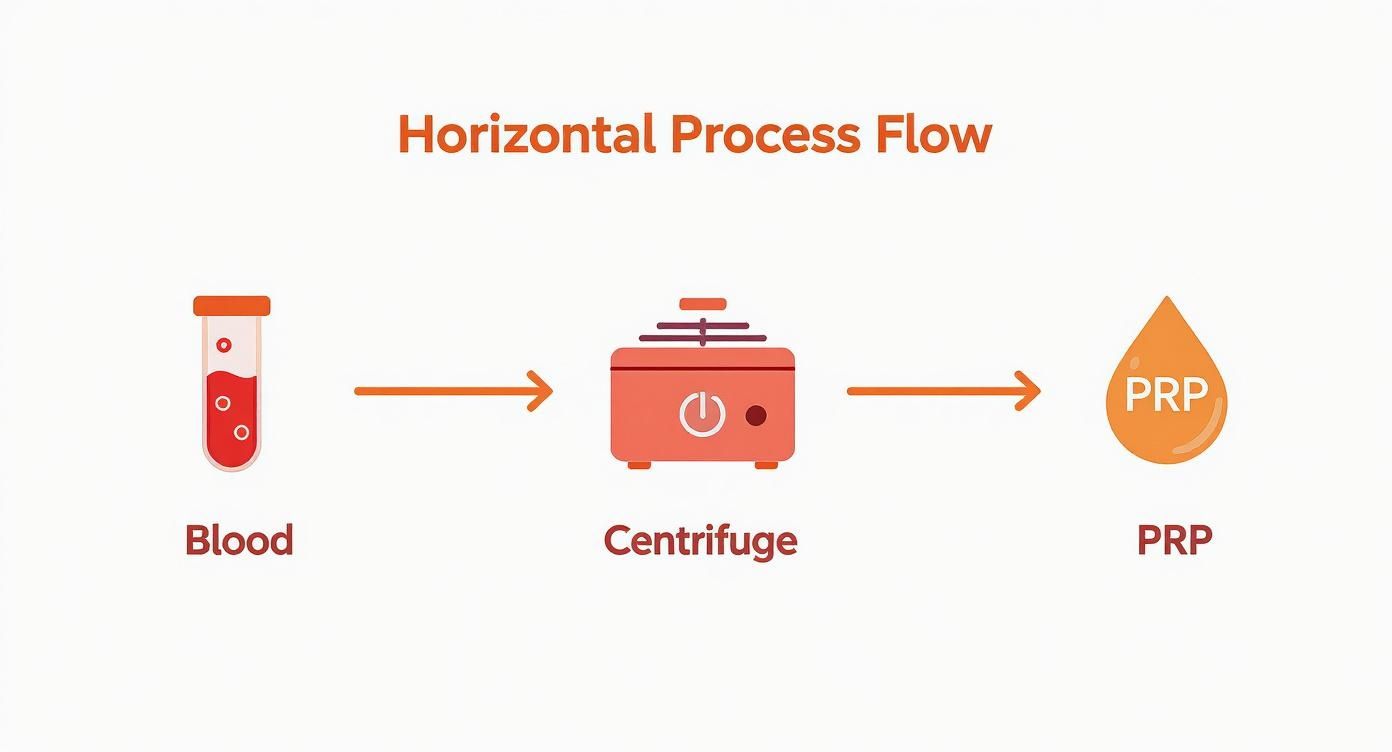
It’s a perfect illustration of how we use your body's natural resources to create a treatment that’s 100% you.
Phase 3: Microneedling and PRP Application
Now for the part where the real magic happens. Your practitioner will use a microneedling pen to create thousands of tiny, controlled micro-channels on your skin's surface. These aren't just random pokes; they are precise pathways that allow the PRP to get deep into the dermis where it can do the most good.
Right after the microneedling, that custom PRP serum is gently massaged all over your face, sinking into those freshly made channels.
The real power of this treatment comes from combining microneedling with PRP. The micro-injuries trigger your body’s natural healing cascade, and the PRP gives that response a massive boost with a flood of growth factors.
This one-two punch essentially tells your skin to get to work building fresh collagen and elastin. The result? A complexion that looks and feels firmer, smoother, and much more radiant.
Is a PRP Facial the Right Choice for You?
While the buzz around PRP facials is well-deserved, it's not a magic wand for every skin concern. The first, most important step is figuring out if this treatment aligns with your unique skin and goals. It’s a fantastic option for those who want to tap into their body's natural healing powers to tackle some of the most common signs of aging and wear.
So, who's the perfect match for a PRP facial? Generally, it’s someone who's starting to see the early signs of aging or is unhappy with their skin's texture. If you’re looking in the mirror and noticing fine lines, a bit of sagging, or that your skin just doesn't have that glow it used to, you're likely in the sweet spot for this treatment. It’s all about kickstarting your own collagen production to get back to smoother, firmer skin.
Who Benefits Most from PRP
This treatment really shines when it comes to tackling a few key issues. You’re probably a great candidate if you're looking to:
- Refine Your Skin's Texture: Tired of large pores? PRP helps smooth things over for a silkier feel.
- Soften Lines and Wrinkles: It’s especially good for those delicate lines that pop up around the eyes and mouth.
- Reduce the Look of Scars: The growth factors in PRP are brilliant for helping repair old acne scars. We often combine it with other scarring treatments for even better results.
- Get a More Even Skin Tone: If sun spots or hyperpigmentation are bothering you, PRP can help brighten your overall complexion.
When to Avoid a PRP Facial
On the flip side, a PRP facial isn't for everyone. Your health and safety come first, and there are a few situations where this treatment isn't the right move.
It's absolutely crucial to be open and honest about your medical history during our consultation. We need the full picture to ensure this is a safe and effective choice for you, as certain conditions can affect healing or introduce risks.
If you have any active skin infections, like cold sores or cystic acne, you’ll need to wait until they've completely cleared up. More importantly, anyone with a history of blood-related conditions—think clotting problems, bleeding disorders, or anemia—is not a candidate for this procedure. A detailed consultation is how we make sure we're on the safest and most effective path for your skin.
Your Recovery Timeline and Aftercare Plan
Knowing what to expect after your PRP facial is key to getting the fantastic results you're after. The healing process isn't instant—it’s a journey that unfolds in stages as your skin gets to work building fresh, new collagen. Understanding this timeline helps you support your skin every step of the way.
Immediately after your session, you can expect your skin to look and feel a bit like it has a mild sunburn. It'll be red and feel sensitive to the touch. This is totally normal! In fact, it's a great sign that your body’s natural healing cascade has kicked into gear. This initial redness usually calms down significantly within 24 to 48 hours.
Mapping Your Results
Patience is a virtue here, as collagen and elastin don't rebuild overnight. While the redness fades pretty quickly, the real magic is happening beneath the surface.
- The First Few Weeks: You'll probably start to notice an initial glow within the first week or two. Your skin's texture will feel smoother, and your complexion will just look brighter and more refreshed.
- The Full Effect: The most dramatic and lasting improvements really start to shine through over the next two to three months. This is when the new collagen has had time to build up, leading to firmer skin, softer fine lines, and a more even, vibrant tone.
This gradual progression is proof that the treatment is working on a deep, cellular level. It’s not just a surface fix. Research into PRP's power has shown some incredible outcomes, with one study on melasma noting a nearly 70% drop in severity scores after a few months. That’s the kind of long-term change we’re aiming for.
Your Aftercare Checklist
Following a proper aftercare plan is non-negotiable if you want to protect your investment and get the best possible outcome. Think of it as creating the perfect environment for your skin to heal and regenerate.
Your main job after treatment is simple: be gentle. For the first few days, avoid harsh products, direct sun, and intense workouts to let your skin recover peacefully.
Here’s a simple checklist to guide you:
- Protect From the Sun: Your skin is going to be extra sensitive. Make a broad-spectrum SPF 30+ your best friend, and try to stay out of direct sunlight for at least the first week.
- Use Gentle Products: Now is not the time for scrubs, retinoids, or acids. Stick with a simple, mild cleanser and a calming, hydrating moisturizer.
- Stay Hydrated: Drinking plenty of water is one of the best things you can do to support your body's healing process from the inside out.
- Hands Off: As tempting as it may be, don't touch, pick, or scratch your face. This prevents irritation and allows those tiny micro-channels to heal cleanly.
Following these simple steps will help ensure your skin heals beautifully. If you're looking for ways to give your results an extra boost, you might want to look into complementing your treatment with LED light therapy in Los Angeles, which is fantastic for supporting the healing process.
Frequently Asked Questions About PRP Facials
Even after learning how a PRP facial works, it’s completely normal to have a few more questions pop into your head. Getting answers to the practical stuff is what helps you decide if this treatment is right for you, so let's walk through some of the most common things people ask.
Does the Procedure Hurt?
This is probably the number one question we hear, and the answer is a relief for most people: no, it's generally not painful. Before we even start, we apply a powerful topical numbing cream to your face. We let that sit and work its magic for about 30 minutes.
This cream does a fantastic job of desensitizing your skin. Most people describe the sensation of the microneedling pen as a light vibration or maybe a faint scratching feeling. It's almost always well-tolerated and definitely not something to be anxious about.
How Many Sessions Will I Need?
Think of a PRP facial as a long-term investment in your skin's foundation—it’s about progressively rebuilding that all-important collagen. Because of this, the right number of sessions really comes down to your unique skin and what you’re hoping to achieve.
- For a General Glow-Up: If you're looking for that fresh, vibrant look and smoother texture, a series of 3 treatments is often the sweet spot.
- For Tackling Deeper Issues: For more stubborn concerns like acne scars or more pronounced wrinkles, a series of 4 to 6 sessions will likely give you the best results.
We usually space these treatments about four to six weeks apart. This gives your skin the perfect amount of time to heal and kickstart that amazing regeneration process before the next session.
What Are the Potential Risks?
One of the best things about a PRP facial is how safe it is. Since it uses growth factors from your own blood, the chance of an allergic reaction or any serious side effect is incredibly low. The "side effects" you'll see are really just signs that your skin is healing.
The real beauty of PRP is that it's autologous—it comes from you. This simple fact nearly eliminates the risk of adverse reactions you might see with foreign substances, making it one of the safest rejuvenation treatments out there.
You can expect to look and feel like you have a mild sunburn for the first 24 to 48 hours. Some redness, a bit of swelling, and feeling sensitive to the touch are all part of the process. A little bruising can happen, too, but it typically fades quickly.
What Is the Typical Cost of a PRP Facial?
The price tag for a PRP facial can definitely fluctuate. Generally, you can expect to see costs ranging from $750 to $1,500 per session. What you'll actually pay depends on a few things, like the city you're in, the expertise of your provider, and whether you buy a single treatment or a discounted package of several.
At Face of Jules, our focus is on creating a plan that’s just for you, designed to deliver results you'll love. Book a consultation today to find out if a PRP facial is the key to unlocking your skin goals.